
Dog UTI Prevention: Daily Habits That Actually Matter
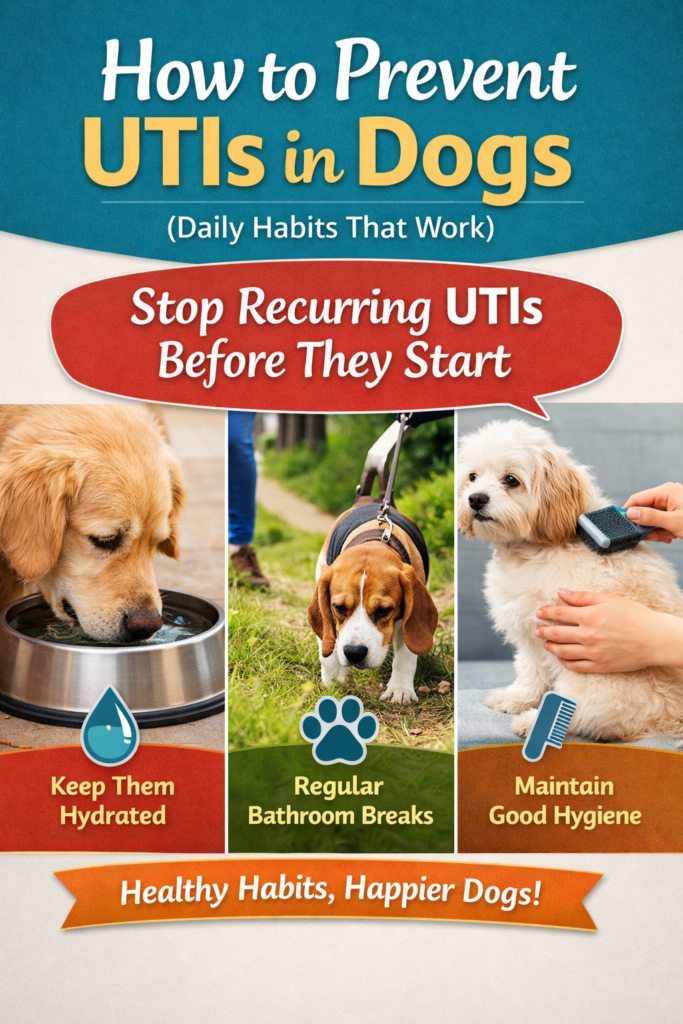
Most dog owners focus on urinary tract infections after symptoms appear — the accidents, the straining, the vet visit, the antibiotics. But for dogs prone to recurring UTIs, prevention is where the real work happens.
Prevention isn’t a single change. It’s a set of daily habits that together influence the urinary environment in ways that make infections less likely to take hold — and less likely to come back after treatment.
These habits won’t replace veterinary care when an active infection is present. But for dogs stuck in the recurring UTI cycle, they’re often the missing piece.
Why Daily Dog UTI Prevention Habits Matter More Than Reactive Treatment
Treatment and prevention are not the same thing. Antibiotics resolve an active infection — they don’t change the conditions that allowed the infection to develop. For dogs who keep cycling through UTIs, addressing those underlying conditions is what actually breaks the pattern.
The urinary environment is influenced daily by hydration, bathroom frequency, hygiene, diet, and supplement support. Each of these factors either contributes to a bladder environment where bacteria struggle to establish — or one where they find it easy.
For a complete overview of why UTIs develop and recur: Dog Urinary Tract Health: A Complete Guide to UTIs, Prevention, and Long-Term Support
1. Hydration — The Most Important Daily Habit
Water intake is the foundation every other prevention strategy depends on. Here’s why it matters biologically: dilute urine means bacteria are less concentrated and more likely to be flushed out before they can attach to the bladder wall. Concentrated urine creates a more favorable environment for bacterial persistence.
Most dogs on dry kibble diets are chronically under-hydrated — kibble contains almost no moisture compared to wet or raw food. This is one of the most overlooked contributors to recurring UTIs.
Practical ways to increase water intake daily:
- Add a splash of low-sodium broth to your dog’s water bowl
- Use a pet water fountain — many dogs prefer moving water and drink significantly more
- Add warm water or wet food to dry kibble at every meal
- Place multiple water bowls in different locations around the house
- Change water at least once daily — dogs often refuse stale water
If your dog is a reluctant drinker, it’s worth discussing with your vet — chronic low water intake is a risk factor worth addressing directly.
2. Regular Bathroom Breaks
How often your dog urinates has a direct impact on urinary health. Urine sitting in the bladder for extended periods gives bacteria more time to multiply before being cleared. Regular urination flushes the urinary tract naturally — it’s one of the body’s primary defenses against infection.
For dogs prone to recurring UTIs, scheduled bathroom breaks every 4-6 hours during the day are a meaningful preventive measure — not just a convenience.
- Puppies and senior dogs typically need more frequent breaks
- Dogs left alone for long stretches are at higher risk for urinary issues
- Never discourage urination when your dog signals — holding urine increases bacterial exposure time in the bladder
3. Hygiene and External Factors
Most UTIs start with bacteria from the gastrointestinal tract or skin migrating to the urethral opening and ascending into the bladder. External hygiene reduces the bacterial load at that entry point.
This is especially relevant for female dogs, whose shorter urethras make bacterial ascent significantly easier than in male dogs.
- Trim long hair around the genital area — moisture and bacteria accumulate in hair and increase infection risk
- Wipe the genital area with an unscented pet-safe wipe after outdoor time, particularly in muddy or high-bacteria environments
- Wash bedding regularly in hot water — bacteria from urine residue on bedding can contribute to reinfection
- If your female dog has a recessed or hooded vulva, discuss this with your vet — it’s one of the most commonly overlooked anatomical risk factors for recurring UTIs
4. Diet and pH Support
What your dog eats influences the urinary environment. High-carbohydrate diets can promote more alkaline urine, which creates conditions more favorable for bacterial growth. Higher-quality diets with adequate animal protein tend to support a more balanced urinary pH.
Avoiding unnecessary sugars and fillers is particularly important for dogs with recurring UTIs — sugar in the urinary environment can fuel bacterial growth.
If your dog is prone to bladder crystals or stones alongside infections, a prescription urinary diet may be worth discussing with your vet, as crystal type determines which dietary approach is appropriate.
5. Daily Supplement Support
Hydration and bathroom habits create the right conditions. Targeted daily supplement ingredients work within that environment to reduce bacterial adhesion and support the bladder lining.
The key ingredients that support daily UTI prevention — and why each one matters biologically:
- Cranberry PACs — reduce bacterial adhesion to the bladder wall. Only effective with consistent daily use, not reactive dosing.
- D-Mannose — gives certain bacteria an alternative binding target so they clear through urination instead of attaching.
- Marshmallow Root — soothes and supports the bladder lining tissue directly, addressing inflammation that cranberry and D-Mannose don’t target.
- NAG — supports the protective glycoprotein layer of the bladder wall, which degrades with repeated infections over time.
- Probiotics — support gut microbiome health which directly influences systemic immune function including urinary tract defense.
- Vitamin C — contributes to urine acidification and immune support simultaneously.
For a full breakdown of how each of these ingredients works biologically: Best Ingredients for Dog Urinary Health (And What They Actually Do)
And for a practical checklist to evaluate any supplement you’re considering: Best Dog UTI Supplement: What to Actually Look For
6. Tracking Patterns
For dogs with recurring UTIs, keeping a simple log is one of the most useful things an owner can do. Track urination frequency, any behavioral changes, water intake, and when symptoms last appeared. This information helps your vet identify patterns and catch early recurrence before it becomes a full infection.
Dogs often show subtle early signs — more frequent urination with smaller output, excessive licking, slight behavioral changes — before obvious symptoms appear. Knowing your dog’s baseline makes those early signals easier to catch.
For the full breakdown of early warning signs: Signs Your Dog’s UTI Is Coming Back (And What to Do Before It Gets Worse)
Putting It Together — What a Prevention Routine Actually Looks Like
A practical daily prevention routine for a dog prone to recurring UTIs:
- Morning — fresh water with a splash of broth, daily supplement chew with breakfast, bathroom break
- Midday — bathroom break, refresh water bowl
- Afternoon — bathroom break after activity
- Evening — bathroom break, wipe genital area if needed, check water intake for the day
- Weekly — wash bedding, check for early warning signs, note anything unusual in your tracking log
None of these steps are complicated or time-consuming individually. The impact comes from consistency — doing them daily rather than reactively.
For dogs with recurring UTIs, the underlying causes are worth investigating with your vet. If you’re evaluating daily supplement support as part of this routine: Best Dog UTI Supplement: What to Actually Look For
If your dog has already had more than one UTI: Why Some Dogs Keep Getting UTIs (And What Actually Helps Long-Term)
How can I prevent UTIs in my dog?
The most effective daily prevention combines consistent hydration, regular bathroom breaks every 4-6 hours, hygiene maintenance around the genital area, quality nutrition, and daily supplement support with ingredients like cranberry PACs, D-Mannose, and probiotics that influence bacterial behavior in the urinary tract.
What causes recurring UTIs in dogs?
Recurring UTIs are usually caused by a combination of factors — bacterial persistence in the bladder, underlying anatomical issues, systemic conditions like diabetes or Cushing’s disease, disrupted gut microbiome from repeated antibiotic use, and inadequate daily prevention between treatment episodes.
Does water intake help prevent UTIs in dogs?
Yes — hydration is one of the most important prevention factors. Dilute urine means bacteria are less concentrated and more likely to be flushed out before attaching to the bladder wall. Dogs on dry kibble diets are often chronically under-hydrated, which increases UTI risk.
How often should dogs go outside to urinate?
Dogs prone to UTIs benefit from bathroom breaks every 4-6 hours during the day. Holding urine for extended periods increases the time bacteria have to multiply in the bladder before being cleared.
Do supplements help prevent dog UTIs?
Supplements containing cranberry PACs, D-Mannose, marshmallow root, and probiotics can support a daily urinary environment that is less favorable for bacterial adhesion and recurrence when used consistently alongside veterinary care. They are not a treatment for active infections.
What daily habits reduce the risk of dog UTIs?
Consistent hydration, frequent bathroom breaks, hygiene maintenance, quality diet without excess sugars or fillers, daily targeted supplement support, and tracking behavioral patterns for early warning signs together create the most effective prevention routine.
References
Byron JK. “Urinary Tract Infection.” Veterinary Clinics of North America: Small Animal Practice. 2019.
Flores-Mireles AL, et al. “Urinary Tract Infections: Epidemiology, Mechanisms, and Treatment Options.” Nature Reviews Microbiology.
Howell AB. “Bioactive Compounds in Cranberry and Their Role in Urinary Tract Health.” Advances in Nutrition.
Kranjčec B, et al. “D-Mannose in Recurrent Urinary Tract Infections.” World Journal of Urology.
VCA Animal Hospitals. “Urinary Tract Infections (UTIs) in Dogs.” vcahospitals.com
Written by [Natural Ranch Products Team ], Pet Wellness Advocate at Natural Ranch. Passionate about holistic dog care and high-quality