The Ultimate Guide to Oat and Aloe Dog Shampoo
If your dog scratches persistently, develops dry flaky skin, or shows redness and irritation that never fully resolves, the solution may be simpler than you think — and it starts with what you’re putting on their skin during bath time. Oat and aloe shampoo for dogs is not just a gentler alternative to standard grooming products. It’s a scientifically grounded approach to supporting the biological system that determines your dog’s skin health: the skin barrier.
This guide covers the science behind both ingredients, who benefits most, how to use the formula correctly for maximum therapeutic benefit, and what to look for when evaluating any oat and aloe product on the market.
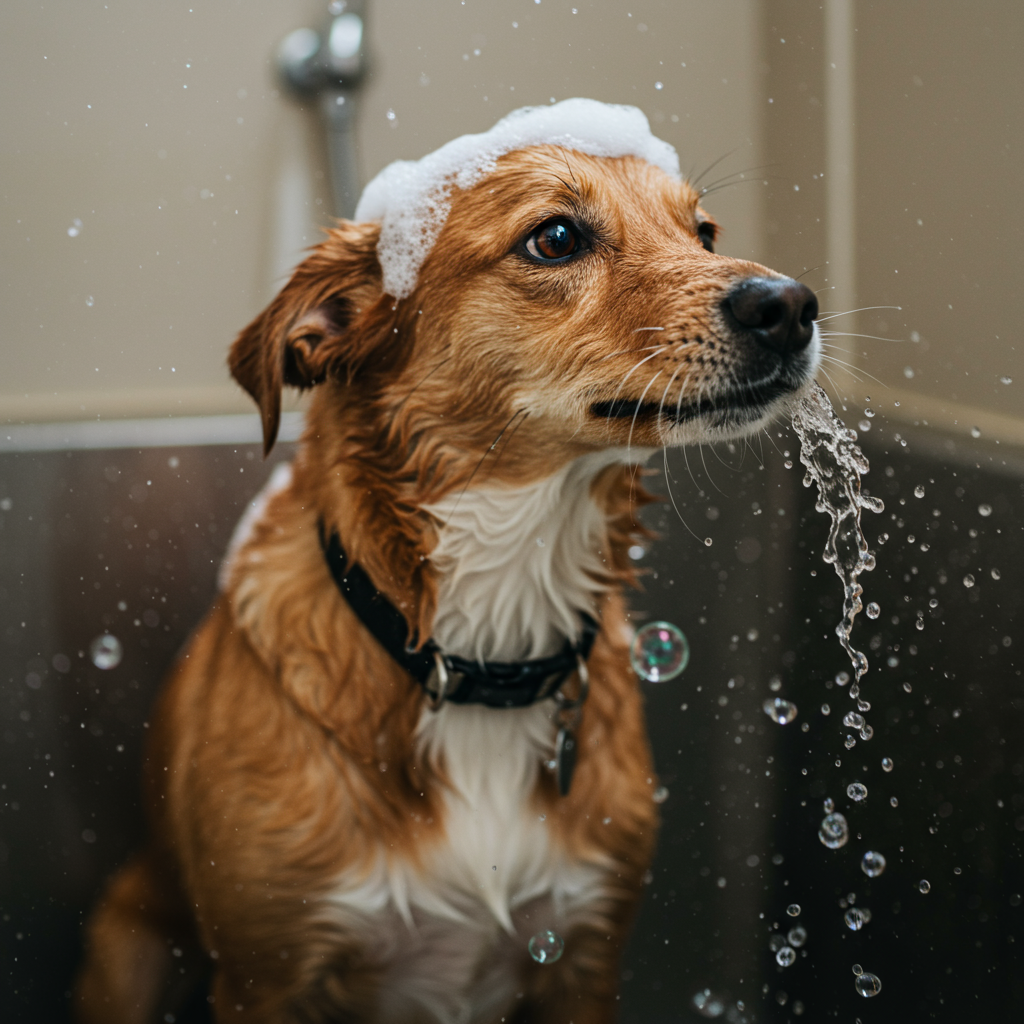
Why Your Dog’s Shampoo Matters More Than Most Owners Realize
Most dog owners choose shampoo based on scent, price, or label claims. What most labels don’t explain is how the cleanser type and pH of a shampoo directly determines whether it supports or damages the skin barrier with every use.
Dog skin ranges from pH 6.2 to 7.5 — significantly more neutral than human skin at pH 5.5. Standard human shampoos and many mass-market dog shampoos are formulated for human pH. Applied to a dog, they disrupt the acid mantle — the thin protective film that is the skin’s first defense against bacteria, allergens, and moisture loss. The post-bath scratching, dull coat, and recurring hotspots that so many owners chalk up to allergies are often the direct result of this pH disruption happening bath after bath.
Oat and aloe formulas designed specifically for dogs address this at the foundation — pH-calibrated for canine skin, free from barrier-stripping sulfates, and formulated with ingredients that actively support skin barrier integrity rather than compromising it.
For the full science on why the canine skin barrier matters: Why the Canine Skin Barrier Matters More Than Most Dog Owners Realize
The Science Behind Colloidal Oatmeal for Dogs
Not all oatmeal in dog shampoos is the same. Colloidal oatmeal — whole-grain oats ground into a micro-fine powder — is fundamentally different from oat protein, the cheaper processed derivative used in many budget formulas. The FDA recognized colloidal oatmeal as an over-the-counter skin protectant in 2003 based on its demonstrated efficacy. Oat protein carries no such recognition.
Here’s what colloidal oatmeal actually does biologically:
Avenanthramides reduce the itch-scratch cycle at the cellular level. These antioxidants found exclusively in oats significantly reduce the release of pro-inflammatory cytokines — the signaling molecules that drive itching and skin inflammation. Clinical research published in PubMed shows significant improvements in skin dryness, scaling, and itch intensity when colloidal oatmeal is applied with adequate contact time. This is not a surface effect — it works at the inflammatory pathway level.
Beta-glucans modulate immune response at the skin surface. For dogs with chronic skin conditions driven by immune overresponse — atopic dermatitis, environmental allergies, recurring hotspots — beta-glucans help regulate the inflammatory response that keeps these conditions active. Repeated use with a colloidal oatmeal formula progressively supports a calmer, more stable skin immune environment.
Saponins provide gentle natural cleansing. Oats naturally contain saponins that lift dirt, dander, and environmental allergens from the coat and skin without synthetic detergents. This allows effective cleaning at gentler surfactant levels — preserving the skin lipid layer that standard detergent shampoos strip.
The mucilaginous film protects skin for days after bathing. Given the critical 5-10 minutes of contact time before rinsing, colloidal oatmeal forms a physical protective film on the skin surface that locks in hydration and creates a barrier against environmental allergens. This film persists after rinsing — which is why dogs bathed with proper colloidal oatmeal formulas show reduced irritation for days afterward, not just during the bath.
The Science Behind Aloe Vera for Dogs
Aloe vera barbadensis leaf juice — particularly in organic whole-leaf form as a primary base ingredient — provides documented biological benefits well beyond simple moisturizing.
Anti-inflammatory pathway inhibition. Aloe contains acemannan, aloesin, and bradykininase that inhibit prostaglandin production and other inflammatory pathways. NIH research confirms that aloe vera inhibits inflammatory pathways, improves the wound healing process, and reduces skin redness. For dogs with inflamed skin from hotspots, seasonal allergies, or barrier disruption, aloe addresses the inflammation at the cellular source.
Humectant hydration that lasts. The polysaccharides in aloe — particularly mucopolysaccharides — act as natural humectants, attracting and binding moisture to the skin surface. When aloe is used as a primary base ingredient rather than a trace addition, this hydrating mechanism is meaningful and lasting — not just cosmetic moisture that evaporates quickly.
Immediate cooling relief. The evaporative cooling effect of aloe on application provides immediate sensory relief from hot, irritated skin — reducing the post-bath scratching that occurs when inflamed skin contacts air. This immediate comfort response is particularly noticeable in dogs with active hotspots or acute allergic reactions.
Wound healing acceleration. Aloe stimulates fibroblast activity and collagen synthesis, supporting faster recovery of compromised skin barrier integrity. For dogs whose barrier has been degraded by repeated inflammation or harsh shampoo use, this healing support reduces the time needed for the skin to recover its protective function.
Who Benefits Most From Oat and Aloe Dog Shampoo
- Dogs with seasonal environmental allergies — weekly bathing with a barrier-preserving formula removes accumulated pollen, grass, and dust allergens before they can penetrate the skin and trigger immune responses. With colloidal oatmeal and aloe, this can be done frequently without the barrier damage that standard detergent shampoos cause.
- Dogs with recurring hotspots — hotspots are often secondary to barrier disruption that allows bacteria to establish on skin that can no longer adequately defend itself. Colloidal oatmeal and aloe address both the inflammation and the barrier compromise that allows hotspots to keep recurring.
- Senior dogs with dry or thinning coats — sebaceous gland output naturally decreases with age, making senior dogs increasingly dependent on shampoo formulas that support rather than strip the limited natural oils their skin still produces.
- Dogs with chronic dry or flaky skin — the combination of colloidal oatmeal’s moisture-locking film and aloe’s humectant hydration directly addresses transepidermal water loss — the primary mechanism behind dry, flaky skin.
- Ranch, outdoor, and working dogs — high environmental allergen exposure combined with frequent bathing needs requires a formula designed for repeated use without cumulative barrier damage.
- Dogs that scratch more after baths than before — the most reliable indicator that the current shampoo is disrupting the barrier. Switching to a sulfate-free, pH-calibrated formula typically resolves post-bath scratching within a few washes.
How to Use Oat and Aloe Shampoo for Maximum Benefit
The difference between surface cleaning and genuine therapeutic benefit comes down to one factor most owners skip: contact time.
- Step 1 — Wet thoroughly with warm water. Never hot — heat opens follicles aggressively and can worsen inflammation in already-irritated skin.
- Step 2 — Apply and massage into the skin. Work the shampoo down through the coat until it reaches the skin surface. Focus on common hotspot areas — paws, belly, armpits, groin — where allergens accumulate and moisture gets trapped.
- Step 3 — Wait 5-10 minutes. This is the critical step. Colloidal oatmeal needs this time to form its protective mucilaginous film. Aloe vera needs this time to penetrate deeper skin layers and deliver its anti-inflammatory compounds. Rinsing immediately provides surface cleaning without the therapeutic benefit — essentially wasting the most valuable part of a quality formula.
- Step 4 — Rinse thoroughly. Ensure no residue remains — dried shampoo residue of any kind can cause irritation regardless of how gentle the formula is.
What to Look For When Choosing an Oat and Aloe Dog Shampoo
Not all oat and aloe shampoos are formulated equally. Here’s how to evaluate what you’re actually getting:
- Colloidal oatmeal — not oat protein. Check the ingredient list specifically. “Oatmeal” on the label may mean either form. Colloidal oatmeal should be listed as “colloidal oatmeal” or “avena sativa kernel flour.” Oat protein is significantly less effective.
- Organic aloe vera as a primary base — not a trace ingredient. If water is the first ingredient and aloe is near the end of the list, the aloe concentration is too low to produce meaningful benefit. Look for “organic aloe barbadensis leaf juice” near the top of the ingredient list.
- Sulfate-free and soap-free cleansing system. Sodium Lauryl Sulfate and Sodium Laureth Sulfate are the primary barrier-stripping agents in standard shampoos. Their absence is essential for a formula suitable for regular use.
- pH-balanced for canine skin. Dog skin ranges from pH 6.2-7.5. Products that don’t specify canine pH calibration may be formulated for human pH — which disrupts the acid mantle even at low use frequency.
- No artificial fragrances, parabens, or synthetic dyes. These serve no therapeutic purpose and are common sensitizers in dogs with reactive skin.
- Made in the USA in a regulated facility. Manufacturing standards directly affect formula consistency and ingredient quality.
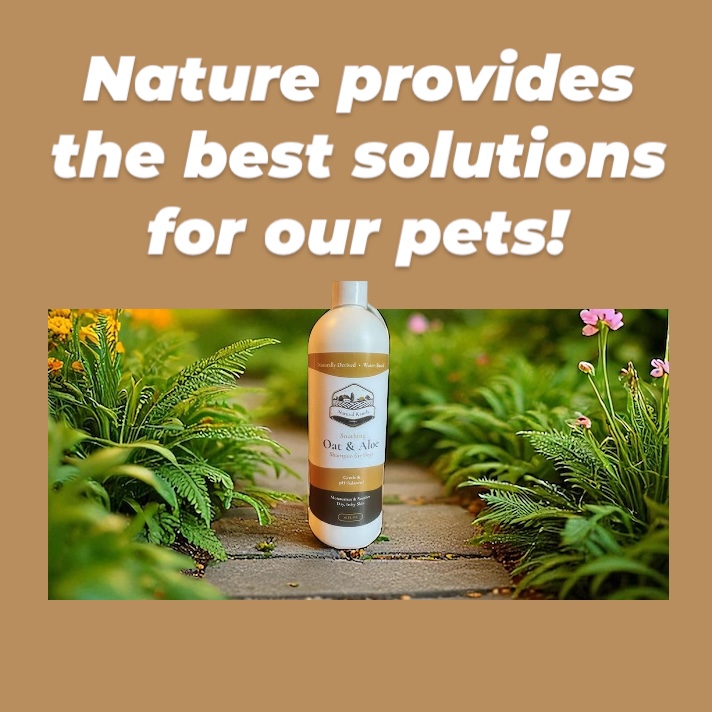
Natural Ranch Oat and Aloe Dog Shampoo
Natural Ranch Oat and Aloe Dog Shampoo is built around these exact standards — concentrated, nutrient-dense, and formulated to meet every criterion above. Organic aloe vera barbadensis leaf juice as a primary base rather than water. Whole-grain colloidal oatmeal rather than oat protein. Plant-based, soap-free, sulfate-free cleansing system. pH-calibrated for canine skin. No sulfates, parabens, or synthetic anything. Made in the USA.
The 5-10 minute contact time rule applies here — and the formula is designed to make that wait worthwhile. The colloidal oatmeal forms its protective film. The aloe penetrates and hydrates. The result is measurable improvement in skin comfort and coat quality that lasts for days after the bath — not just while the dog is in the tub.
→ See Natural Ranch Oat and Aloe Dog Shampoo — $18.99
The Inside-Out Approach for Chronic Skin Issues
For dogs with persistent skin problems, topical shampoo addresses the external environment. The most complete approach combines this with internal nutritional support that rebuilds the skin barrier from within — Omega-3 fatty acids for lipid layer production, Biotin for keratin synthesis, and Zinc for skin cell repair and immune regulation.
The Skin and Coat Defense Duo pairs Oat and Aloe Shampoo with the Natural Ranch Daily Multivitamin — addressing the itch cycle from both directions simultaneously.
→ See the Skin and Coat Defense Duo
For the full science on over-bathing and skin barrier disruption: Are You Over-Bathing Your Dog? What It Does to Their Skin
For the detailed ingredient science behind each compound: Why Oat and Aloe Help Calm Irritated Dog Skin
Is oat and aloe shampoo good for dogs?
How often can I use oat and aloe shampoo on my dog?
Why does my dog scratch more after a bath?
Is colloidal oatmeal the same as regular oatmeal for dogs?
Can I use oat and aloe shampoo on a puppy?
How long should I leave oat and aloe shampoo on my dog?
References
Marsella R., et al. “Current Evidence on the Use of Colloidal Oatmeal in Veterinary Dermatology.” Veterinary Dermatology.
Pavicic T., et al. “Colloidal Oatmeal in Dermatology.” Journal of Drugs in Dermatology.
PubMed. “Extracts of colloidal oatmeal diminished pro-inflammatory cytokines in vitro showing significant clinical improvements in skin dryness, scaling, and itch intensity.” PMID: 25607907.
NIH National Library of Medicine. “Aloe vera can inhibit inflammatory pathways, improve the wound healing process, and reduce skin redness.” PMC6330525.
Surjushe A., et al. “Aloe Vera: A Short Review.” Indian Journal of Dermatology.
Scott D., Miller W., Griffin C. Muller and Kirk’s Small Animal Dermatology.
FDA. Colloidal oatmeal recognized as an over-the-counter skin protectant active ingredient. 2003.