Why the Canine Skin Barrier Matters More Than Most Dog Owners Realize
Most dog owners think about their dog’s skin only when something goes visibly wrong — a hotspot appears, itching becomes constant, the coat loses its shine. By the time these signs are obvious, the underlying problem has usually been developing for weeks or months. The system that was supposed to prevent these issues — the canine skin barrier — had already been quietly failing.
The canine skin barrier is one of the most important and most overlooked aspects of dog health. It is not simply a covering. It is an active biological system that determines your dog’s vulnerability to allergies, infections, moisture loss, and chronic inflammation. Understanding how it works — and what damages it — changes how you approach every grooming decision, every supplement choice, and every recurring skin problem your dog experiences.
What the Canine Skin Barrier Actually Is
The skin and coat form the largest organ in dogs, comprising around 10-15% of total body weight. The skin performs multiple simultaneous functions — physical barrier against environmental irritants, allergens, bacteria and fungi, temperature regulation through hair follicle positioning and blood flow, immune surveillance through specialized cells that identify and respond to pathogens, and sensory function through nerve endings that detect heat, cold, pressure, and pain.
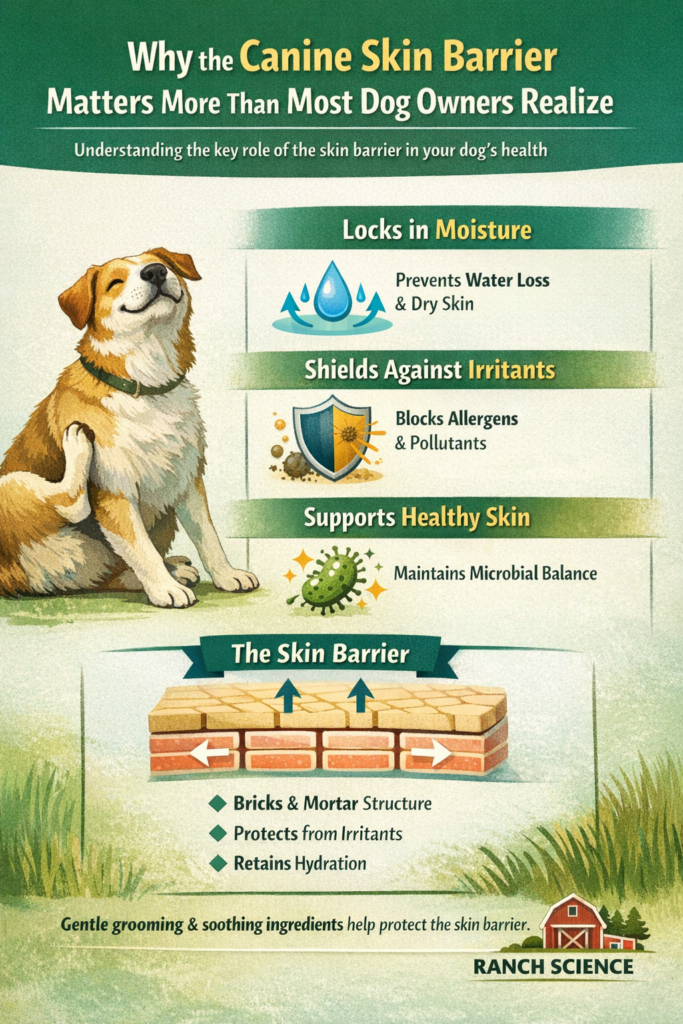
The canine skin barrier’s protective function is concentrated in the outermost layer — the stratum corneum. This layer is composed of flattened, protein-rich cells (corneocytes) surrounded by a lipid matrix — a complex mixture of ceramides, free fatty acids, and cholesterol that fills the spaces between cells like mortar between bricks. This lipid matrix is the physical foundation of barrier function.
The stratum corneum performs two primary functions simultaneously. It limits transepidermal water loss — preventing moisture from evaporating out of the skin. And it limits allergen and irritant penetration — preventing environmental substances from entering the deeper skin layers where immune cells respond to them. When both functions are working the skin maintains its own moisture, resists environmental triggers, and supports healthy coat growth. When either function fails the problems cascade quickly.
The Acid Mantle — The Skin’s Chemical Defense Layer
Beneath the surface of the stratum corneum lies the acid mantle — a thin film of natural oils, amino acids, and lactic acid that maintains the skin’s surface pH. Dog skin ranges from pH 6.2 to 7.5 — significantly more alkaline than human skin at pH 5.5. This pH range supports the specific beneficial microbial populations that colonize healthy dog skin, inhibits the growth of pathogenic bacteria and fungi, and maintains the enzymatic activity that drives normal skin cell renewal.
The acid mantle is the first thing damaged by inappropriate grooming products. Shampoos formulated for human skin at pH 5.5 disrupt the canine acid mantle with every application — shifting the surface environment toward alkalinity that favors pathogenic microbial growth over beneficial populations. Sulfate-based detergents in standard shampoos strip the natural oils that maintain acid mantle chemistry. The post-bath scratching that many owners notice is often not a reaction to the shampoo ingredients — it is the skin responding to the acid mantle disruption that occurs regardless of which shampoo is used if it isn’t pH-calibrated for canine skin.
What Happens When the canine Skin Barrier Is Compromised
Skin barrier compromise is not a single event — it is a progressive deterioration that creates a worsening cycle of vulnerability. Understanding this cycle explains why so many chronic skin conditions in dogs seem to compound over time despite treatment.
Moisture loss accelerates. When the lipid matrix is disrupted — through harsh detergents, nutritional deficiency, or inflammation — the skin loses moisture more rapidly. Dry, dehydrated skin cells shrink and crack, creating microscopic gaps in the barrier surface that increase permeability to allergens and bacteria. The skin becomes increasingly reactive as more of these entry points develop.
Allergen penetration increases. A healthy barrier keeps environmental allergens — pollen, dust mites, grass proteins — on the skin surface where they can be removed by bathing. A compromised barrier allows these allergens to penetrate into the dermis where immune cells react to them. The same allergen exposure that produces no reaction in a dog with an intact barrier produces significant itching and inflammation in a dog whose barrier is compromised — which is why two dogs in the same environment can have completely different allergy profiles.
Bacterial colonization increases. The intact barrier limits Staphylococcus bacteria to controlled surface populations that don’t produce infection. Barrier compromise allows these normally harmless bacteria to establish in the compromised tissue, producing the secondary bacterial infections — pyoderma, hotspots — that are almost always secondary to underlying barrier disruption rather than primary infections in their own right.
The itch-scratch cycle establishes. Barrier compromise creates itching. Scratching causes physical trauma to the already-compromised barrier. The trauma worsens the barrier damage, increasing allergen penetration and bacterial access. The increased allergen penetration and bacterial activity increases itching. The cycle reinforces itself — which is why dogs with chronic skin problems tend to get progressively worse over time without intervention that addresses the barrier itself, not just the symptoms.
What Damages the Canine Skin Barrier
Inappropriate Grooming Products
Sulfate-based shampoos (Sodium Lauryl Sulfate, Sodium Laureth Sulfate) are the most common external cause of skin barrier damage in dogs. They strip the lipid matrix that holds the stratum corneum together — removing the natural ceramides and fatty acids that the barrier depends on for structural integrity. Used repeatedly even at monthly frequency, they progressively degrade barrier function in ways that accumulate over months and years.
pH mismatch compounds this — shampoos formulated for human pH 5.5 disrupt the canine acid mantle regardless of their cleanser type. The combination of sulfate-based cleansers at the wrong pH is the most damaging grooming scenario for canine skin barrier health.
For the full science on over-bathing and barrier damage: Are You Over-Bathing Your Dog? What It Does to Their Skin
Nutritional Deficiencies
The lipid matrix of the stratum corneum is produced by the skin from dietary fatty acids. Without adequate omega-3 and omega-6 fatty acids in appropriate ratios, the skin cannot maintain the lipid matrix that barrier function depends on. Zinc deficiency impairs skin cell repair and turnover. Biotin deficiency weakens keratin — the structural protein of the skin surface. Vitamin E deficiency removes antioxidant protection from skin cells under oxidative stress.
Dogs on high-carbohydrate, grain-heavy commercial diets deficient in quality animal protein and essential fatty acids often show barrier compromise as one of the earliest signs of nutritional inadequacy — before other health markers change detectably.
Chronic Inflammation
Allergic inflammation — whether environmental, food-driven, or contact — disrupts the lipid matrix through inflammatory mediators that alter lipid synthesis and increase skin cell turnover beyond the rate at which the barrier can maintain itself. Each inflammatory episode leaves the barrier more compromised than it was before. This is why atopic dogs show progressively worsening barrier function year over year without intervention — the inflammation itself is degrading the structure that protects against further inflammation.
Environmental Factors
Low environmental humidity accelerates transepidermal water loss — the rate at which moisture evaporates through the stratum corneum. Dogs in dry climates or forced-air heated indoor environments during winter lose moisture from the skin faster than the barrier can compensate, producing the seasonal dry skin and increased itching that owners commonly observe in winter months.
What Supports and Restores the Canine Skin Barrier
pH-Balanced Sulfate-Free Grooming
A pH-balanced, sulfate-free shampoo formulated specifically for canine skin pH is the single most impactful external intervention for dogs with barrier compromise. It removes environmental allergens and surface debris while preserving the acid mantle and the lipid matrix rather than stripping them. For dogs with environmental allergies requiring frequent bathing, this distinction determines whether regular washing reduces their allergen burden or compounds their barrier damage.
Colloidal oatmeal in the formula adds active barrier support — forming a protective mucilaginous film on the skin surface that locks in moisture and buffers environmental allergens. Organic aloe vera inhibits inflammatory pathways and provides humectant hydration. Together they address both the moisture retention and allergen buffering functions of the barrier during and after bathing.
→ See Natural Ranch Oat and Aloe Dog Shampoo
For the full science on how colloidal oatmeal and aloe support the barrier: Why Oat and Aloe Help Calm Irritated Dog Skin
Nutritional Foundation From Within
The canine skin barrier’s structural integrity is ultimately determined by the nutritional inputs available for its production and ongoing maintenance. Omega fatty acids for lipid matrix production. Zinc for skin cell repair and immune regulation at the skin surface. Biotin for keratin synthesis. Vitamin E for antioxidant protection of skin cell lipids. Vitamin A for normal skin cell differentiation and turnover. Adequate animal protein for collagen synthesis and tissue repair.
A daily multivitamin addressing all of these foundations supports the barrier from within — complementing topical grooming support with the internal nutritional architecture that the barrier needs to maintain itself between baths and recover after inflammatory episodes.
→ See the Skin and Coat Defense Duo — Shampoo plus Daily Multivitamin
For the complete guide to skin health nutrition: Dog Skin Health: A Complete Guide to Causes, Nutrition, and Long-Term Support
Allergen Load Reduction
For dogs with environmental allergies, reducing the allergen load the barrier has to defend against reduces the inflammatory stimulus that progressively degrades it. Weekly bathing during high pollen seasons removes accumulated environmental allergens before they penetrate. Wiping paws and belly after outdoor time reduces ground-level allergen exposure between baths. Year-round flea prevention removes flea saliva — one of the most potent allergic triggers — from the equation entirely for sensitized dogs.
Early Warning Signs of the Canine Skin Barrier Compromise
Barrier compromise produces early signals worth identifying before the obvious symptoms develop:
- Coat losing its shine or feeling coarser than usual — one of the earliest indicators of lipid matrix compromise
- Increased scratching after bathing — the clearest signal that the grooming product is disrupting rather than supporting the barrier
- Mild dandruff appearing between baths — early transepidermal water loss indicating barrier permeability
- Skin that feels less supple and more papery than usual under the coat
- Paw licking that’s becoming habitual — often the earliest behavioral sign of environmental allergen penetration in susceptible dogs
- Small red bumps on the belly or groin — early superficial bacterial colonization of compromised barrier areas
- Seasonal worsening that’s getting more severe each year — progressive barrier degradation from cumulative inflammatory episodes
For the full guide on why hotspots develop as a secondary consequence of barrier compromise: Why Does My Dog Keep Getting Hotspots? The Real Causes and How to Stop the Cycle
For the complete allergy management guide connecting barrier health to allergen management: Dog Allergies: Seasonal vs Food vs Contact — How to Tell the Difference
What is the canine skin barrier?
The canine skin barrier is the outermost layer of the skin — the stratum corneum — composed of flattened protein-rich cells surrounded by a lipid matrix of ceramides, fatty acids, and cholesterol. It performs two primary functions: limiting transepidermal water loss to maintain skin hydration, and limiting allergen and irritant penetration to protect the deeper skin layers where immune cells respond. When intact it maintains healthy skin function. When compromised it creates a cascade of moisture loss, allergen penetration, bacterial colonization, and progressive inflammation.
What causes dog skin barrier damage?
The most common causes of canine skin barrier damage are sulfate-based shampoos that strip the lipid matrix, pH-mismatched grooming products that disrupt the acid mantle, nutritional deficiencies in omega fatty acids, zinc, biotin, and vitamin E that impair lipid matrix production, chronic allergic inflammation that degrades barrier structure through inflammatory mediators, environmental factors like low humidity that accelerate transepidermal water loss, and repeated self-trauma from scratching that physically disrupts barrier integrity.
How do I know if my dog’s skin barrier is compromised?
Early signs include coat losing its shine or feeling coarser than usual, increased scratching after bathing, mild dandruff between baths, paw licking becoming habitual, small red bumps on the belly or groin, and seasonal allergy symptoms that worsen progressively each year. More obvious signs include hotspots, recurring bacterial or yeast skin infections, chronic itching that doesn’t respond to topical treatment, and skin that feels dry and papery under the coat. The key indicator is whether problems keep recurring despite treatment — recurring skin problems almost always indicate ongoing barrier compromise rather than isolated incidents.
What pH should dog shampoo be?
Dog skin ranges from pH 6.2-7.5 — significantly more alkaline than human skin at pH 5.5. Shampoos formulated for human pH disrupt the canine acid mantle with every use, regardless of other ingredient quality. A pH-balanced dog shampoo should be specifically formulated and tested for the canine pH range. The post-bath scratching that many owners observe is often a direct result of acid mantle disruption from pH-mismatched shampoo — occurring even when the shampoo contains high-quality ingredients if it isn’t calibrated for canine skin pH.
Can nutrition improve a dog’s skin barrier?
Yes — significantly. The skin barrier’s lipid matrix is produced from dietary fatty acids. Without adequate omega-3 and omega-6 fatty acids in appropriate ratios, the skin cannot maintain the structural foundation that barrier function depends on. Zinc supports skin cell repair. Biotin supports keratin synthesis. Vitamin E provides antioxidant protection for skin cell lipids. Vitamin A supports normal skin cell differentiation. A daily multivitamin addressing all of these foundations supports the barrier from within — complementing topical grooming support with the internal nutritional architecture the barrier needs to maintain itself.
Why does my dog’s skin keep getting worse each year?
Progressive worsening of skin problems year over year is one of the most consistent signs of cumulative skin barrier damage. Each allergic episode causes inflammation that degrades the lipid matrix and disrupts tight junctions between skin cells. Each infection causes physical damage to the barrier surface. Each inappropriate grooming cycle strips more lipid matrix. Without intervention that addresses barrier integrity — appropriate pH-balanced grooming, nutritional support for lipid matrix production, and allergen load reduction — the cumulative damage compounds season after season.
References
VCA Animal Hospitals. “The Importance of Your Pet’s Skin and Coat and the Role of Diet.” vcahospitals.com.
PetMD Editorial. “The Impact of Nutrition on Dog Skin Conditions.” September 2025.
Marsella R., et al. “Current Evidence on the Use of Colloidal Oatmeal in Veterinary Dermatology.” Veterinary Dermatology.
PubMed. “Extracts of colloidal oatmeal diminished pro-inflammatory cytokines in vitro.” PMID: 25607907.
Olivry T., et al. “Treatment of canine atopic dermatitis: 2015 updated guidelines.” BMC Veterinary Research. 2015.
National Research Council. Nutrient Requirements of Dogs and Cats. National Academies Press. 2006.
Scott D., Miller W., Griffin C. Muller and Kirk’s Small Animal Dermatology.