
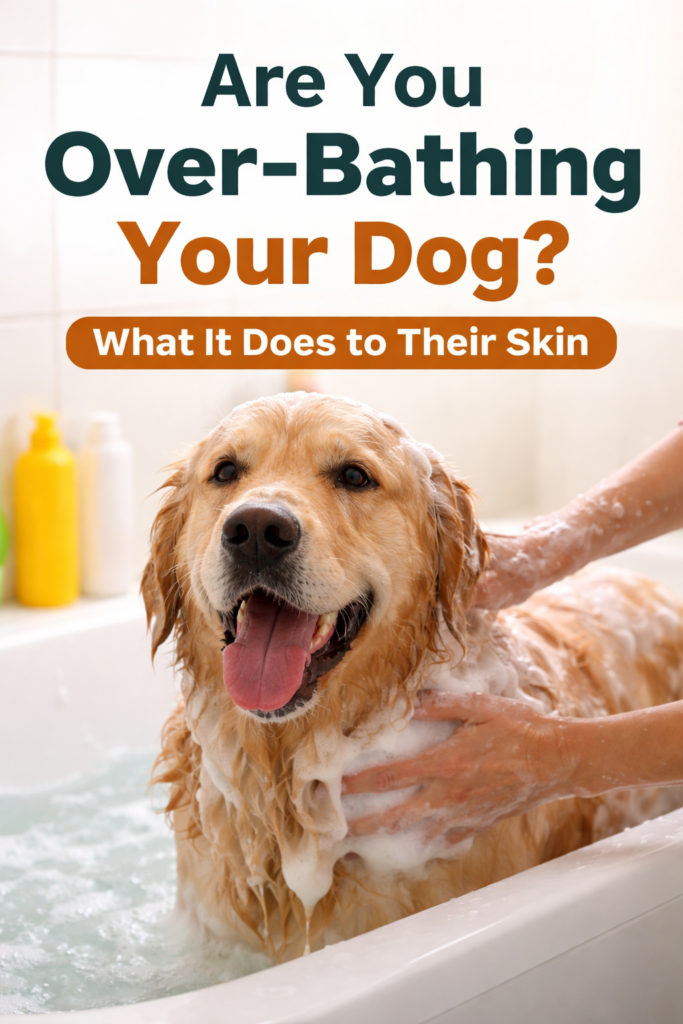
Are You Over-Bathing Your Dog? What It Does to Their Skin
Over-bathing your dog is one of the most common and least recognized causes of chronic skin problems. Most owners who bathe their dogs frequently do so with the best intentions — cleaner coat, less odor, better hygiene. But bathing too often, particularly with the wrong shampoo, can progressively damage the very system that keeps your dog’s skin healthy between baths.
Understanding what over-bathing actually does to canine skin — and how to find the right frequency for your specific dog — helps you make grooming decisions that support skin health rather than quietly undermining it.
What Over-Bathing Does to Your Dog’s Skin
The canine skin surface is covered in a thin layer of natural lipids — oils produced by sebaceous glands that lubricate the coat, maintain moisture in the skin, and form a critical part of the skin’s protective barrier. This lipid layer is not cosmetic. It’s functional. It limits the penetration of allergens and irritants, prevents transepidermal water loss, and supports the microbial balance that keeps opportunistic bacteria and yeast from establishing on the skin surface.
When a dog is bathed — particularly with detergent-based shampoos — these lipids are removed. The skin’s sebaceous glands produce new oil to replace what was lost, but this process takes time. In a dog bathed infrequently, the skin has time to fully restore its lipid layer between baths. In a dog bathed too frequently, sebum is repeatedly stripped before it can be adequately replaced.
The result over time: a progressively more compromised skin barrier — drier, more permeable, more reactive to environmental triggers, and more vulnerable to secondary infection from bacteria and yeast that the intact barrier would have kept in check.
For the full science on why the canine skin barrier matters: Why the Canine Skin Barrier Matters More Than Most Dog Owners Realize
Signs You May Be Over-Bathing Your Dog
These signs don’t always appear immediately after a single bath — they develop gradually as the skin barrier becomes progressively more compromised over repeated washing cycles.
- Post-bath scratching that lasts more than an hour — some scratching immediately after a bath is normal as the dog dries. Scratching that persists for hours or intensifies after every bath indicates the shampoo is disrupting the barrier rather than supporting it.
- Dry or flaky skin between baths — white or gray flakes visible in the coat between washes indicate the skin is losing moisture faster than it can be replaced. This is transepidermal water loss — a hallmark of barrier disruption.
- Dull, brittle, or coarse coat texture — a coat that loses its shine and softness over time despite regular washing suggests the lipid layer that gives coat its healthy appearance is being chronically stripped.
- Increased skin odor shortly after bathing — counterintuitively, over-bathing can worsen odor. When the lipid layer is stripped, the skin microbiome becomes imbalanced, allowing odor-producing bacteria and yeast to proliferate more rapidly between washes.
- Redness or irritation around common hotspot areas — paws, armpits, groin, and belly are particularly vulnerable to barrier disruption. Recurrent hotspots in a dog bathed frequently warrant a closer look at grooming frequency and shampoo selection.
- Increased environmental allergy symptoms after grooming — a compromised barrier allows allergens to penetrate more easily. Dogs with seasonal allergies who are frequently bathed may actually show worse allergy symptoms because the barrier that would normally exclude pollen and dust has been weakened.
How Often Should You Bathe Your Dog? The Real Answer
There is no universal bathing frequency that works for every dog. The right answer depends on several factors specific to your dog — and the shampoo you’re using matters as much as the frequency.
Coat Type
Dogs with thick double coats — Huskies, Golden Retrievers, Border Collies — produce more natural oils and have more coat insulation between the skin surface and the environment. They generally tolerate less frequent bathing well and may only need bathing every 6-8 weeks in normal circumstances. Short-coated breeds with thinner hair may need bathing more frequently but are also more vulnerable to barrier disruption from over-washing.
Activity Level and Environmental Exposure
Ranch dogs, outdoor working dogs, and dogs with high environmental allergen exposure have a legitimate need for more frequent bathing — removing mud, debris, and accumulated allergens is genuinely beneficial. But the shampoo used needs to be able to handle frequent application without stripping the barrier each time. This is where sulfate-free, pH-balanced formulas become essential rather than optional.
Skin Condition
Dogs with diagnosed skin conditions — atopic dermatitis, seborrhea, recurrent yeast or bacterial infections — may actually benefit from more frequent therapeutic bathing, but with medicated or specifically formulated shampoos rather than standard grooming shampoos. Frequency recommendations for dogs with skin conditions should come from a veterinarian or veterinary dermatologist.
General Baseline Guidance
- Most healthy dogs with normal skin: Every 4-6 weeks
- Dogs with allergies bathing to remove environmental allergens: Weekly, but only with a barrier-preserving formula
- Active outdoor or ranch dogs: As needed for mud and debris, with a gentle formula designed for frequent use
- Dogs with skin conditions: Per veterinary recommendation
Why Shampoo Choice Matters as Much as Frequency
Two dogs bathed at the same frequency can have dramatically different skin outcomes depending on what shampoo is used. A dog bathed weekly with a sulfate-free, pH-balanced, barrier-supporting formula may have healthier skin than a dog bathed monthly with a detergent-based mass-market shampoo.
The key variables in shampoo selection for barrier preservation:
pH calibration — dog skin ranges from approximately pH 6.2-7.5, significantly more neutral than human skin at pH 5.5. Shampoos formulated for human pH disrupt the canine acid mantle even at low frequencies. A shampoo calibrated for canine pH preserves the barrier environment regardless of how often it’s used.
Cleanser type — sulfate-based cleansers (Sodium Lauryl Sulfate, Sodium Laureth Sulfate) strip lipids aggressively. Soap-free, plant-derived cleansers remove dirt and debris without the same barrier-stripping effect. For any dog bathed more than once a month, sulfate-free is not optional.
Active skin-supporting ingredients — whole-grain colloidal oatmeal forms a protective mucilaginous film on the skin surface during the 5-10 minute contact time, locking in hydration and providing a temporary barrier layer. Organic aloe vera soothes and hydrates skin on contact. Both ingredients work with the skin barrier rather than against it — making them particularly valuable in formulas used frequently.
For the full science on how oat and aloe support skin health during bathing: Why Oat and Aloe Help Calm Irritated Dog Skin
The 5-10 Minute Contact Time Rule
One of the most impactful and most overlooked aspects of bathing technique is contact time. Most owners apply shampoo and rinse within a minute or two. But therapeutic ingredients like colloidal oatmeal and aloe vera need time to penetrate and form their protective film on the skin surface.
Letting shampoo sit for 5-10 minutes before rinsing allows colloidal oatmeal to form its protective mucilaginous layer, aloe vera to hydrate deeper skin layers, and active ingredients to provide maximum benefit. Rinsing immediately delivers surface cleaning without the therapeutic benefit — essentially wasting the most valuable part of a quality shampoo.
For dogs with active skin irritation, allergies, or sensitivity, the contact time matters more than the frequency. A thorough 10-minute contact time bath every two weeks is more beneficial than a quick rinse every week.
The Inside-Out Approach to Skin Health
External shampoo addresses skin health from the outside — removing allergens, supporting barrier integrity, soothing irritation. For dogs with chronic skin issues, the most complete approach combines topical support with internal nutritional support that rebuilds the barrier from within.
Omega-3 fatty acids — particularly the EPA and DHA from marine sources like salmon — directly support skin barrier lipid production and reduce systemic inflammation that manifests as skin reactivity. Biotin supports keratin production for stronger coat. Zinc supports skin cell repair and immune function at the skin surface.
The Natural Ranch Skin and Coat Defense Duo combines Oat and Aloe Shampoo — barrier-preserving topical support — with the Daily Multivitamin powered by cold-pressed Canine Royal Oil for inside-out skin and coat nutrition.
→ See Natural Ranch Oat and Aloe Dog Shampoo
→ See the Skin and Coat Defense Duo
How often should you bathe a dog?
Most healthy dogs with normal skin benefit from bathing every 4-6 weeks. Dogs with environmental allergies may benefit from weekly bathing to remove allergens, but only with a sulfate-free, pH-balanced formula designed for frequent use. Active outdoor dogs can be bathed more frequently as needed. Dogs with skin conditions should follow veterinary recommendations. The shampoo used matters as much as frequency — a gentle barrier-preserving formula used weekly is less damaging than a detergent-based shampoo used monthly.
Can you bathe a dog too much?
Yes. Bathing too frequently — particularly with detergent-based shampoos — strips the natural lipid layer faster than sebaceous glands can replace it. Over time this degrades the skin barrier, causing dryness, increased allergen penetration, moisture loss, and greater susceptibility to bacterial and yeast infections. The signs develop gradually: post-bath scratching, dry or flaky skin, dull coat texture, and recurrent hotspots are all indicators that bathing frequency or shampoo selection needs adjustment.
What are signs of over-bathing in dogs?
Signs of over-bathing include post-bath scratching that lasts more than an hour, dry or flaky skin between washes, dull or brittle coat texture, increased skin odor shortly after bathing, redness or irritation in common hotspot areas, and worsening allergy symptoms. These signs develop gradually as the skin barrier becomes progressively compromised — a dog bathed too frequently may not show obvious signs immediately but will develop chronic skin sensitivity over time.
What type of shampoo is best for dogs with sensitive skin?
Shampoos formulated with whole-grain colloidal oatmeal, organic aloe vera, and plant-based soap-free cleansers are best for sensitive dogs. Colloidal oatmeal — not oat protein — forms a protective film on the skin surface that locks in hydration and provides a physical barrier against allergens. Aloe vera soothes and hydrates on contact. The formula should also be pH-balanced for canine skin (pH 6.2-7.5) and free from sulfates, parabens, and synthetic fragrances.
Why does my dog scratch more after a bath?
Post-bath scratching indicates the shampoo is disrupting the skin barrier rather than supporting it. Most mass-market shampoos use detergent-based cleansers that strip the natural lipid layer from the skin surface. Without this protective oil layer, the skin becomes dry and reactive, triggering scratching. Switching to a sulfate-free, pH-balanced formula typically resolves post-bath scratching within a few washes as the skin barrier begins to recover.
Is it OK to bathe a dog once a week?
Weekly bathing can be appropriate for dogs with environmental allergies who need regular allergen removal, but it requires a shampoo specifically designed for frequent use — sulfate-free, pH-balanced, and ideally containing colloidal oatmeal and aloe vera. Using a standard detergent shampoo weekly will progressively damage the skin barrier. The 5-10 minute contact time rule becomes especially important for weekly bathers — allowing therapeutic ingredients to penetrate and protect between wash cycles.
References
Marsella R., et al. “Current Evidence on the Use of Colloidal Oatmeal in Veterinary Dermatology.” Veterinary Dermatology.
Pavicic T., et al. “Colloidal Oatmeal in Dermatology.” Journal of Drugs in Dermatology.
Proksch E., et al. “The Skin: An Indispensable Barrier.” Experimental Dermatology.
Scott D., Miller W., Griffin C. Muller and Kirk’s Small Animal Dermatology.
PubMed. “Extracts of colloidal oatmeal diminished pro-inflammatory cytokines in vitro showing significant clinical improvements in skin dryness, scaling, and itch intensity.” PMID: 25607907.