Dog UTI vs Bladder Infection: What’s the Difference and Why It Matters
If you’ve searched “dog UTI” and “dog bladder infection” and gotten what looks like identical information, there’s a reason for that — and understanding it will help you have a much more productive conversation with your vet the next time your dog has urinary symptoms.
The short answer is that a bladder infection and a UTI are closely related but not exactly the same thing. The longer answer explains why the distinction matters for diagnosis, treatment, and long-term prevention — and why getting it wrong can lead to repeated antibiotic courses that don’t actually solve the underlying problem.
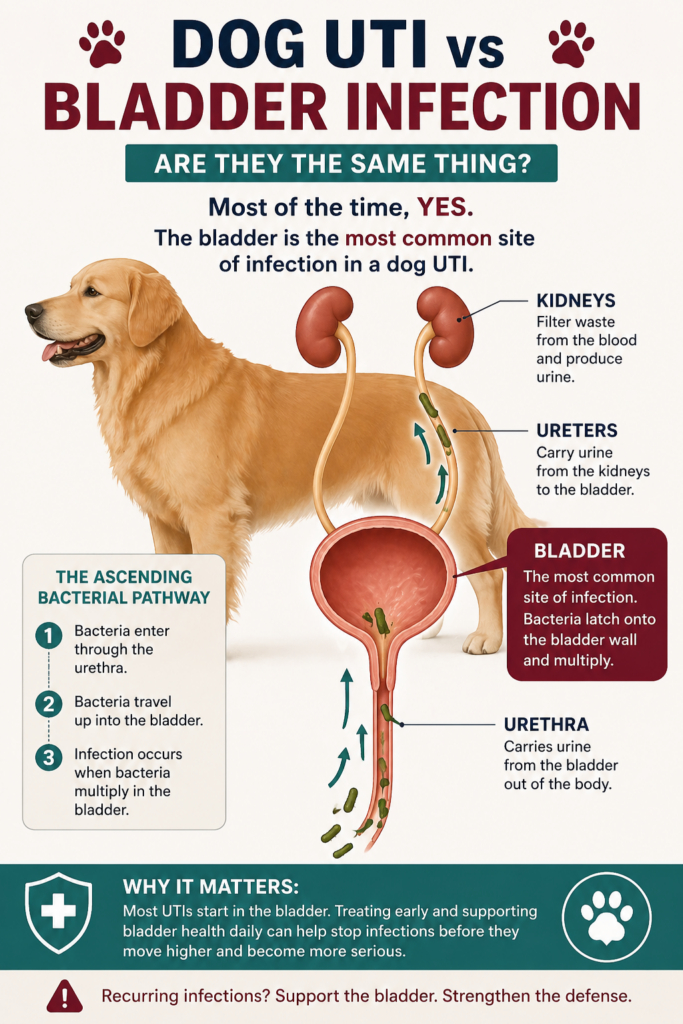
Dog UTI vs Bladder Infection: Are They the Same Thing?
The term UTI — urinary tract infection — refers to a bacterial infection anywhere in the urinary tract. While UTIs often refer to infection in the bladder (bacterial cystitis), infection could occur anywhere in the urinary tract from the urethra to the kidneys.
A bladder infection — medically called bacterial cystitis — is the most common type of UTI. The most common type of UTI in dogs is bacterial infection in the bladder. The term UTI usually refers to a bacterial bladder infection, since that’s the most common type of urinary tract infection.
So in everyday use, “UTI” and “bladder infection” are often used interchangeably — and for most dogs most of the time, they describe the same condition. But technically a UTI is the broader category and a bladder infection is the most common specific type within it.
The distinction becomes clinically important when the infection isn’t confined to the bladder — when it has spread upward to the kidneys (pyelonephritis) or downward to the urethra (urethritis). These are all UTIs but they require different diagnostic approaches and different treatment protocols.
What Causes a Dog Bladder Infection?
UTIs generally occur when bacteria enter the bladder from the external environment, evade the body’s immune defenses, and cause infection. E. coli is the most common bacteria identified in UTIs.
UTIs are often caused by bacteria that are typically found in or around the rectum, skin, or hair near the external urethral opening traveling through the urethra into the bladder. This ascending pathway — from the external environment upward through the urethra into the bladder — is why female dogs are significantly more susceptible than males. Female dogs have a shorter, wider urethra, giving bacteria a shorter distance to travel.
Once bacteria reach the bladder they can grow and reproduce, triggering the immune response that causes the symptoms dog owners recognize — urgency, straining, blood in urine, and discomfort. A UTI in dogs causes pain and swelling of the bladder, leading to symptoms like painful or bloody urination.
For the full science on how bacteria attach to the bladder wall and why this leads to recurring infections: How Bacteria Adhere to the Bladder Wall in Dogs (and Why Recurring UTIs Keep Coming Back)
Symptoms: Dog UTI vs Bladder Infection — What to Look For
Since a bladder infection is the most common form of UTI, the symptoms largely overlap. Here’s what to watch for and what each symptom typically indicates:
Symptoms of a Bladder Infection (Bacterial Cystitis)
- Frequent urination with small output — the most common sign. The inflamed bladder signals urgency even when little urine is present.
- Straining or pain during urination — dogs may vocalize, squat for extended periods, or show obvious discomfort
- Blood in the urine — pink, red, or brown-tinged urine indicates bladder wall irritation and inflammation
- Strong or unusual urine odor — bacterial presence changes the chemical composition of urine
- Accidents in a house-trained dog — urgency overwhelms the dog’s ability to hold it
- Excessive licking of the genital area — dogs self-soothe irritation they can’t otherwise address
- Cloudy urine — white blood cells and bacteria make urine appear turbid
Additional Symptoms That May Indicate Kidney Infection (Upper UTI)
When a UTI has spread beyond the bladder to the kidneys — a condition called pyelonephritis — additional systemic symptoms typically appear alongside the bladder symptoms:
- Fever — the body’s systemic response to a deeper infection
- Lethargy and significantly reduced energy
- Loss of appetite
- Vomiting or nausea
- Pain or sensitivity when touching the lower back or flank area
- Increased water consumption
These symptoms alongside urinary symptoms indicate a more serious infection requiring prompt veterinary attention. Left untreated, a UTI could go on to cause more serious illnesses such as a kidney infection in one or both kidneys.
Symptoms That Look Like a UTI But May Be Something Else
Several conditions produce symptoms that closely resemble a bladder infection but require different treatment entirely. A lot of the signs associated with UTIs, like frequent urination and bloody urine, also show up with other urinary conditions. UTIs require veterinary care for a definitive diagnosis and proper treatment.
Conditions that can mimic UTI symptoms include bladder stones (uroliths), bladder tumors, hormonal incontinence, interstitial cystitis, kidney disease, diabetes, and Cushing’s disease. This is why veterinary diagnosis — including urinalysis and often urine culture — is essential before antibiotic treatment, not after.
For a breakdown of how senior dogs experience these symptoms differently: Senior Dog Urinary Health: Why Older Dogs Are More Vulnerable
How Vets Diagnose a Dog UTI vs Bladder Infection
The diagnostic process is the same whether the suspected diagnosis is a UTI or specifically a bladder infection — because the vet needs to determine both whether infection is present and where in the urinary tract it is located.
Urinalysis
If your dog presents to your veterinarian with urinary signs, your veterinarian will first perform a urinalysis. There are several urinary tract disorders that can mimic the signs of a UTI, so it is important to do this test. The urinalysis reveals important information about the urine — including urine specific gravity, pH, the presence of bacteria, white blood cells, red blood cells, crystals, glucose, and ketones. Each of these gives the vet information about both the likely diagnosis and any underlying conditions.
Urine Culture and Sensitivity
A urinalysis can identify the presence of bacteria but not necessarily which bacteria or which antibiotics will effectively treat it. A urine culture grows the bacteria present in the sample and identifies the specific organism. Sensitivity testing then determines which antibiotics it responds to.
For dogs with recurring UTIs this step is essential — not optional. Empirical antibiotic prescribing without culture and sensitivity testing is one of the primary reasons recurring infections fail to resolve. The wrong antibiotic may suppress symptoms temporarily without fully clearing the infection, setting up the conditions for relapse.
Imaging
X-rays or ultrasound may be used to check for bladder stones, structural abnormalities, or signs of kidney involvement. Untreated UTIs may also cause dogs to develop struvite bladder stones. While not all bladder stones are related to infection, this specific type — which is quite common in dogs — is directly correlated with UTIs. Bladder stones can then predispose your dog to more UTIs, in addition to being incredibly painful.
For dogs with three or more UTIs in twelve months imaging is strongly recommended to rule out stones as a contributing factor before continuing antibiotic treatment cycles.
Treatment: Dog UTI vs Bladder Infection
Treatment for both conditions follows the same general approach with some important distinctions based on location and severity.
Uncomplicated bladder infection: A 5-7 day course of antibiotics selected based on culture and sensitivity results. Follow-up urinalysis 7-14 days after completing the course confirms full clearance rather than partial resolution.
Complicated or recurring UTI: If the case is complicated, antibiotic treatment is extended out for several weeks while the underlying or predisposing cause is also treated. Complicated cases include dogs with underlying health conditions, those with more than three UTIs in the past twelve months, and those with recent antibiotic use that may have influenced bacterial resistance patterns.
Kidney infection (pyelonephritis): Requires longer antibiotic courses — typically 4-6 weeks — and more frequent monitoring. Some dogs require hospitalization for intravenous antibiotics if the infection is severe.
For the full explanation of why antibiotics sometimes fail to prevent recurrence even when they clear the active infection: Why Antibiotics Sometimes Fail in Recurring Dog UTIs
When to Go to the Vet Immediately
Some urinary symptoms require same-day veterinary attention rather than watchful waiting:
- Straining without producing any urine — this may indicate a blockage, which is a medical emergency particularly in male dogs
- Visible blood in urine combined with lethargy or loss of appetite — may indicate kidney involvement or a more serious condition
- Complete inability to urinate — always an emergency requiring immediate veterinary care
- Fever, vomiting, or significant pain alongside urinary symptoms — suggests systemic infection beyond the bladder
- Symptoms in a dog with known diabetes, Cushing’s disease, or kidney disease — underlying conditions make UTI complications more likely and faster-developing
A UTI in a dog can be a veterinary emergency. If left untreated, they can cause life-threatening complications including pyelonephritis (kidney infection), sepsis, and kidney failure.
Prevention: What Reduces Risk of Both UTIs and Bladder Infections
Since bladder infections are the most common form of UTI, prevention strategies for both are largely the same. The goal is to maintain a urinary environment where bacteria have a harder time establishing — through consistent hydration, regular bathroom breaks, hygiene maintenance, and daily supplement support.
Hydration is the most fundamental prevention factor — dilute urine flushes bacteria more effectively and reduces chemical irritation to the bladder lining. Dogs on dry kibble diets are often chronically under-hydrated without their owners realizing it.
Cranberry PACs and D-Mannose address bacterial adhesion daily — the mechanism through which most bladder infections establish. These work through complementary pathways and are most effective with consistent daily use rather than reactive dosing when symptoms appear.
NAG and marshmallow root support the bladder lining and GAG layer that protect against bacterial attachment and chemical irritation — particularly important for dogs with a history of repeated infections.
Probiotics maintain the gut microbiome health that supports systemic immune function — including the immune cells lining the urinary tract that resist infection before it establishes.
For a complete daily prevention routine: Dog UTI Prevention: Daily Habits That Actually Matter
For a practical evaluation of which supplement ingredients and formulas actually address these mechanisms: Best Dog UTI Supplement: What to Actually Look For
Bladder Guard Soft Chews from Natural Ranch Products combines all of these prevention mechanisms in a single daily cold-pressed chew — cranberry PACs, D-Mannose, marshmallow root, NAG, pumpkin seed powder, Vitamin C, and probiotics — designed for consistent daily use as the foundation of long-term urinary health.
→ See Bladder Guard Soft Chews
→ See the Total Defense System
Is a dog UTI the same as a bladder infection?
A bladder infection (bacterial cystitis) is the most common type of UTI in dogs. UTI is the broader term referring to bacterial infection anywhere in the urinary tract — from the urethra to the kidneys. In everyday use the terms are often used interchangeably because most canine UTIs are bladder infections, but technically a UTI can involve other parts of the urinary tract as well.
What are the symptoms of a dog bladder infection?
The most common symptoms include frequent urination with small output, straining or pain during urination, blood in the urine, strong urine odor, accidents in a house-trained dog, excessive licking of the genital area, and cloudy urine. Additional symptoms like fever, lethargy, and loss of appetite alongside urinary symptoms may indicate the infection has spread to the kidneys.
How do vets diagnose a dog UTI vs bladder infection?
Vets typically start with a urinalysis to check for bacteria, blood cells, crystals, and other indicators. A urine culture and sensitivity test identifies the specific bacteria and which antibiotics will treat it effectively. Imaging like X-rays or ultrasound may be used to check for bladder stones or structural abnormalities. The diagnostic process is the same for both conditions since the vet needs to determine both whether infection is present and where in the urinary tract it is located.
Can a dog bladder infection go away without antibiotics?
No. Bacterial bladder infections require appropriate antibiotic treatment to clear. Without treatment the infection can worsen, spread to the kidneys, and potentially cause serious complications including sepsis and kidney failure. Supplements support the urinary environment but are not a treatment for active bacterial infections.
Why does my dog keep getting bladder infections?
Recurring bladder infections usually indicate an underlying factor — anatomical issues like a recessed vulva, systemic conditions like diabetes or Cushing’s disease, bacterial persistence or biofilm formation in the bladder, disrupted gut microbiome from repeated antibiotic courses, or inadequate daily prevention between treatment episodes. Dogs with three or more infections in twelve months should have a thorough diagnostic workup to identify the underlying cause.
What prevents dog bladder infections naturally?
The most effective prevention combines consistent hydration to flush the urinary tract and dilute urine, regular bathroom breaks to reduce bacterial exposure time in the bladder, hygiene maintenance around the genital area, and daily supplement support with cranberry PACs and D-Mannose for bacterial adhesion inhibition, NAG and marshmallow root for bladder lining support, and probiotics for immune function. None of these replace veterinary treatment for active infections.
References
Cornell University College of Veterinary Medicine. “Urinary Tract Infections.” vet.cornell.edu
PetMD Editorial. “UTI in Dogs: Signs, Causes, and Treatment.” petmd.com. Updated December 2025.
Vetster Editorial. “A Pet Owner’s Guide to Urinary Tract Infections in Dogs.” vetster.com. November 2025.
VCA Animal Hospitals. “Urinary Tract Infections (UTIs) in Dogs.” vcahospitals.com
Small Door Veterinary. “UTIs in Dogs.” smalldoorvet.com
Byron JK. “Urinary Tract Infection.” Veterinary Clinics of North America: Small Animal Practice. 2019.