
Omega-3 for Dogs: Why the Source Matters
Omega-3 for dogs fatty acids are one of the most consistently evidence-supported supplements in veterinary nutrition — and one of the most confusing to evaluate when shopping for a product. Fish oil, krill oil, flaxseed oil, algae oil, cranberry seed oil — every label claims omega-3 benefits. But the source determines what type of omega-3 is actually present, how well it converts to usable form in your dog’s body, how stable it is after opening, and what additional risks or benefits come alongside the omega-3 content.
Understanding the differences helps you make a choice that genuinely delivers the benefits omega-3 research supports rather than just checking the omega-3 box on your dog’s supplement routine.
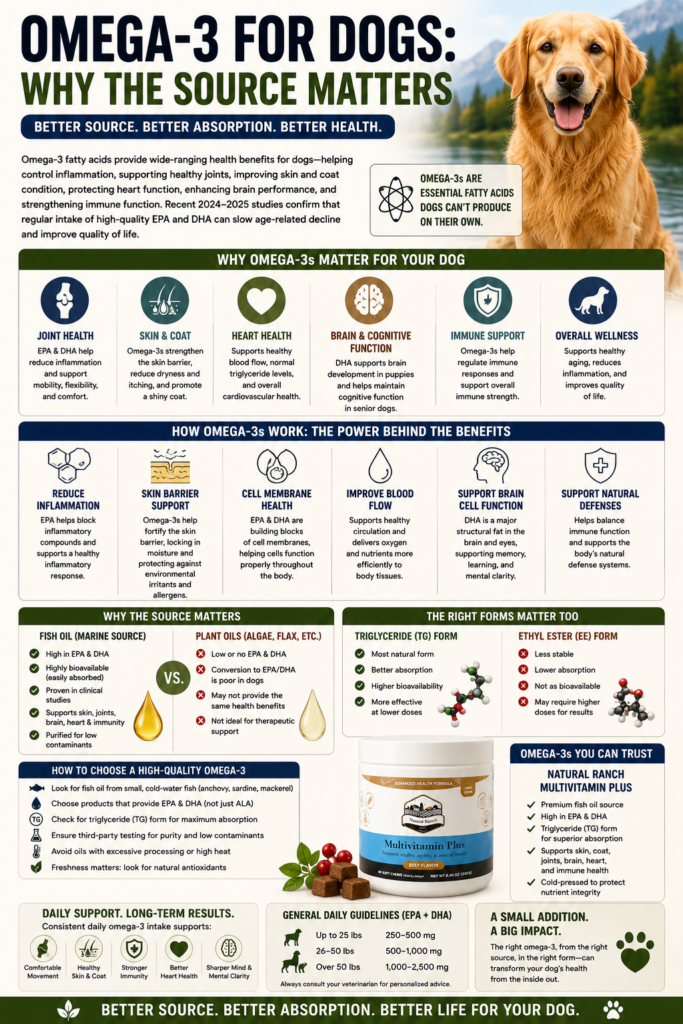
Why Omega-3 Fatty Acids Matter for Dogs
Omega-3 fatty acids provide wide-ranging health benefits for dogs — helping control inflammation, supporting healthy joints, improving skin and coat condition, protecting heart function, enhancing brain performance, and strengthening immune function. Recent 2024-2025 studies confirm that regular intake of high-quality EPA and DHA can slow age-related decline and improve quality of life, making omega-3 supplementation one of the most practically impactful additions to a senior dog’s routine.
The specific mechanisms behind these benefits are worth understanding because they explain why omega-3 source and form matter:
Skin barrier support. Not only does omega-3 make a dog’s coat healthy and shiny, it also helps fortify their skin barrier — which can help significantly for dogs with environmental allergies. The skin barrier’s lipid matrix depends on a continuous supply of fatty acids for structural maintenance. Omega-3 deficiency compromises this structure, increasing moisture loss and allergen penetration.
Anti-inflammatory effect. EPA and DHA act as anti-inflammatory agents — reducing the production of inflammatory compounds that drive joint pain, skin reactivity, and chronic disease progression. Research has shown that omega-3 fatty acids help treat canine arthritis, and a 2024 study found daily omega-3 supplementation improved pain scores and overall quality of life in dogs with joint conditions.
Kidney health. Omega-3 from quality sources helps support kidney health — vital for dogs with kidney disease or those at elevated risk from age or breed predisposition.
Brain and cognitive function. DHA aids in proper brain and eye development in puppies and may improve cognitive function in older dogs dealing with canine cognitive dysfunction — the progressive cognitive decline that affects many senior dogs.
Anxiety and neurological support. Fish oils rich in omega-3 fatty acids can help reduce anxiety due to their effect on neurotransmitters — helping regulate dopamine and serotonin to induce relaxation and decrease anxiety symptoms in dogs.
The Critical Distinction: ALA vs EPA and DHA
Before evaluating sources, one foundational distinction needs to be clear: not all omega-3 fatty acids are equivalent in their biological effects in dogs.
ALA (alpha-linolenic acid) — a short-chain omega-3 found in plant sources including flaxseed, canola, walnut, and soybean oils. ALA provides only indirect health benefits via its conversion to the longer-chain omega-3s EPA and DHA. Dogs have limited enzymatic capacity to convert ALA to EPA and DHA — conversion rates are low and variable. ALA-rich plant sources may appear attractive from cost or sustainability perspectives, but limited conversion to EPA and DHA in dogs can significantly reduce functional outcomes.
EPA (eicosapentaenoic acid) — a long-chain omega-3 with strong anti-inflammatory properties. EPA reduces the production of inflammatory compounds directly — no conversion required. It is the primary omega-3 behind the joint pain, skin barrier, and systemic inflammation benefits that omega-3 research in dogs consistently demonstrates.
DHA (docosahexaenoic acid) — a long-chain omega-3 essential for brain cell membrane structure, cognitive function, eye development, and neurological health. DHA is particularly important for puppies during development and for senior dogs experiencing cognitive decline.
The practical implication: when evaluating any omega-3 supplement for dogs, look for EPA and DHA content specifically — not just total omega-3. Many fish oils don’t contain the amount or type of omega-3s they claim, with ALA dominating the omega-3 profile in lower-quality products despite fish oil being theoretically an EPA and DHA source.
Omega-3 Sources Compared — What Each Delivers
Fish Oil — High EPA and DHA But With Significant Caveats
Fish oil is the most common and widely studied omega-3 source for dogs. It provides EPA and DHA directly — no conversion required — and has the strongest research base for the anti-inflammatory and skin barrier benefits that omega-3 supplementation produces in dogs.
The caveats are significant and worth knowing:
Oxidation and rancidity. Fish oil is highly prone to oxidation after opening — the unsaturated fatty acids that make it beneficial become pro-inflammatory as they oxidize. Rancid fish oil doesn’t just fail to deliver anti-inflammatory benefit — it actively promotes the inflammation it was intended to reduce. Fish oil requires refrigeration after opening and has a short shelf life once opened. The fishy smell many dog owners notice isn’t just odor — it’s often a sign of oxidative degradation.
Heavy metal contamination risk. Fish are higher on the food chain and bioaccumulate heavy metals — mercury, lead, cadmium — from their environment. Fish oil from non-distilled sources can carry these contaminants at concentrations that become relevant with long-term daily use. Third-party testing and molecular distillation are the quality standards to look for — but many fish oil products don’t disclose whether they’ve been tested or purified.
Omega ratio imbalance. Fish oil is heavily weighted toward omega-3 without meaningful omega-6 or omega-9 content. While supplementing omega-3 alongside a diet already high in omega-6 can help rebalance the ratio, fish oil alone doesn’t address the complete fatty acid profile that skin barrier lipid production and cellular health require.
Krill Oil — Better Absorption, Higher Cost
Krill oil provides EPA and DHA in phospholipid form — a structure that may improve absorption compared to the triglyceride form in most fish oils. Krill oil is a popular alternative that is easier to digest for some dogs. It also contains astaxanthin — a natural antioxidant that provides some protection against oxidation, making it more stable than standard fish oil after opening.
The primary limitations are cost — krill oil is significantly more expensive per EPA and DHA dose than fish oil — and the same heavy metal and sustainability concerns that apply to marine sources generally, though krill are lower on the food chain than most fish used for fish oil production.
Flaxseed Oil — ALA Only, Significant Conversion Limitation
Flaxseed oil is suitable for plant-based diets but less potent than marine sources due to the ALA conversion limitation. For dogs the conversion of ALA to EPA and DHA is too limited to reliably deliver the therapeutic anti-inflammatory and skin barrier benefits that direct EPA and DHA sources produce. Flaxseed can contribute to overall fatty acid intake but should not be relied on as a primary omega-3 source for dogs with specific health goals requiring EPA and DHA.
Algae Oil — Sustainable EPA and DHA Without Marine Risks
Algae-based omega-3 provides EPA and DHA directly — fish get their omega-3 content from eating algae, so algae oil is effectively the primary source in the food chain. Algae oil is good for dogs with sensitivities or for those seeking a plant-based source. It carries no heavy metal accumulation risk and has a lower environmental footprint than fishing-based sources. The primary limitation is cost — algae oil is among the more expensive omega-3 sources per effective dose.
Cranberry Seed Oil — Balanced 1:1:1 Omega Profile With Additional Benefits
Cranberry seed oil occupies a unique position among omega-3 sources — it provides a naturally balanced 1:1:1 ratio of Omega-3, Omega-6, and Omega-9 fatty acids from a plant-based source, alongside naturally occurring tocopherols (Vitamin E) that protect against oxidation without refrigeration.
The balanced ratio addresses something fish oil and krill oil don’t: the complete fatty acid profile that skin barrier lipid production requires. The skin barrier’s lipid matrix needs both omega-3 and omega-6 in appropriate ratios — not just omega-3 supplementation on top of an already omega-6 heavy commercial diet. Cranberry seed oil’s natural 1:1:1 balance supports the full lipid profile rather than just one component of it.
Cold-pressed cranberry seed oil also retains the Type-A proanthocyanidins and polyphenols naturally present in cranberry — compounds with documented urinary health benefits alongside the fatty acid profile. This makes cold-pressed cranberry seed oil uniquely positioned as an omega source that simultaneously supports skin barrier integrity, systemic inflammation management, and urinary health through a single ingredient.
Natural stability from natural antioxidants means no refrigeration required — the tocopherols that protect the omega fatty acids in cranberry seed oil from oxidation are the same compounds degraded by heat processing, which is why cold-pressed extraction is essential for preserving both the omega profile and the antioxidant protection.
For the full science on cranberry seed oil versus fish oil specifically: Cranberry Seed Oil vs Fish Oil for Dogs: What’s the Difference?
The Omega Ratio — Why Balance Matters as Much as Total Amount
Most discussions of omega-3 for dogs focus exclusively on omega-3 content without addressing the omega-6 context in which it operates. This is a significant gap because the anti-inflammatory effect of omega-3 supplementation is mediated partly through its ratio to omega-6 rather than through absolute omega-3 levels alone.
Most commercial dog foods are heavily weighted toward omega-6 from grain and vegetable oil content — creating a dietary baseline that is inherently more pro-inflammatory. Adding omega-3 supplementation helps rebalance this ratio. But adding omega-3 alone without considering the complete fatty acid picture still leaves the skin barrier’s need for omega-6 in appropriate ratio unaddressed.
A balanced omega-3, 6, and 9 source — rather than just an omega-3 supplement — addresses the complete fatty acid balance that skin barrier function, cellular membrane integrity, and systemic inflammation management require simultaneously.
What to Look for When Choosing an Omega-3 Supplement for Dogs
- EPA and DHA content specifically disclosed — not just total omega-3. ALA and EPA/DHA are categorically different in their biological effects in dogs.
- Third-party testing for heavy metals — essential for any marine-sourced omega-3 product used daily long-term.
- Oxidation stability — how is the product protected from going rancid? Natural antioxidants preserved through cold-pressing outperform synthetic preservatives added to compensate for oxidative vulnerability.
- Omega ratio — is the source providing only omega-3, or a balanced omega-3, 6, 9 profile? For skin barrier support specifically, the complete ratio matters.
- Cold-pressed extraction — heat processing degrades both the omega fatty acids and the natural antioxidants that protect them. Cold-pressed oils deliver a more intact, more stable product.
- Dog-specific formulation and dosing — human omega-3 supplements are dosed for human body weight and metabolic rate, may contain xylitol or other additives toxic to dogs, and are not appropriate for canine use.
Canine Royal Oil™ — The Omega Foundation in Natural Ranch Products
Natural Ranch Products uses cold-pressed Canine Royal Oil™ — a proprietary cranberry seed oil — as the carrier and omega foundation in both Bladder Guard Soft Chews and the Daily Multivitamin. This choice reflects the complete omega picture rather than just the omega-3 box.
The balanced 1:1:1 ratio of Omega-3, Omega-6, and Omega-9 supports skin barrier lipid production, systemic inflammation management, and cellular health simultaneously. Natural tocopherols provide oxidation stability without refrigeration or synthetic preservatives. Cold-pressed extraction preserves both the fatty acid profile and the polyphenolic compounds naturally present in cranberry seed. And as a plant-based source there are no heavy metal accumulation concerns with long-term daily use.
The carrier oil is an often-overlooked quality signal in supplement evaluation. Most manufacturers use cheap corn or soybean oil as a carrier — adding calories without contributing functional nutritional value. Canine Royal Oil turns the carrier into a meaningful active nutritional contribution with every chew.
→ See the Natural Ranch Daily Multivitamin — with cold-pressed Canine Royal Oil™
→ See Bladder Guard Soft Chews — with cold-pressed Canine Royal Oil™
For dogs where skin and coat support is the primary concern alongside foundational nutrition: → See the Skin and Coat Defense Duo
For the complete guide to dog skin health and how omega fatty acids support barrier integrity from within: Dog Skin Health: A Complete Guide to Causes, Nutrition, and Long-Term Support
What is the best omega-3 source for dogs?
The best omega-3 source depends on the goal. For direct EPA and DHA delivery fish oil and krill oil have the strongest research base — but fish oil requires careful quality evaluation for oxidation stability and heavy metal testing. For a balanced complete fatty acid profile that supports skin barrier function alongside anti-inflammatory benefit, cold-pressed cranberry seed oil providing a 1:1:1 ratio of Omega-3, Omega-6, and Omega-9 offers unique advantages. For dogs with fish sensitivities, algae oil provides EPA and DHA from a plant-based source without marine allergen risk.
What is the difference between ALA and EPA/DHA omega-3 for dogs?
ALA is a short-chain omega-3 found in plant oils like flaxseed. It requires conversion to EPA and DHA to deliver the anti-inflammatory and skin barrier benefits associated with omega-3 supplementation — and dogs have very limited conversion capacity. EPA and DHA are long-chain omega-3s found in marine sources and algae that deliver their benefits directly without conversion. When evaluating omega-3 supplements for dogs look specifically for EPA and DHA content rather than total omega-3, which may be primarily ALA in lower-quality products.
How long does it take to see results from omega-3 supplementation in dogs?
Most dog owners notice coat improvements — increased shine, reduced shedding, improved texture — within 6-10 weeks of consistent daily omega-3 supplementation. Skin condition improvements in dogs with environmental allergies may be noticeable within 4-8 weeks. Joint pain reduction from EPA’s anti-inflammatory effect typically develops over 8-12 weeks of consistent use. Cognitive and cardiovascular benefits are cumulative and less visually obvious — they compound over months of consistent supplementation rather than producing a single noticeable change.
Can I give my dog human fish oil capsules?
Human fish oil supplements are not recommended for dogs. They are dosed for human body weight and metabolic rate — not canine requirements. Some human omega-3 products contain xylitol, artificial flavoring, or additives that are toxic to dogs. Human fish oil concentrations may also produce side effects including gastrointestinal upset, diarrhea, and in excessive doses slow wound healing and bleeding issues in dogs. Always use omega-3 supplements specifically formulated and dosed for dogs.
Why does cranberry seed oil have omega-3 benefits for dogs?
Cranberry seed oil provides a naturally balanced 1:1:1 ratio of Omega-3, Omega-6, and Omega-9 fatty acids — the complete fatty acid profile that skin barrier lipid production requires rather than just omega-3 alone. It is naturally rich in tocopherols that protect against oxidation without refrigeration. Cold-pressed cranberry seed oil also retains Type-A proanthocyanidins with urinary health benefits alongside the fatty acid profile. As a plant-based source it carries no heavy metal accumulation risk with long-term daily use.
Does fish oil go bad for dogs?
Yes — fish oil oxidizes rapidly after opening, particularly once exposed to air and light. Oxidized fish oil doesn’t just lose its anti-inflammatory benefit — it produces compounds that actively promote inflammation. Signs of rancid fish oil include a very strong fishy odor, cloudiness, or visible color change. Fish oil should be refrigerated after opening, used within 30-60 days, and purchased in sizes that can be used within this window. Products with natural antioxidant protection like tocopherols have better stability but still degrade faster than plant-based omega sources with inherent oxidation resistance.
References
PetMD Editorial. “Fish Oil for Dogs: Benefits, Dosage, and Vet Pick.” Updated June 2025.
American Kennel Club. “Fish Oil for Dogs: What to Know.” Updated November 2025.
Lindqvist H., et al. “Comparison of Fish, Krill and Flaxseed as Omega-3 Sources to Increase the Omega-3 Index in Dogs.” Veterinary Sciences. 2023.
PubMed. “Omega-3 Index and Pain Reduction Study in Dogs.” 2024.
PetFood Industry. “Omega-3 sources and efficacy differ in pet food formulations.”
National Research Council. Nutrient Requirements of Dogs and Cats. National Academies Press. 2006.
VCA Animal Hospitals. “Nutrition and Your Dog’s Skin and Haircoat.” vcahospitals.com.