
Why Is My Dog Drinking So Much Water?
Your dog has always been a normal drinker. Now they’re at the water bowl constantly — emptying it multiple times a day, asking to go outside more frequently, and sometimes having accidents despite being reliably house-trained for years. You’re not imagining it. And you’re right to pay attention.Why is my dog drinking so much water?
Excessive thirst — medically called polydipsia — is one of the earliest and most reliable signals that something has changed in your dog’s body. The most common causes of polydipsia are diabetes mellitus, Cushing’s disease, and chronic kidney disease. But there are several other causes worth knowing, and the pattern of symptoms that accompanies the increased drinking is usually the key to identifying which one applies to your dog.
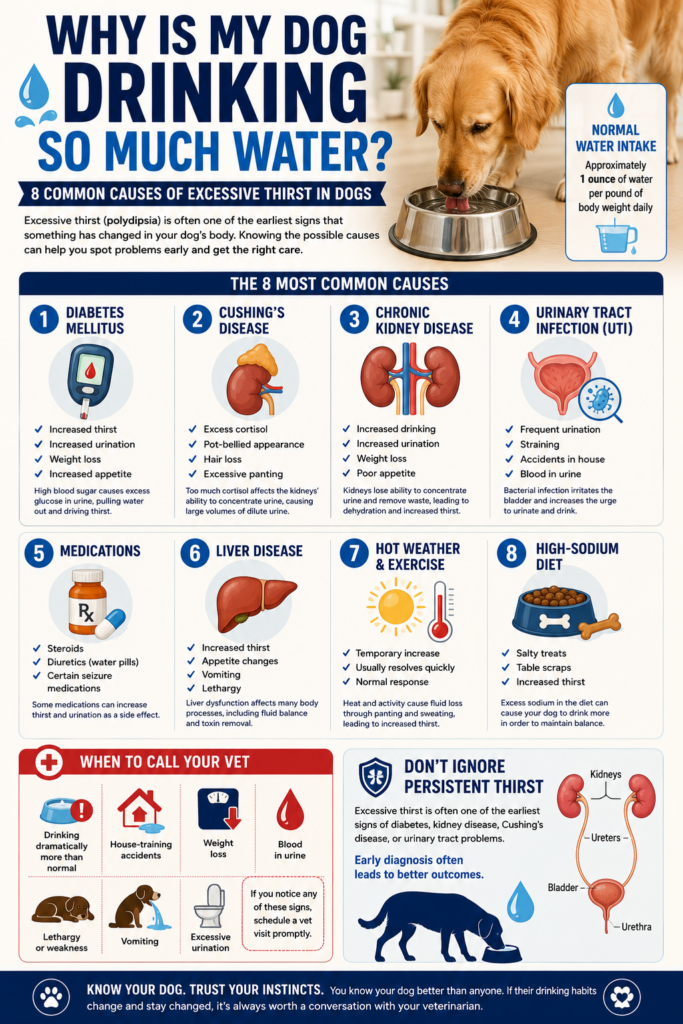
What Is Normal Water Intake for Dogs?
Most healthy adult dogs drink about one ounce of water for every pound of body weight each day. A 20-pound dog typically drinks around two and a half cups, while a 50-pound dog might consume closer to six cups.
Normal variation exists — dogs drink more in hot weather, after exercise, and when eating dry kibble versus wet food. The concerning pattern is a persistent change from an individual dog’s established baseline — not a single day of increased drinking but a consistent shift over days or weeks that doesn’t correspond to an obvious environmental explanation like summer heat or increased activity.
Shifts in drinking habits can point to conditions like kidney disease, diabetes mellitus, Cushing’s disease, or urinary tract infections. Catching these patterns early can make a big difference in getting the right diagnosis and treatment.
Why is My Dog Drinking So Much Water? The 8 Most Common Causes
1. Diabetes Mellitus — Sweet Urine Driving Constant Thirst
Dogs with diabetes mellitus have high blood sugar levels that cause them to urinate more, drink excessive amounts, and become dehydrated. This triggers excessive thirst. The mechanism is straightforward: excess glucose in the blood cannot be reabsorbed by the kidneys and is excreted in the urine — pulling water with it through osmosis. The dog produces large volumes of glucose-rich urine, becomes dehydrated, and drinks more to compensate. The cycle continues regardless of how much they drink.
Accompanying signs: increased appetite alongside weight loss, lethargy, cloudy eyes (cataracts develop rapidly in diabetic dogs), and urine that may have a slightly sweet or fruity odor. Diabetes affects middle-aged to older dogs and unspayed females more frequently.
Why it matters for urinary health: glucose in the urine provides a bacterial substrate that makes diabetic dogs significantly more prone to recurring UTIs. Managing blood glucose reduces UTI frequency — but diabetic dogs often need additional urinary support alongside their diabetes management.
2. Cushing’s Disease (Hyperadrenocorticism) — Cortisol Overproduction
Cushing’s disease is a hormonal disorder that causes the body to produce too much cortisol. Symptoms include excessive thirst, increased appetite, and a pot-bellied appearance. Excess cortisol directly affects the kidneys’ ability to concentrate urine — producing large volumes of dilute urine that drives compensatory drinking. In about 90% of Cushing’s cases, polydipsia is a sign that prompts veterinarians to investigate further.
Accompanying signs: pot-bellied abdomen from muscle wasting and fat redistribution, symmetrical hair loss especially on the flanks, increased appetite, panting at rest, and skin that becomes thin and bruises easily. Cushing’s develops slowly — owners often attribute early signs to normal aging.
Diagnosis requires specific blood tests — the low-dose dexamethasone suppression test or ACTH stimulation test — and sometimes imaging to identify adrenal or pituitary tumors. Urinalysis typically shows very dilute urine.
3. Chronic Kidney Disease — The Kidneys Losing Concentrating Ability
The most common causes of polyuria and polydipsia in dogs are chronic kidney disease, hyperadrenocorticism (Cushing’s disease), and diabetes mellitus. In kidney disease the kidneys progressively lose their ability to concentrate urine — producing large volumes of dilute urine that the dog must replace through increased drinking. By the time polydipsia is noticeable, significant kidney function has usually already been lost.
Accompanying signs: weight loss, decreased appetite, vomiting, bad breath with a urine-like odor (uremic breath), lethargy, and pale gums in advanced stages. Kidney disease progresses slowly — early detection through routine bloodwork in dogs aged 7 and above allows management that can significantly extend quality of life.
4. Urinary Tract Infection — Increased Urination Driving Compensatory Drinking
Urinary tract infections can increase urination, which leads dogs to drink more water to replace lost fluids. UTI-driven polydipsia is typically less dramatic than the thirst produced by diabetes, Cushing’s, or kidney disease — and is usually accompanied by more obvious UTI symptoms including straining, frequent small urinations, blood in the urine, and accidents.
UTIs are one of the less dramatic causes of polydipsia, so vets usually rule these out first — a urinalysis and urine culture are typically the first diagnostics performed for any dog showing increased drinking and urination.
For the complete guide to UTI symptoms and management: Dog Urinary Tract Health: A Complete Guide to UTIs, Prevention, and Long-Term Support
5. Pyometra — Uterine Infection in Unspayed Females
Pyometra is a uterine infection in unspayed female dogs that releases toxins that can impair kidney function and trigger significant thirst. Pyometra is a life-threatening emergency — the toxins produced by the infection impair kidney function directly, producing the same polydipsia pattern as kidney disease alongside fever, lethargy, vaginal discharge, and abdominal distension. Any unspayed female with sudden onset excessive drinking requires urgent veterinary evaluation.
6. Liver Disease — Disrupted Hormone Metabolism
Problems with the liver can disrupt its ability to produce certain hormones, leading to an increase in thirst. The liver metabolizes hormones that regulate thirst and urine production — when liver function is impaired this regulation breaks down. Liver disease also produces toxin accumulation that directly affects kidney function and thirst regulation.
Accompanying signs: jaundice (yellow tinge to gums, whites of eyes, or skin), vomiting, loss of appetite, abdominal fluid accumulation, and behavioral changes in advanced cases. Liver disease requires bloodwork and imaging for diagnosis.
7. Medications — Steroids and Other Common Drugs
Drugs that can cause polyuria and polydipsia include glucocorticoids, phenobarbital, and diuretics. If your dog’s increased drinking began shortly after starting a new medication — particularly prednisone, dexamethasone, or any steroid — the medication is a likely driver. Steroids mimic the effect of excess cortisol on kidney concentrating ability. Discuss dose adjustment or alternatives with your vet rather than stopping the medication abruptly.
8. Hypercalcemia — Elevated Blood Calcium
Hypercalcemia (elevated calcium levels in the blood) occurs secondary to numerous conditions, including kidney disease, various types of cancer, and fungal diseases. Elevated calcium directly impairs the kidney tubules’ ability to respond to antidiuretic hormone — producing large volumes of dilute urine and compensatory drinking. Hypercalcemia is often a signal of an underlying condition that requires investigation rather than a primary diagnosis in itself.
The Diagnostic Table — Matching Symptoms to Most Likely Cause
| If increased drinking is accompanied by… | Most likely cause | Urgency |
| Weight loss, increased appetite, possible cloudy eyes | Diabetes mellitus | Vet appointment this week |
| Pot belly, hair loss, panting at rest, increased appetite | Cushing’s disease | Vet appointment this week |
| Weight loss, vomiting, bad breath, lethargy | Chronic kidney disease | Vet appointment this week |
| Straining, blood in urine, accidents, genital licking | UTI | Vet appointment within 48 hours |
| Vaginal discharge, fever, lethargy (unspayed female) | Pyometra | Emergency — same day |
| Jaundice, vomiting, abdominal swelling | Liver disease | Vet appointment within 48 hours |
| Started after new medication | Drug-induced polydipsia | Contact prescribing vet |
| No other symptoms, mild increase | Environmental — heat, diet, activity | Monitor for 1-2 weeks |
What to Tell Your Vet — And What Tests to Expect
Bring as much specific information as possible to the appointment. Be prepared to tell your vet exactly how much your dog is drinking, how often they are urinating, and any other symptoms you’ve observed. Tracking water intake for 24-48 hours before the appointment — measuring what you put in the bowl and what remains — provides the objective data that helps quantify the degree of polydipsia.
To diagnose polydipsia, vets perform a physical exam and review your dog’s history to determine whether it has been eating or sleeping well. Complete blood count, urinalysis, urine culture, and serum biochemistry are some of the tests veterinarians perform. By measuring the concentration of urine, vets can determine what causes polydipsia and polyuria.
Never restrict your dog’s water intake without veterinary guidance — even if the drinking seems excessive. Restricting water intake can cause dangerous dehydration and electrolyte imbalances. The dog is drinking more because their body requires it — restricting access adds dehydration risk to whatever underlying condition is already present.
The UTI and Urinary Health Connection
If your dog’s increased drinking leads to a UTI diagnosis — or if UTIs are recurring alongside other symptoms — consistent daily urinary support addresses the biological mechanisms that determine how frequently infections establish.
For dogs whose increased drinking is driven by diabetes or Cushing’s disease — conditions that significantly elevate UTI risk through glucose in the urine or immune suppression from excess cortisol — daily urinary support with cranberry PACs, D-Mannose, and probiotics provides meaningful protection alongside their primary condition management.
→ See Bladder Guard Soft Chews
For the complete guide to UTI prevention and daily urinary support habits: Dog UTI Prevention: Daily Habits That Actually Matter
For why hydration is the foundation of urinary health: Why Hydration Determines Whether Urinary Health Strategies Work in Dogs
Why is my dog suddenly drinking a lot of water?
Sudden onset excessive drinking in dogs most commonly indicates diabetes mellitus, Cushing’s disease, chronic kidney disease, or a urinary tract infection. Less common causes include liver disease, pyometra in unspayed females, hypercalcemia, and certain medications including steroids. Any persistent increase in water intake that doesn’t correspond to environmental factors like heat or increased exercise warrants veterinary evaluation — many of the conditions that cause polydipsia are most effectively managed when identified early.
How much water should a dog drink per day?
Most healthy adult dogs drink approximately one ounce of water per pound of body weight daily. A 20-pound dog typically drinks around two and a half cups while a 50-pound dog may consume around six cups. Normal variation occurs with hot weather, exercise, and diet — dogs on dry kibble drink more than those on wet food. The concerning pattern is a persistent change from an individual dog’s established baseline over days or weeks without an obvious environmental explanation.
Should I restrict my dog’s water if they’re drinking too much?
No — never restrict a dog’s water intake without explicit veterinary guidance. Dogs with polydipsia are drinking more because their body requires it to compensate for increased urine output from an underlying condition. Restricting water access adds dangerous dehydration risk to whatever condition is already present. Bring the dog to a vet for diagnosis rather than attempting to manage the drinking itself.
Can a UTI cause a dog to drink more water?
Yes — UTIs increase urination frequency, and dogs drink more water to compensate for the increased urine output. UTI-driven polydipsia is typically less dramatic than thirst produced by diabetes, Cushing’s, or kidney disease and is usually accompanied by more obvious UTI symptoms including straining, frequent small urinations, blood in the urine, and accidents. Veterinarians typically run urinalysis first when investigating polydipsia as UTIs are among the simpler causes to diagnose and treat.
What tests does a vet run for a dog drinking too much water?
The standard diagnostic workup for polydipsia includes urinalysis to assess urine concentration and check for bacteria, glucose, and crystals; urine culture to identify any bacterial infection; complete blood count; and serum biochemistry panel that evaluates kidney function, liver function, blood glucose, and calcium levels. Additional tests depend on initial findings — Cushing’s requires specific endocrine testing, and imaging may be needed if tumors or pyometra are suspected.
Is excessive drinking in dogs an emergency?
It depends on the accompanying symptoms. Sudden onset excessive drinking in an unspayed female dog alongside vaginal discharge, fever, or lethargy is an emergency requiring same-day veterinary care — pyometra is life-threatening. Sudden extreme thirst with vomiting, lethargy, or collapse warrants urgent veterinary contact. Gradual onset polydipsia without dramatic accompanying symptoms warrants a vet appointment within the week rather than an emergency visit — but should not be monitored at home for extended periods without investigation.
References
American Kennel Club. “Why Is My Dog Drinking So Much Water? Polydipsia or Excessive Thirst in Dogs.” April 2026.
Maven Pet. “Polydipsia in Dogs: Why Your Dog Is Drinking More Water (Vet Verified).” December 2025.
Veterinary Partner — VIN. “Polyuria/Polydipsia in Dogs and Cats.”
VCA Animal Hospitals. “Diabetes Insipidus in Dogs.” vcahospitals.com.
Petfolk Editorial. “Why Is My Dog Drinking So Much Water.” September 2025.
Byron JK. “Urinary Tract Infection.” Veterinary Clinics of North America: Small Animal Practice. 2019.