
Dog Urinary Tract Health: A Complete Guide to UTIs, Prevention, and Long-Term Support
Dog urinary health is one of the most common — and most manageable — areas of canine wellness. Yet most pet owners don’t think about it until something goes wrong. A UTI diagnosis, an accident on the floor, a dog straining in the yard. By that point the problem has already established.
This guide covers everything you need to understand about dog urinary tract health — how the system works, why infections happen, what makes some dogs more vulnerable than others, how to recognize early warning signs, what prevention actually looks like, and how to evaluate the supplement options available. It is designed as a reference you can return to at any stage of your dog’s urinary health journey.
How the Canine Urinary System Works
The urinary system consists of the kidneys, ureters, bladder, and urethra — each playing a specific role in filtering waste and maintaining fluid balance. The kidneys filter blood continuously, producing urine that carries dissolved waste products. Urine travels through the ureters to the bladder, where it is stored until urination. The urethra carries urine from the bladder out of the body.
The bladder is more than a passive storage container. Its inner surface is lined with a specialized protective coating — the glycosaminoglycan (GAG) layer — that acts as a barrier between urine and the bladder tissue. This layer limits bacterial adhesion, buffers chemical irritation from concentrated urine, and helps maintain the structural integrity of the bladder wall. When this layer is intact, the urinary environment is resilient. When it is compromised — through repeated infections, chronic inflammation, or inadequate hydration — vulnerability increases significantly.
For the full science on the bladder’s protective barrier: The Bladder’s Protective Barrier: Understanding the GAG Layer in Dogs
What Is a Dog UTI — And Why Does It Happen?
A urinary tract infection (UTI) occurs when bacteria enter the urinary tract — typically from the external environment — and establish in the bladder. E. coli, bacteria commonly found near the rectum and skin around the urethral opening, is responsible for the majority of canine UTIs. The bacteria travel up the urethra and adhere to the bladder wall, triggering inflammation and the immune response that produces the symptoms dog owners recognize.
Urinary tract infections are common in dogs, affecting approximately 14% of all dogs at some point in their lives. Female dogs are significantly more susceptible than males due to their shorter, wider urethra — giving bacteria a shorter path to the bladder. Senior dogs, spayed females, and dogs with underlying health conditions face additional risk factors beyond anatomy.
For the full science on how bacteria adhere to the bladder wall and why this matters for recurrence: How Bacteria Adhere to the Bladder Wall in Dogs (and Why Recurring UTIs Keep Coming Back)
Early Warning Signs of Dog Urinary Issues
Dogs are stoic animals — they often hide discomfort until it becomes significant. By the time obvious symptoms appear, the infection is usually well established. These early signals are worth watching for before the obvious signs develop.
Early Signs — Often Missed
- More frequent trips outside with smaller urine output — the inflamed bladder signals urgency even when little urine is present
- Excessive licking of the genital area — dogs self-soothe irritation they can’t otherwise address
- Subtle behavioral changes — reduced energy, slight restlessness, or unusual irritability during handling
- Changes in urine odor — stronger than usual smell without other explanation
More Obvious Signs — Act Promptly
- Straining or vocalizing during urination — indicates pain and active inflammation
- Blood in the urine — pink, red, or brown-tinged urine indicates bladder wall irritation
- Accidents in a house-trained dog — urgency overwhelms the dog’s ability to hold it
- Cloudy urine — white blood cells and bacteria make urine appear turbid
Urgent Signs — Contact Your Vet Same Day
- Straining without producing any urine — may indicate a blockage, particularly in males
- Fever, lethargy, or loss of appetite alongside urinary symptoms — suggests the infection may have spread to the kidneys
- Vomiting alongside urinary symptoms — indicates systemic involvement requiring immediate care
For a detailed guide on what early warning signs look like and how to track them: Signs Your Dog’s UTI Is Coming Back (And What to Do Before It Gets Worse)
Is Your Dog Truly Hydrated? The Most Overlooked UTI Risk Factor
Hydration is the foundation of urinary health — and chronic low-level dehydration is one of the most common and most overlooked contributors to recurring UTIs. Many owners believe that as long as the water bowl is full their dog is adequately hydrated. But hydration is about cellular absorption and the body’s ability to maintain dilute urine, not just access to water.
When urine is concentrated — due to low water intake, dry kibble diets, or heat exposure — waste products sit in the bladder at higher concentrations. This increases chemical irritation to the bladder lining, creates a more favorable environment for bacterial growth, and reduces the natural flushing that clears bacteria before they can adhere and establish an infection.
5 Signs of Functional Dehydration in Dogs
- Loss of skin elasticity — pinch the skin between the shoulder blades. In a well-hydrated dog it snaps back instantly. Slow return indicates dehydration.
- Dry or tacky gums — gums should be slippery, wet, and pink. Sticky or tacky gums indicate the body is pulling fluid from mucous membranes to protect vital organs.
- Dark or concentrated urine — healthy urine is pale yellow. Dark gold, amber, or strong-smelling urine indicates poor flushing and concentrated waste.
- Lethargy and sunken eyes — dehydration lowers blood volume, causing fatigue and hollow-looking eyes.
- Excessive dry panting — thick, ropey saliva and a dry tongue while panting indicate insufficient fluids.
How to Increase Daily Water Intake
- Add warm water or low-sodium broth to dry kibble at every meal — this alone can increase daily moisture intake by up to 30%
- Use a pet water fountain — many dogs prefer moving water and drink significantly more
- Place multiple water bowls in different locations around the house
- Change water at least once daily — dogs often refuse stale water
- Add wet food to meals — wet food contains significantly more moisture than dry kibble
For the full science on how hydration affects the urinary environment: Why Hydration Determines Whether Urinary Health Strategies Work in Dogs
Why Some Dogs Keep Getting UTIs
A single UTI is fairly common and usually resolves with appropriate antibiotic treatment. Recurring UTIs — defined as three or more infections in twelve months — indicate something more than bad luck. Several factors contribute to the recurring UTI pattern that frustrates so many dog owners.
Incomplete bacterial clearance — antibiotics that suppress rather than fully eliminate the bacterial population set up conditions for relapse when treatment ends. Follow-up urinalysis 7-14 days after completing antibiotics is essential to confirm full clearance.
Bacterial persistence mechanisms — some bacteria enter dormant states within bladder tissue, surviving the antibiotic course and reactivating afterward. Others form protective biofilm structures on the bladder wall that standard antibiotics penetrate poorly.
Anatomical factors — recessed or hooded vulva in female dogs is one of the most commonly overlooked contributors to recurring UTIs. The anatomy traps moisture and bacteria near the urethral opening, creating persistent infection risk regardless of treatment quality.
Underlying health conditions — diabetes mellitus, Cushing’s disease, kidney disease, and bladder stones all create environments where UTIs recur despite appropriate treatment.
Gut microbiome disruption — each antibiotic course disrupts the gut microbiome that supports systemic immune function, including the immune cells lining the urinary tract. Dogs cycling through multiple UTIs and antibiotic courses can develop progressively compromised immune environments.
For the complete breakdown of why some dogs keep getting UTIs: Why Some Dogs Keep Getting UTIs (And What Actually Helps Long-Term)
For the science on dormant bacteria: Why Some Dog UTIs Return: The Role of Dormant Bacteria in the Bladder
For the science on biofilms: Biofilms in Canine UTIs: Why Some Infections Keep Coming Back
The Gut-Urinary Connection: Why Immune Health Matters
The gut microbiome and urinary health are connected in ways most pet owners don’t realize. The bacteria responsible for most canine UTIs originate in the gut before migrating to the urinary tract. And approximately 70% of the immune system is housed in the gut — meaning gut health directly influences how effectively immune cells in the urinary tract resist infection.
For dogs on repeated antibiotic courses, this connection becomes critical. Each course disrupts the gut microbiome alongside the bacteria it targets — progressively weakening the immune environment that should be preventing the next infection. Probiotic support during and after antibiotic treatment helps restore this balance and is one of the most underused prevention strategies in recurring UTI management.
For the full science: Why Gut Health and Urinary Health Are Connected in Dogs
Daily Prevention: What Actually Reduces UTI Risk Long-Term
Prevention is more effective than treatment — and significantly less expensive. The dogs who experience the fewest recurring UTIs tend to have owners who treat urinary health as a daily priority rather than a reactive problem.
Consistent hydration — the single most impactful daily habit. Dilute urine flushes bacteria more effectively and reduces bladder lining irritation.
Regular bathroom breaks — dogs benefit from opportunities to urinate every 4-6 hours during the day. Holding urine gives bacteria more time to multiply in the bladder before being cleared.
Hygiene maintenance — keeping the genital area clean and trimming long hair around it reduces bacterial load at the urethral opening, particularly important for female dogs.
Quality diet — high-carbohydrate, high-filler diets can promote more alkaline urine that is favorable for bacterial growth. Higher quality diets with adequate animal protein support a more balanced urinary pH.
Daily supplement support — targeted ingredients that maintain a urinary environment where bacteria struggle to establish and persist.
For the complete daily prevention guide: Dog UTI Prevention: Daily Habits That Actually Matter
The Key Ingredients in Effective Dog Urinary Support
Not all urinary supplements work the same way — and understanding what each ingredient does biologically helps evaluate any product on the market.
Cranberry PACs (Proanthocyanidins) — reduce bacterial adhesion to the bladder wall. The active compounds are A-Type PACs, not just “cranberry extract.” Cold-pressed processing preserves PAC integrity that heat manufacturing degrades. Works best with consistent daily use.
D-Mannose — a naturally occurring sugar that gives certain bacteria an alternative binding target, allowing them to clear through urination rather than attaching to the bladder lining. Works alongside cranberry PACs through a complementary mechanism.
Marshmallow Root — contains mucilage that soothes and coats the bladder lining directly, addressing tissue-level inflammation that anti-adhesion ingredients alone don’t target.
NAG (N-Acetyl Glucosamine) — supports the glycosaminoglycan layer that protects the bladder wall. Particularly important for dogs with a history of repeated infections where this layer has been progressively degraded.
Pumpkin Seed Powder — supports bladder muscle tone and urethral sphincter function. Particularly relevant for senior dogs and spayed females experiencing leaking or incontinence.
Vitamin C — contributes to natural urine acidification, creating conditions less favorable for bacterial persistence, while supporting immune function systemically.
Probiotics — support gut microbiome health and the systemic immune function it underlies, including the immune cells that line the urinary tract and resist infection.
For the complete ingredient breakdown: Best Ingredients for Dog Urinary Health (And What They Actually Do)
For a practical checklist to evaluate any supplement: Best Dog UTI Supplement: What to Actually Look For
The Manufacturing Difference — Why Cold-Pressed Matters
Most pet supplement chews are made using high-heat extrusion — a fast, inexpensive manufacturing process that significantly degrades heat-sensitive active compounds before the product is ever sealed. Cranberry PACs, probiotics, and certain vitamins are particularly vulnerable to heat degradation. A supplement that lists these ingredients at meaningful doses on the label may be delivering a fraction of those doses biologically after high-heat processing.
Cold-pressed manufacturing preserves the molecular integrity of these active compounds. What’s listed on the label is what’s actually biologically available to your dog. This is the Ranch Science standard applied to every Natural Ranch Products formula.
For the full science on why manufacturing temperature matters: Why Cold-Processed Pet Supplements Preserve Nutrients Better
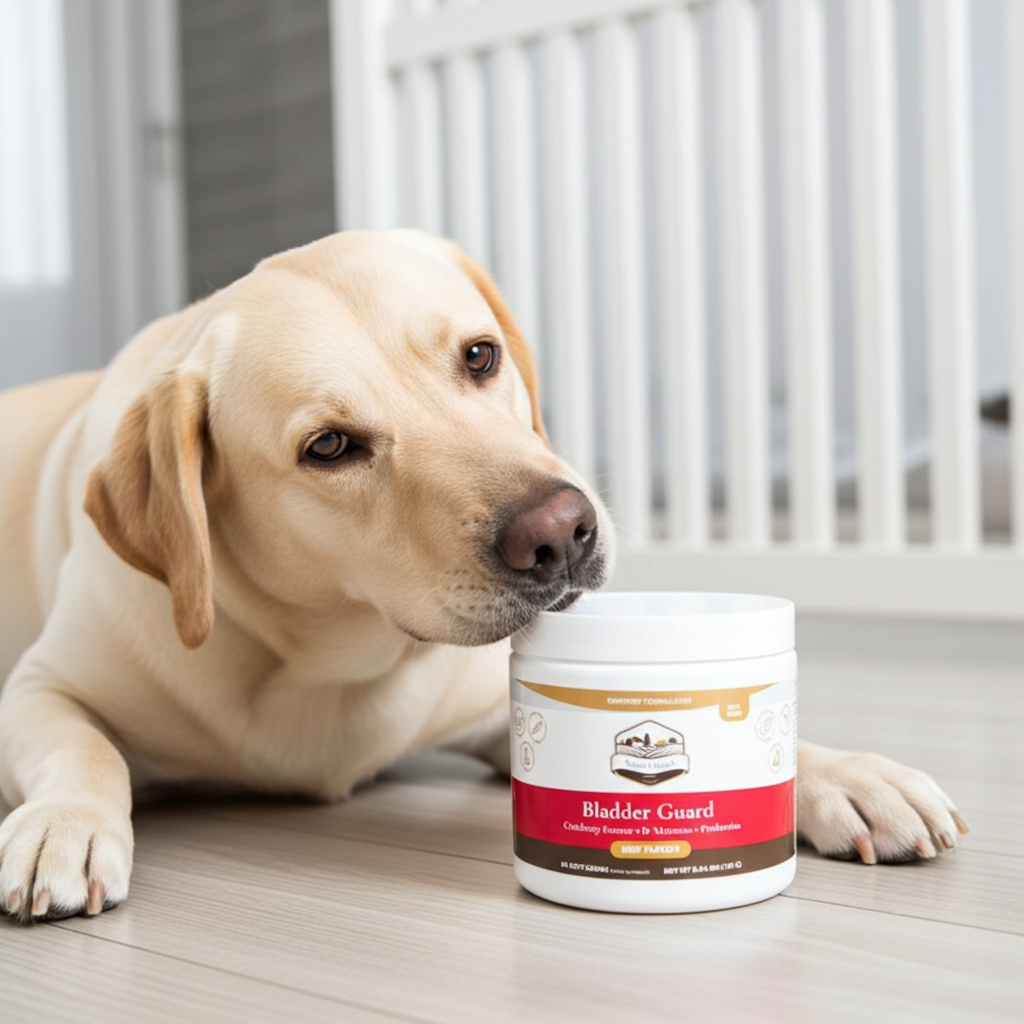
Bladder Guard Soft Chews — Daily Urinary Defense
Bladder Guard Soft Chews from Natural Ranch Products was formulated around the complete biological picture of canine urinary health — not just bacterial adhesion, but bladder lining integrity, immune support, bladder muscle tone, and urinary pH balance simultaneously.
Every active ingredient — Cranberry PACs, D-Mannose, Marshmallow Root, NAG, Glucosamine, Pumpkin Seed Powder, Vitamin C, and Probiotics — is cold-pressed to preserve the bioavailability that high-heat manufacturing destroys. The result is a formula where what’s on the label is what’s working.
Bladder Guard is designed for daily, ongoing use — not as a replacement for veterinary care when infections are active, but as the kind of consistent foundational support that makes recurring issues less likely over time.
→ See Bladder Guard Soft Chews
The Total Defense System — For Dogs Where Urinary Health Is an Ongoing Priority
For dogs with recurring urinary issues, the most effective long-term approach combines targeted urinary defense with foundational nutritional support. The gut microbiome, immune function, and cellular health all influence how vulnerable the urinary tract is to infection — and these systems depend on nutritional foundations that urinary-specific supplements don’t address.
The Total Defense System pairs Bladder Guard with the Natural Ranch Daily Multivitamin — cold-pressed Canine Royal Oil Omegas, full B-Complex, Vitamins A, D3, and E, Zinc, Selenium, and digestive enzymes — for a complete daily foundation that addresses urinary health from both the targeted and the systemic level.
→ See the Total Defense System
Special Considerations: Senior Dog Urinary Health
Senior dogs face additional urinary health challenges that younger dogs don’t — bladder muscle weakness, progressive GAG layer degradation from accumulated infection history, age-related immune decline, and a higher prevalence of systemic conditions like diabetes and Cushing’s disease that directly affect the urinary environment.
For senior dogs, urinary leaking and incontinence are often attributed to “just getting old” — but most of these symptoms have specific biological causes with specific solutions. The most common cause of incontinence in senior spayed females is urethral sphincter mechanism incompetence (USMI), which is manageable but requires veterinary diagnosis and appropriate support.
For the complete guide to senior dog urinary health: Senior Dog Urinary Health: Why Older Dogs Are More Vulnerable (And What Actually Helps)
When to See the Vet — And What to Ask
Supplements and daily habits support the urinary environment — they do not treat active bacterial infections. Any dog with symptoms of an active UTI should be evaluated by a veterinarian before starting or continuing a supplement regimen.
For dogs with recurring infections, ask your vet specifically about urine culture and sensitivity testing (not just urinalysis), imaging to rule out bladder stones, bloodwork to screen for diabetes and Cushing’s disease, and follow-up urinalysis 7-14 days after completing antibiotics to confirm full clearance rather than just symptom resolution.
What causes urinary issues in dogs?
Urinary issues in dogs are most commonly caused by bacterial infection — particularly E. coli ascending from the external environment into the bladder. Other contributing factors include dehydration and concentrated urine, anatomical factors like recessed vulva in females, underlying health conditions like diabetes or Cushing’s disease, bladder stones, bacterial persistence mechanisms like biofilms, and gut microbiome disruption from repeated antibiotic courses.
How do I know if my dog has a UTI?
Common signs include frequent urination with small output, straining or pain during urination, blood in the urine, strong or unusual urine odor, accidents in a house-trained dog, and excessive licking of the genital area. Subtle early signs include slightly increased bathroom frequency, minor behavioral changes, and changes in urine smell. Any of these signs warrant a veterinary evaluation for proper diagnosis.
Can cranberry help dogs with urinary health?
Yes — specifically the A-Type proanthocyanidins (PACs) in cranberry reduce bacterial adhesion to the bladder wall. Cranberry doesn’t kill bacteria directly — it influences where bacteria end up, making daily consistent use more important than reactive dosing when symptoms appear. The processing method matters: cold-pressed cranberry preserves PAC integrity that heat-based manufacturing degrades significantly.
How much water should a dog drink per day?
Most dogs need approximately one ounce of water per pound of body weight daily, though activity level, diet type, and temperature all affect individual needs. Dogs on dry kibble diets are often chronically under-hydrated — adding warm water or wet food to meals significantly increases daily moisture intake. Signs of functional dehydration include slow skin snap-back, tacky gums, and dark or strong-smelling urine.
Are natural urinary supplements safe for long-term use in dogs?
High-quality, dog-specific supplements containing cranberry PACs, D-Mannose, marshmallow root, NAG, and probiotics are generally considered safe for daily long-term use. They work best as a consistent daily prevention strategy rather than reactive dosing during episodes. Active infections require veterinary diagnosis and antibiotic treatment — supplements support the urinary environment but do not treat established bacterial infections.
When should I see a veterinarian for my dog’s urinary issues?
Any new urinary symptom warrants a veterinary evaluation. Urgently contact your vet if your dog shows straining without producing urine, visible blood in the urine, fever or lethargy alongside urinary symptoms, vomiting, or complete inability to urinate. For dogs with recurring infections, ask specifically about urine culture and sensitivity testing, imaging to rule out bladder stones, and bloodwork to screen for underlying conditions.
Is a dog UTI the same as a bladder infection?
A bladder infection (bacterial cystitis) is the most common type of UTI in dogs. UTI is the broader term referring to infection anywhere in the urinary tract — from the urethra to the kidneys. Most canine UTIs are bladder infections, but the infection can spread to the kidneys (pyelonephritis) in serious untreated cases, producing additional systemic symptoms like fever and lethargy.
Can I give my dog human cranberry supplements?
No. Human cranberry supplements may contain xylitol, high sugar levels, or other ingredients that are unsafe for dogs. Canine-specific formulas are designed for appropriate dosing, canine pH, and digestive tolerance. Always use supplements specifically formulated and dosed for dogs.
References
PubMed. “Effect of cranberry extract on E. coli adhesion in dogs.” 2016.
PubMed. “Dietary cranberry supplementation and bacteria binding reduction in canine urinary cells.” 2023.
American Holistic Veterinary Medical Association. “Use of D-Mannose for bacterial urinary tract infections in dogs and cats.”
Flores-Mireles AL, et al. “Urinary tract infections: epidemiology, mechanisms of infection and treatment options.” Nature Reviews Microbiology. 2015.
Byron JK. “Urinary Tract Infection.” Veterinary Clinics of North America: Small Animal Practice. 2019.
Parsons CL. “The role of the glycosaminoglycan layer in bladder defense.” Urology.
VCA Animal Hospitals. “Urinary Tract Infections (UTIs) in Dogs.” vcahospitals.com
Cornell University College of Veterinary Medicine. “Urinary Tract Infections.” vet.cornell.edu