Can Dogs Get UTIs From Diet? What Your Dog Eats and Bladder Health
Can dogs get UTIs from diet? The honest answer is more nuanced than most pet health sites admit — and understanding it helps you make dietary decisions that genuinely support your dog’s urinary health rather than just following general advice.
Diet doesn’t directly cause bacterial UTIs the way contaminated water or poor hygiene might. But what your dog eats significantly influences the urinary environment — the pH of their urine, how concentrated it is, how well their immune system functions, and whether the conditions inside the bladder favor or resist bacterial growth. Those factors directly affect how likely a UTI is to establish and how often it comes back.
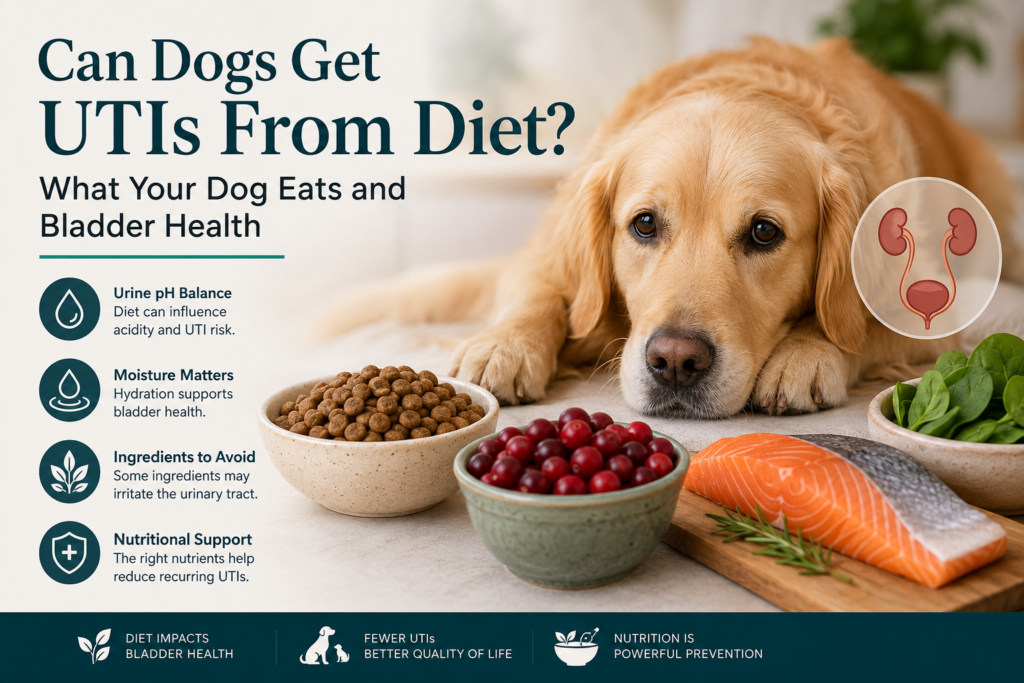
Can Dog Food Cause UTIs? What the Science Actually Says
Can Dogs Get UTIs From Diet? Understanding the Connection
Nutrition influences your pet’s urinary pH, hydration status, and immune function — all critical factors in UTI management. Diet works alongside veterinary treatment to support healing and reduce recurrence risk — but it’s important to be precise about what diet can and can’t do.
Diet can reduce conditions favorable to bacterial growth, but it cannot replace medical treatment. Active bacterial UTIs require veterinary diagnosis and appropriate antibiotic treatment. No dietary change will eliminate an established infection. But the urinary environment that diet creates determines how hospitable the bladder is to bacterial growth between infections — and that’s where diet becomes genuinely impactful for dogs with recurring UTIs.
How Diet Affects Urine pH — And Why It Matters
The normal urine pH range for dogs is 6 to 7.5. An imbalanced urine pH level often underlies many urinary issues. When urine becomes too alkaline — moving above pH 7.5 — the environment becomes significantly more favorable for bacterial growth and crystal formation.
Diets high in carbohydrates and excessive fillers can disrupt the optimal pH balance in urine, making it conducive for bacterial overgrowth. A high carbohydrate or high-starch diet — common in many commercial kibble formulations — can cause the urine to become more alkaline. This alkaline environment promotes the formation of struvite crystals, which are linked to urinary tract infections. Food rich in grains and starches such as corn and rice can lead to elevated pH levels. In fact, many commercial dog foods contain around 30-60% starch, a significant amount that can alter urine chemistry.
The practical implication: a dog eating a high-carbohydrate, grain-heavy commercial kibble diet may have consistently more alkaline urine that creates a more hospitable environment for bacterial persistence — even if bacteria aren’t directly introduced by the food itself.
Higher quality diets with adequate animal protein and lower carbohydrate content tend to support a more acidic urine pH — the range where bacterial growth is less favorable and where the urinary environment is more naturally resistant to infection.
The Moisture Problem — Why Dry Kibble Increases UTI Risk
Beyond pH, moisture content is one of the most significant dietary factors in urinary health. Wet food contains around 75% moisture versus only 10% in dry kibble. Higher moisture intake dilutes urine, reducing the risk of crystal formation and bacterial overgrowth. If you feed dry food, adding warm water to the bowl at each meal helps compensate significantly.
Dilute urine is one of the bladder’s most effective natural defenses. When urine is concentrated — due to low moisture intake from an exclusively dry kibble diet — bacteria are more concentrated, waste products sit in the bladder at higher chemical concentrations, and the natural flushing mechanism becomes less effective. Dogs on dry kibble diets who are also reluctant drinkers face compounding risk: concentrated urine combined with infrequent urination creates the conditions where bacteria have both time and a favorable environment to establish.
For the full explanation of why hydration is the foundation of every prevention strategy: Why Hydration Determines Whether Urinary Health Strategies Work in Dogs
Dietary Ingredients That Support Urinary Health
Animal Protein as the Primary Macronutrient
Dogs are carnivores with a metabolic preference for animal protein. Diets built around high-quality animal protein — rather than plant-based protein or grain fillers — tend to produce more acidic urine that is less favorable for bacterial persistence. Animal protein also provides the amino acids that support immune function, tissue repair, and the production of the proteins that make up the bladder’s protective GAG layer.
Vitamin C
Vitamin C supports urinary acid balance and immune support. Vitamin C contributes to natural urine acidification — creating conditions less hospitable to bacterial persistence — while also supporting systemic immune function. Dogs produce some Vitamin C endogenously but dietary or supplemental sources provide additional support, particularly for dogs under immune stress from repeated infections.
B Vitamins
B vitamins support cell repair and energy. The full B-Complex — B1, B2, B3, B5, B6, B12, Folic Acid, and Biotin — supports cellular energy production and immune cell function. A dog deficient in B vitamins operates with a compromised immune system that directly affects resistance to urinary tract infection. High-carbohydrate processed diets that displace animal protein sources often provide inadequate B vitamin levels for dogs with increased immune demands.
Omega-3 Fatty Acids
Omega-3 fatty acids from quality sources reduce inflammation. Chronic low-grade inflammation — driven by poor diet quality, gut microbiome imbalance, or repeated infection cycles — affects the bladder lining’s ability to maintain its protective integrity. Omega-3 fatty acids from stable plant-based sources like cranberry seed oil or quality marine sources help manage systemic inflammation that otherwise compounds urinary vulnerability.
Probiotics and Live Enzymes
The gut microbiome directly influences systemic immune function — including the immune cells lining the urinary tract. Live enzymes and probiotics maintain a healthy microbiome. Processed, heat-extruded commercial diets destroy naturally occurring live enzymes and beneficial bacteria that support digestive and immune health. Supplemental probiotic support becomes increasingly important for dogs on predominantly processed diets — particularly those who have been on repeated antibiotic courses that further disrupt gut microbiome balance.
For the full explanation of the gut-urinary connection: Why Gut Health and Urinary Health Are Connected in Dogs
Dietary Factors That Increase UTI Risk
High carbohydrate content — particularly from corn, rice, wheat, and soy — promotes alkaline urine and provides a substrate for bacterial fermentation. Avoid excessive fillers: ingredients like corn, soy, and wheat can contribute to inflammation and an imbalance in urine pH.
High sodium content — a diet high in sodium concentrates urine and stresses the kidneys. Concentrated urine creates a more favorable environment for bacterial growth and mineral crystallization simultaneously.
Excessive magnesium and phosphorus — diets with excessive magnesium and phosphorus promote crystal formation. Struvite crystals — the most common urinary crystals in dogs — are directly linked to elevated magnesium intake combined with alkaline urine conditions. Struvite crystals both predispose to UTIs and create physical surfaces where bacteria can persist between antibiotic courses.
Low moisture exclusively dry diets — dry kibble is not always the best option as it can lead to dehydration and concentrated urine. The 10% moisture content of dry kibble versus 75% in wet food represents a significant daily hydration deficit that compounds over time in dogs with recurring urinary issues.
Low-quality protein sources — plant-based proteins and byproduct meals that replace high-quality animal protein reduce the amino acid availability needed for immune function, tissue repair, and GAG layer maintenance.
Practical Dietary Adjustments for Dogs With Recurring UTIs
You don’t necessarily need to overhaul your dog’s entire diet to make a meaningful difference in urinary health. These targeted adjustments produce the most impact:
- Add moisture to every meal — warm water, low-sodium broth, or a portion of wet food added to dry kibble significantly increases daily moisture intake. This single change can increase fluid consumption by up to 30% and meaningfully dilute urine concentration.
- Reduce high-carbohydrate fillers — if your current food lists corn, rice, wheat, or soy in the first five ingredients, consider transitioning to a formula where animal protein is the primary ingredient. This supports more acidic urine pH over time.
- Avoid excessive sodium — check sodium levels on the guaranteed analysis. High-sodium diets concentrate urine and stress the kidneys — both counterproductive for dogs with urinary concerns.
- Add probiotic support — whether through a quality probiotic supplement or probiotic-containing food, restoring gut microbiome balance directly supports the immune environment that protects the urinary tract.
- Consider Vitamin C and B-Complex supplementation — particularly for dogs on heavily processed commercial diets where these nutrients may be present but at levels insufficient to support dogs with elevated immune demands from recurring infections.
Why Dietary Support Alone Isn’t Enough — And What Completes the Picture
Diet creates the urinary environment. Daily supplement support maintains the specific biological mechanisms — anti-adhesion, bladder lining integrity, immune function — that determine whether bacteria establish in that environment. Neither alone produces the same results as both together.
This is the principle behind the Total Defense System from Natural Ranch Products — a complete two-product daily foundation that addresses canine health from both the targeted urinary defense layer and the foundational nutritional layer simultaneously.
Bladder Guard Soft Chews — targeted daily urinary defense. Cranberry PACs and D-Mannose for bacterial adhesion inhibition. Marshmallow root and NAG for bladder lining and GAG layer support. Pumpkin seed powder for bladder muscle tone. Vitamin C for pH support and immune function. Probiotics for gut-immune reinforcement. Cold-pressed to preserve bioavailability.
Natural Ranch Daily Multivitamin — foundational nutritional support. Full B-Complex for cellular energy and immune function. Vitamins A, D3, and E for mucous membrane integrity and immune modulation. Zinc and Selenium for immune cell function and antioxidant protection. Digestive enzymes for nutrient absorption. Cold-pressed Canine Royal Oil providing the balanced 1:1:1 Omega 3-6-9 profile from cranberry seed oil for systemic inflammation management and skin barrier support.
Together these two products address the urinary environment at the bladder wall level and at the immune and nutritional foundation level — the complete picture that diet quality alone can support but not fully deliver.
→ See the Total Defense System — Bladder Guard + Daily Multivitamin
→ See Bladder Guard Soft Chews
→ See the Natural Ranch Daily Multivitamin
What Diet Can and Can’t Do for Dog UTIs — The Honest Summary
Diet can: influence urine pH toward the range less favorable for bacterial growth, increase urine dilution through moisture content, support immune function through nutrient quality, reduce systemic inflammation that compromises the bladder lining, and support the gut microbiome that protects urinary tract immune function.
Diet cannot: treat an active bacterial infection, replace antibiotic therapy when an infection is established, guarantee UTI prevention regardless of other risk factors, or substitute for veterinary diagnosis and management of recurring infections.
The dogs with the fewest recurring UTIs are typically those whose owners address all the layers simultaneously — quality nutrition, consistent hydration, daily targeted supplement support, appropriate veterinary care when infections occur, and follow-up to confirm full clearance. No single factor does the whole job.
For the complete prevention guide: How to Prevent Dog UTIs Naturally: What Actually Works Long-Term
For a practical supplement evaluation checklist: Best Dog UTI Supplement: What to Actually Look For
Can dog food cause UTIs?
Dog food doesn’t directly cause bacterial UTIs the way contaminated sources might. But diet significantly influences the urinary environment — particularly urine pH and concentration — that determines how hospitable the bladder is to bacterial growth. High-carbohydrate, grain-heavy diets promote more alkaline urine that favors bacterial persistence. Low-moisture kibble diets concentrate urine and reduce the natural flushing that clears bacteria before they can establish. These dietary factors don’t cause UTIs directly but create conditions that make them more likely to develop and recur.
What foods should dogs with UTIs avoid?
Dogs with recurring UTIs benefit from avoiding high-carbohydrate ingredients like corn, soy, wheat, and rice that promote alkaline urine favorable to bacterial growth. High-sodium foods that concentrate urine and stress the kidneys should also be limited. Foods with excessive magnesium and phosphorus can promote struvite crystal formation that both predisposes to UTIs and creates surfaces where bacteria can persist between treatments. Exclusively dry kibble without moisture supplementation is a risk factor that can be addressed by adding warm water or wet food to meals.
Is wet food better than dry food for dogs with UTIs?
Generally yes — wet food contains approximately 75% moisture versus only 10% in dry kibble. Higher moisture intake dilutes urine, reducing bacterial concentration and making the urinary environment less favorable for bacterial growth and crystal formation. If feeding dry food, adding warm water or low-sodium broth to every meal significantly increases daily moisture intake. This single change can increase fluid consumption by up to 30% and meaningfully reduce urine concentration over time.
Can Vitamin C help prevent UTIs in dogs?
Yes — Vitamin C contributes to natural urine acidification, creating a urinary pH less favorable for bacterial persistence, while also supporting systemic immune function. Dogs produce some Vitamin C endogenously but dietary and supplemental sources provide additional support, particularly for dogs with recurring infections who have elevated immune demands. Vitamin C is one of the active ingredients in Bladder Guard Soft Chews for this reason.
Do probiotics help prevent UTIs in dogs?
Yes — the gut microbiome directly influences systemic immune function including the immune cells lining the urinary tract that resist infection. Probiotic support helps maintain gut microbiome balance that strengthens urinary tract defense. This becomes especially important for dogs on processed commercial diets that displace naturally occurring beneficial bacteria, and for dogs who have been on repeated antibiotic courses that further disrupt gut microbiome balance.
What is the Total Defense System for dogs?
The Total Defense System from Natural Ranch Products pairs Bladder Guard Soft Chews — targeted daily urinary defense with cranberry PACs, D-Mannose, marshmallow root, NAG, pumpkin seed, Vitamin C, and probiotics — with the Natural Ranch Daily Multivitamin providing foundational nutritional support including full B-Complex, Vitamins A, D3, and E, Zinc, Selenium, digestive enzymes, and cold-pressed Canine Royal Oil. Together they address urinary health at the bladder wall level and the immune and nutritional foundation level simultaneously — the complete approach that diet quality alone can support but not fully deliver.
References
Tufts University Cummings School of Veterinary Medicine. “Can Diet Prevent or Treat Urinary Tract Infections in Dogs?” 2023.
The Pet Vet. “Urinary Tract Infection Diet: Best Foods to Heal Your Pet.” 2026.
Raydogs Editorial. “Best Dog Food for Urinary Tract Health in 2026: Vet-Backed Guide.”
Byron JK. “Urinary Tract Infection.” Veterinary Clinics of North America: Small Animal Practice. 2019.
Howell AB. “Bioactive Compounds in Cranberry and Their Role in Urinary Tract Health.” Advances in Nutrition.
VCA Animal Hospitals. “Urinary Tract Infections (UTIs) in Dogs.” vcahospitals.com