
UTI in Female Dogs
Female dogs get UTIs in Female Dogs more often than male dogs — this is one of the most well-established facts in veterinary medicine. But most dog owners don’t know why, which means they also don’t know what specifically reduces that risk or why their female dog keeps getting infections despite appropriate treatment.
The reasons female dogs are more vulnerable to UTIs are specific, biological, and actionable. Understanding them explains why prevention looks different for female dogs than for males — and why a strategy that addresses anatomy, hormones, hygiene, and daily support together produces better long-term results than any single intervention alone.
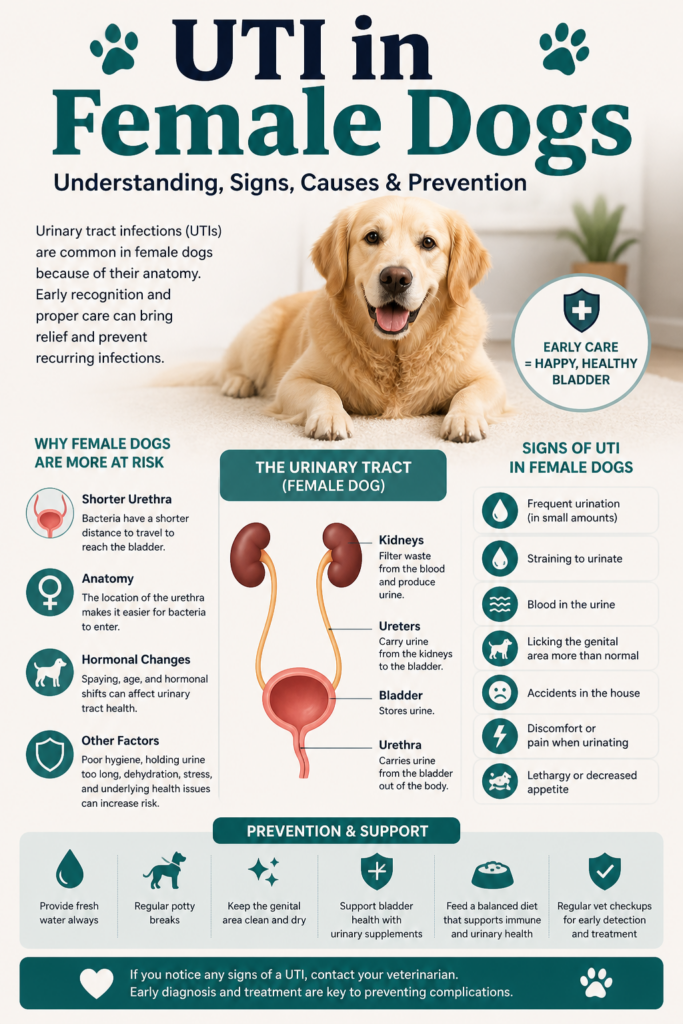
Why Female Dogs Get UTIs More Often — The Biological Reasons
1. Shorter Urethra — The Primary Anatomical Factor
The anatomy of female dogs makes them more likely to get urinary tract infections. In the female, the urethra is short so bacteria don’t have to go far to get to the bladder. In male dogs the urethra is significantly longer, giving bacteria a much greater distance to travel before reaching the bladder — and more opportunity to be cleared before establishing an infection.
This anatomical difference is the foundational reason female dogs account for the majority of canine UTI in Female Dogs cases. In veterinary medicine, UTIs occur more commonly in female dogs compared to males because of differences in anatomy. It’s not a health problem that can be corrected — it’s a biological reality that makes consistent daily prevention more important for female dogs than for males.
2. Vulvar Anatomy and Fecal Proximity
The vulva sits right under the anus, so fecal contamination is more common. E. coli — the bacteria responsible for the majority of canine UTIs — is found in fecal matter. The proximity of the vulvar opening to the anal area means female dogs face constant low-level bacterial exposure at the urethral entry point that male dogs simply don’t experience to the same degree.
Understanding the factors contributing to UTI in Female Dogs can help pet owners implement effective prevention strategies.
This proximity becomes a more significant risk factor in specific situations: dogs who are overweight and have difficulty fully squatting to urinate, senior dogs with reduced mobility who may have urine contact with the skin around the vulva, and dogs with excess skin folds around the vulvar area where moisture and bacteria accumulate.
3. Recessed or Hooded Vulva
A recessed or hooded vulva — where the vulva is partially or fully covered by a skin fold — is one of the most commonly overlooked anatomical contributors to recurring UTIs in female dogs. The skin fold traps moisture and creates a warm, protected environment where bacteria accumulate near the urethral opening. Anatomic abnormalities such as hooded vulva are among the underlying conditions that can make dogs more susceptible to UTIs.
If your female dog has had three or more UTIs and a recessed vulva hasn’t been discussed with your vet, it’s worth raising specifically. In some cases this anatomical factor is the primary driver of recurrence — and in severe cases, surgical correction can resolve recurring infections that years of antibiotic treatment couldn’t.
4. Hormonal Factors — Spaying and Estrogen
Spayed female dogs face an additional risk factor that intact females don’t — reduced estrogen levels. Estrogen plays a role in maintaining the health of the urethral sphincter and the mucosal lining of the urinary tract. When estrogen declines after spaying, both urethral sphincter tone and the integrity of the urinary tract lining can be affected.
This is why urethral sphincter mechanism incompetence (USMI) — the most common cause of incontinence in senior dogs — disproportionately affects large breed spayed females. And incontinence creates its own UTI risk: urine leaking involuntarily increases bacterial access to the urethral opening, raising the likelihood of ascending infection.
Female dogs are more prone to UTIs, especially during periods of hormonal changes such as heat cycles. Even intact females experience periods of increased vulnerability as hormonal fluctuations affect the urinary tract environment.
5. Weight and Skin Fold Issues
UTIs are more common in dogs who are overweight and have excess folds of skin around the vulva. Excess weight creates skin folds that trap moisture near the urethral opening, and overweight dogs may have more difficulty fully squatting during urination — leading to incomplete bladder emptying and urine contact with periurethral skin that increases bacterial exposure.
Even modest weight reduction in overweight female dogs with recurring UTIs can meaningfully reduce recurrence frequency — not because of any direct antibacterial effect, but because it reduces the anatomical and mechanical factors that create repeated bacterial access to the urethral opening.
Female Dog UTI Symptoms — What to Watch For
The symptoms of UTI in female dogs are the same as in males but often appear earlier and more frequently due to the anatomical factors above. Knowing the early signs — before obvious symptoms develop — allows faster intervention and reduces the likelihood of the infection progressing to the kidneys.
Early Signs — Often Missed
- More frequent requests to go outside with smaller amounts of urine each time
- Excessive licking of the genital area — dogs self-soothe irritation they can’t otherwise address
- Inflammation of the genital region, sometimes with salivary staining — the copper coloring to fur from repeated licking
- Subtle behavioral changes — mild restlessness or reduced energy
- Changes in urine odor stronger than usual
More Obvious Signs — Act Promptly
- Straining or vocalizing during urination
- Blood in the urine — pink, red, or brown-tinged
- Accidents in a house-trained dog
- Cloudy urine
- Strong or foul urine odor
Urgent Signs — Contact Your Vet Same Day
- Fever, lethargy, or loss of appetite alongside urinary symptoms — may indicate kidney involvement
- Vomiting alongside urinary symptoms
- Straining without producing any urine
For a detailed guide on tracking early warning signs between infections: Signs Your Dog’s UTI Is Coming Back (And What to Do Before It Gets Worse)
Prevention Strategies Specific to Female Dogs
Because female dogs face anatomical risk factors that don’t exist for males, their prevention strategy needs to specifically address those factors — not just general urinary health principles.
Hygiene Maintenance
Keeping the genital area clean and trimmed is more impactful for female dogs than most owners realize. For female dogs, consider trimming the hair around the genital area to minimize the risk of bacterial buildup. Long hair around the vulva traps moisture, debris, and fecal bacteria near the urethral opening — exactly the contamination pathway that makes female dogs more susceptible.
Practical steps for female dog hygiene:
- Keep hair trimmed short around the vulvar area — ask your groomer to include this in regular grooming
- Wipe the genital area with unscented pet-safe wipes after outdoor time, particularly after time in muddy or high-bacteria environments
- Check for skin fold moisture regularly — particularly in overweight dogs or those with naturally recessed vulvas
- Wash bedding regularly in hot water — urine residue on bedding contributes to reinfection
Frequent Bathroom Breaks
Don’t allow your dog to hold their urine for extended periods as this can create an environment that promotes bacterial growth. For female dogs with recurring UTIs, scheduled bathroom breaks every 4-6 hours during the day are a meaningful prevention measure — not just a convenience. Regular urination flushes bacteria from the bladder before they can establish.
Consistent Hydration
Dilute urine is less favorable for bacterial growth and flushes bacteria more effectively during urination. Female dogs on dry kibble diets — where moisture intake is significantly lower than wet or raw food diets — face a compounding risk: anatomical vulnerability combined with chronically concentrated urine that creates a more hospitable bladder environment for bacteria.
Adding warm water or low-sodium broth to meals, using a pet water fountain, and placing multiple water bowls in different locations are all practical ways to increase daily moisture intake without changing the overall diet.
Daily Supplement Support
For female dogs with recurring UTIs, daily supplement support addresses the bladder environment in ways that hygiene and hydration alone can’t. The ingredients that matter most:
- Cranberry PACs — reduce bacterial adhesion to the bladder wall daily. Female dogs’ shorter urethras mean bacteria reach the bladder more easily — reducing their ability to adhere once there is the next line of defense.
- D-Mannose — works alongside cranberry PACs through a complementary anti-adhesion mechanism, particularly effective against E. coli — the most common UTI pathogen in female dogs.
- Marshmallow Root and NAG — support the GAG layer and bladder lining integrity that each infection progressively degrades. Female dogs with repeated infections need active support for this protective barrier.
- Pumpkin Seed Powder — supports bladder muscle tone and urethral sphincter function. Particularly relevant for spayed females experiencing any incontinence, which increases UTI risk by creating additional bacterial access to the urethral opening.
- Probiotics — support gut microbiome balance and the systemic immune function that protects the urinary tract between infections.
Bladder Guard Soft Chews from Natural Ranch Products combines all of these ingredients in a daily cold-pressed formula — addressing female dog UTI vulnerability from the bacterial adhesion, bladder lining, sphincter tone, and immune function angles simultaneously.
→ See Bladder Guard Soft Chews
For a complete ingredient breakdown and evaluation checklist: Best Dog UTI Supplement: What to Actually Look For
When Female Dog UTIs Keep Coming Back — What to Investigate
If your female dog has had two or more UTIs in twelve months, there’s almost certainly an underlying factor that hasn’t been identified and addressed. Here’s what to ask your vet specifically:
- Urine culture and sensitivity testing — not just urinalysis. Culture identifies the specific bacteria and which antibiotic will actually treat it. Empirical prescribing without culture is one of the most common reasons recurring infections fail to resolve.
- Anatomical evaluation — specifically ask whether your dog has a recessed or hooded vulva. This is frequently overlooked and can be the primary driver of recurrence.
- Bladder imaging — to rule out bladder stones, which create physical surfaces where bacteria can hide between antibiotic courses.
- Bloodwork — to screen for diabetes mellitus and Cushing’s disease, both of which create urinary environments significantly more favorable to bacterial growth.
- Follow-up urinalysis — 7-14 days after completing antibiotics to confirm full clearance rather than symptom resolution. Many relapses occur because the infection was suppressed but not fully eliminated.
For the full breakdown of why some dogs keep cycling through infections: Why Some Dogs Keep Getting UTIs (And What Actually Helps Long-Term)
For the complete daily prevention routine: Dog UTI Prevention: Daily Habits That Actually Matter
Special Considerations for Senior Spayed Females
Senior spayed female dogs face the highest UTI risk of any demographic — combining the anatomical vulnerability of being female with the age-related factors of reduced immune function, progressive GAG layer degradation from accumulated infection history, and the hormonal changes of spaying that affect urethral sphincter tone.
This is especially true for senior dogs who may have more difficulty squatting to urinate and are prone to incontinence. Incomplete bladder emptying leaves residual urine in the bladder that increases bacterial exposure time. Incontinence creates ongoing bacterial access to the urethral opening. Both factors compound the anatomical vulnerability that already makes female dogs more susceptible.
For the complete guide to urinary health in older dogs: Senior Dog Urinary Health: Why Older Dogs Are More Vulnerable (And What Actually Helps)
Why do female dogs get UTIs more than male dogs?
Female dogs have a shorter, wider urethra than males, giving bacteria a much shorter path to the bladder. The vulva also sits close to the anus, increasing exposure to E. coli and other fecal bacteria at the urethral opening. Spayed females face additional vulnerability from reduced estrogen that affects urethral sphincter tone and urinary tract lining integrity. These anatomical and hormonal factors make consistent daily prevention more important for female dogs than for males.
What is a hooded vulva in dogs and why does it cause UTIs?
A hooded or recessed vulva is an anatomical condition where the vulva is partially or fully covered by a skin fold. The fold traps moisture and creates a warm, protected environment where bacteria accumulate near the urethral opening — exactly the contamination pathway that causes ascending UTIs. It is one of the most commonly overlooked contributors to recurring UTIs in female dogs. If your female dog has had three or more UTIs without an identified cause, ask your vet specifically about this.
How can I prevent UTIs in my female dog?
The most effective prevention for female dogs combines regular hygiene maintenance — keeping hair trimmed around the vulvar area and wiping after outdoor time — with consistent hydration, frequent bathroom breaks every 4-6 hours, and daily supplement support. Cranberry PACs and D-Mannose address bacterial adhesion, marshmallow root and NAG support bladder lining integrity, pumpkin seed powder supports urethral sphincter tone, and probiotics maintain immune function. Weight management also meaningfully reduces UTI risk in overweight females.
Do spayed female dogs get more UTIs?
Spayed female dogs are at higher risk for both UTIs and urinary incontinence due to reduced estrogen levels after spaying. Estrogen plays a role in maintaining urethral sphincter tone and urinary tract lining integrity. Reduced estrogen can weaken the sphincter and affect the mucosal lining, making the urinary tract more vulnerable. Incontinence — the most common consequence of USMI in spayed females — also increases UTI risk by creating ongoing bacterial access to the urethral opening.
Why does my female dog keep getting UTIs after antibiotics?
Recurring UTIs in female dogs after antibiotic treatment usually indicate an underlying factor that hasn’t been addressed — anatomical issues like recessed vulva, incomplete bacterial clearance from the previous infection, bladder stones providing bacterial hiding places, systemic conditions like diabetes, or inadequate daily prevention between episodes. Ask your vet specifically about urine culture and sensitivity testing, anatomical evaluation, bladder imaging, and bloodwork to identify the specific contributing factor rather than continuing repeat antibiotic courses.
What supplements help female dogs prone to UTIs?
The most effective daily supplement formulas for UTI-prone female dogs address multiple mechanisms simultaneously. Cranberry PACs and D-Mannose reduce bacterial adhesion — particularly important for female dogs whose shorter urethras make adhesion prevention the critical defense. Marshmallow root and NAG support the bladder lining that repeated infections degrade. Pumpkin seed powder supports urethral sphincter function — especially relevant for spayed females. Probiotics maintain the immune environment that resists infection between episodes. Consistent daily use is essential — these work as prevention, not treatment.
References
Merck Veterinary Manual. “Infectious Diseases of the Urinary System in Dogs.” Updated September 2024.
PetMD Editorial. “UTI in Dogs: Signs, Causes, and Treatment.” Updated December 2025.
Cornell University College of Veterinary Medicine. “Urinary Tract Infections.”
Acierno M. “Making sense of the new UTI antimicrobial recommendations.” dvm360 Fetch Coastal Conference. 2024.
Vetster Editorial. “A Pet Owner’s Guide to Urinary Tract Infections in Dogs.” November 2025.
Byron JK. “Urinary Tract Infection.” Veterinary Clinics of North America: Small Animal Practice. 2019.