Best Dog Food for Urinary Health: What to Look For and What Diet Can Actually Do
What your dog eats directly affects the urinary environment — urine pH, mineral concentration, hydration status, and the bacterial substrate available in the bladder. These factors determine how hospitable the bladder is to bacterial growth and crystal formation. Getting the diet right doesn’t replace veterinary care when problems occur, but it is one of the most practical and sustainable tools for reducing how often they do.
This guide covers the dietary principles that genuinely support urinary health, what to look for and avoid in a dog food for urinary concerns, the honest distinction between over-the-counter urinary support diets and prescription urinary diets, and how diet fits into a complete urinary health strategy alongside daily supplement support.So what is the best dog food for urinary health.
What Diet Can and Cannot Do for Dog Urinary Health
Before evaluating any food for urinary health it’s worth being precise about what diet can realistically accomplish — because the marketing around this category frequently overstates it.
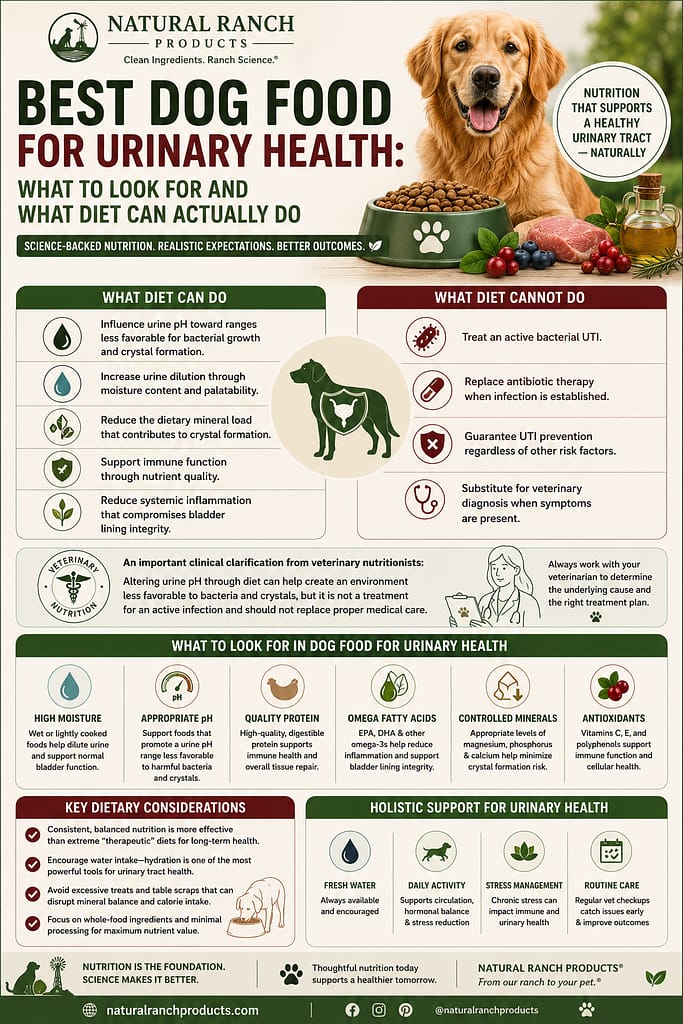
What diet can do: influence urine pH toward ranges less favorable for bacterial growth and crystal formation, increase urine dilution through moisture content, reduce the dietary mineral load that contributes to crystal formation, support immune function through nutrient quality, and reduce systemic inflammation that compromises bladder lining integrity.
What diet cannot do: treat an active bacterial UTI, replace antibiotic therapy when infection is established, guarantee UTI prevention regardless of other risk factors, or substitute for veterinary diagnosis when symptoms are present.
An important clinical clarification from veterinary nutritionists: altering pH helps to manage stones, either to dissolve them or to prevent them from recurring. It does not help prevent urinary tract infections, which is a common misconception. Diet and UTI prevention work through different mechanisms — hydration, inflammation reduction, and nutrient support rather than pH manipulation alone.
For the complete science on how diet affects the urinary environment: Can Dogs Get UTIs From Diet? What Your Dog Eats and Bladder Health
The Most Important Dietary Factor — Moisture
Hydration is the single most impactful dietary variable in urinary health. Moisture-rich foods or fresh diets with added water help dilute urine, flushing out bacteria and crystals before they cause problems. The difference between wet and dry food moisture content is substantial — wet dog foods typically contain about 75% moisture, compared to only 10% in dry kibble. This is not a minor difference. It fundamentally changes how concentrated your dog’s urine is throughout the day.
More dilute urine means bacteria are less concentrated, minerals are less likely to reach crystallization thresholds, and the natural flushing that clears bacteria from the bladder before they can attach is more frequent and more effective. For dogs who eat dry kibble — the majority of commercial dog diets — adding warm water to their bowl at each meal is one of the simplest, most impactful changes you can make today.
For the full science on why hydration is the foundation of every urinary health strategy: Why Hydration Determines Whether Urinary Health Strategies Work in Dogs
Key Nutritional Criteria for Urinary Health Dog Food
Quality Animal Protein as the Primary Ingredient
High-quality proteins like chicken, turkey, or fish are ideal. Dogs are carnivores with a metabolic preference for animal protein. Diets built around quality animal protein — rather than plant-based protein or grain fillers — tend to produce more acidic urine that is less favorable for bacterial persistence and struvite crystal formation. Animal protein also provides the amino acids that support immune function and the bladder lining’s protective glycosaminoglycan layer.
The protein source matters as much as the protein level. Named whole meats — chicken, beef, salmon, turkey — as the first ingredient deliver complete amino acid profiles. Plant proteins, byproduct meals, and corn gluten meal as primary protein sources inflate crude protein percentages without the same biological value or urine pH effect.
Controlled Magnesium and Phosphorus
Look for foods with low magnesium and phosphorus levels to prevent urinary stones. Struvite crystals — the most common urinary crystals in dogs — are composed of magnesium ammonium phosphate. Diets high in magnesium, phosphorus, and calcium can contribute to urinary crystals and stones, increasing the risk of UTIs. Excess dietary magnesium combined with alkaline urine creates the conditions most favorable for struvite formation. For dogs prone to struvite crystals or with a history of struvite stones, reducing dietary magnesium is a meaningful preventive measure.
Omega-3 Fatty Acids for Inflammation Management
Omega-3 fatty acids reduce systemic inflammation including in the urinary tract. Chronic low-grade inflammation compromises the bladder lining’s ability to maintain its protective integrity — the GAG layer that limits bacterial adhesion degrades under chronic inflammatory conditions. Diets with quality omega-3 sources from fish, salmon oil, or cold-pressed plant sources with balanced omega profiles support systemic inflammation management that benefits the bladder lining alongside skin, joints, and immune function.
Low Sodium
High dietary sodium concentrates urine and stresses the kidneys — both counterproductive for dogs with urinary concerns. Avoiding high-sodium foods and treats, particularly for dogs already prone to UTIs or crystal formation, reduces the urinary concentration that creates more favorable conditions for bacterial growth and mineral precipitation.
Antioxidants and Immune Support Nutrients
Antioxidants — vitamins C and E — support immune function, helping the body resist infection. Glucosamine supports the health of the bladder lining, which can be beneficial for dogs with chronic cystitis or recurring irritation. These nutrients are often present in quality commercial diets but may be insufficient for dogs with elevated immune demands from recurring infections — making daily supplement support a meaningful complement to dietary improvements.
What to Avoid in Dog Food for Urinary Health
- High-carbohydrate grain-heavy formulas — corn, rice, wheat, and soy as primary ingredients promote alkaline urine favorable for bacterial persistence and struvite crystal formation. They also displace the animal protein that supports appropriate urine pH and immune function.
- Excessive magnesium content — check the guaranteed analysis for magnesium levels if your dog has a history of struvite crystals or stones.
- High sodium content — concentrates urine and increases renal workload. Look for sodium levels below 0.3% dry matter for dogs with ongoing urinary concerns.
- Artificial preservatives and fillers — BHA, BHT, and ethoxyquin have safety concerns and add metabolic burden without nutritional benefit. Unnecessary fillers displace higher-quality ingredients.
- Plant protein as primary protein source — pea protein, soy protein isolate, and corn gluten meal inflate crude protein percentages without the amino acid profile or urine-acidifying effect of quality animal protein.
Over-the-Counter Urinary Support Diets vs Prescription Urinary Diets
This distinction is important and frequently misunderstood. The market has two very different categories of “urinary health” dog food — and they serve fundamentally different purposes.
Over-the-Counter Urinary Support Diets
These are standard commercial diets marketed with urinary health claims — typically incorporating higher moisture, quality protein, controlled minerals, and sometimes cranberry or other urinary-supportive ingredients. They are appropriate for dogs with general urinary health goals, recurring UTIs without confirmed stone disease, and at-risk breeds as preventive nutrition.
For dogs with recurring UTIs but no stones — prioritize hydration (switch to wet food or add water to kibble), reduce sodium, and maintain a healthy weight. OTC urinary support foods may be sufficient.
Prescription Urinary Diets
Prescription urinary diets — including Hill’s Prescription Diet c/d, Royal Canin Urinary SO, and Purina Pro Plan Veterinary Diets UR — are specifically formulated to dissolve existing bladder stones or prevent their recurrence through aggressive mineral and pH manipulation. Urinary dog diets require precise levels of nutrients to dissolve and prevent bladder stones. They can be harmful to dogs without urinary issues.
Prescription urinary diets require veterinary prescription and ongoing monitoring — they are not appropriate as general urinary health nutrition for dogs without confirmed stone disease. “Not all dogs with urinary tract conditions need to be on a urinary diet,” says Dr. John P. Loftus, assistant professor of small animal internal medicine and nutrition at Cornell University College of Veterinary Medicine.
What to Look for in an Over-the-Counter Urinary Health Dog Food
- Named whole meat as the first ingredient — chicken, salmon, turkey, beef at the top of the ingredient list
- High moisture content or wet food option — or designed to be used with water addition
- Controlled magnesium and phosphorus — disclosed in the guaranteed analysis
- Low sodium — below 0.3% dry matter for dogs with ongoing urinary concerns
- Quality fat source with omega-3 content — salmon oil, fish oil, or balanced plant-based omega source
- No artificial preservatives, colors, or fillers
- AAFCO-complete for adult maintenance or all life stages
Diet Plus Daily Supplement Support — The Complete Approach
Diet creates the urinary environment. Daily supplement support maintains the specific biological mechanisms — anti-adhesion, bladder lining integrity, immune function — that determine whether bacteria establish in that environment. Neither approach alone produces the same results as both together.
For dogs where recurring UTIs are the primary concern, the most complete approach combines dietary improvements — higher moisture, quality protein, controlled minerals — with daily urinary supplement support addressing cranberry PAC anti-adhesion, D-Mannose competitive binding, marshmallow root and NAG bladder lining support, and probiotic immune reinforcement.
Bladder Guard Soft Chews delivers all of these mechanisms in a single cold-pressed daily formula that works alongside whatever dietary approach is in place — preserving the bioactive compounds that heat-processed supplements degrade before they reach your dog’s bladder.
→ See Bladder Guard Soft Chews
→ See the Total Defense System — Bladder Guard + Daily Multivitamin
For the complete daily prevention guide: Dog UTI Prevention: Daily Habits That Actually Matter
For the full science on how the gut microbiome connects diet to urinary health: Why Gut Health and Urinary Health Are Connected in Dogs
What is the best dog food for urinary health?
The best dog food for urinary health prioritizes high moisture content to dilute urine, quality animal protein as the primary ingredient to support appropriate urine pH, controlled magnesium and phosphorus to reduce crystal formation risk, low sodium to avoid concentrating urine, and quality omega-3 sources for systemic inflammation management. For most dogs with recurring UTIs without confirmed stone disease, a high-quality commercial diet with these characteristics combined with daily urinary supplement support provides more practical benefit than prescription urinary diets designed specifically for stone dissolution.
Can dog food prevent UTIs?
Diet reduces conditions favorable to bacterial growth but cannot prevent UTIs entirely or treat active infections. Dietary factors that reduce UTI risk include adequate moisture to dilute urine and flush bacteria, quality animal protein that supports appropriate urine pH, controlled magnesium that reduces struvite crystal formation, and omega-3 fatty acids that manage the bladder lining inflammation that increases susceptibility. Active bacterial UTIs require antibiotic treatment — no dietary change eliminates an established infection.
Is wet food better than dry food for dogs with UTIs?
Generally yes — wet food contains approximately 75% moisture versus only 10% in dry kibble. Higher moisture intake dilutes urine, reduces bacterial concentration, and makes the urinary environment less favorable for bacterial growth and crystal formation. If feeding dry food, adding warm water or low-sodium broth to every meal significantly increases daily moisture intake. This single change can increase fluid consumption meaningfully and reduce urine concentration over time — making it one of the most practical dietary adjustments for dogs with recurring urinary issues.
Do dogs with UTIs need prescription urinary food?
Not necessarily — prescription urinary diets are specifically designed to dissolve existing bladder stones or prevent their recurrence through mineral and pH manipulation. They can be harmful to dogs without urinary stone disease and are not appropriate as general UTI prevention nutrition. Dogs with recurring UTIs but no confirmed bladder stones typically benefit more from dietary improvements focused on moisture, protein quality, and mineral control — combined with daily urinary supplement support — than from prescription urinary diets designed for stone management.
What ingredients should I look for in dog food for urinary health?
Look for named whole meat as the first ingredient, high moisture content or wet food format, controlled magnesium and phosphorus disclosed in the guaranteed analysis, low sodium content, quality omega-3 fat sources, and no artificial preservatives or fillers. Some dog foods also include cranberry extract for anti-adhesion support and glucosamine for bladder lining health — useful additions for dogs with recurring urinary concerns. Avoid high-carbohydrate grain-heavy formulas where corn, rice, or soy are primary ingredients, as these promote the alkaline urine conditions favorable for bacterial persistence.
How does diet work alongside urinary supplements for dogs?
Diet creates the urinary environment — urine pH, concentration, and mineral balance that determine how hospitable the bladder is to bacterial growth. Daily urinary supplements address the specific biological mechanisms that operate within that environment — cranberry PACs and D-Mannose for bacterial anti-adhesion, marshmallow root and NAG for bladder lining integrity, and probiotics for gut microbiome immune support. Diet and supplements address complementary layers — neither produces the same results alone as both working together.
References
Great Pet Care Editorial. “Urinary Dog Food: 6 Best Vet-Approved Formulas in 2026.” April 2026.
Raydogs Editorial. “Best Dog Food for Urinary Tract Health in 2026: Vet-Backed Guide.” April 2026.
iHeartDogs Editorial. “7 Best Dog Foods for Urinary Tract Health — 2026.” February 2026.
Byron JK. “Urinary Tract Infection.” Veterinary Clinics of North America: Small Animal Practice. 2019.
Tufts University Cummings School of Veterinary Medicine. “Can Diet Prevent or Treat Urinary Tract Infections in Dogs?” 2023.
VCA Animal Hospitals. “Urinary Tract Infections (UTIs) in Dogs.” vcahospitals.com