Best High-Protein Treats for Dogs
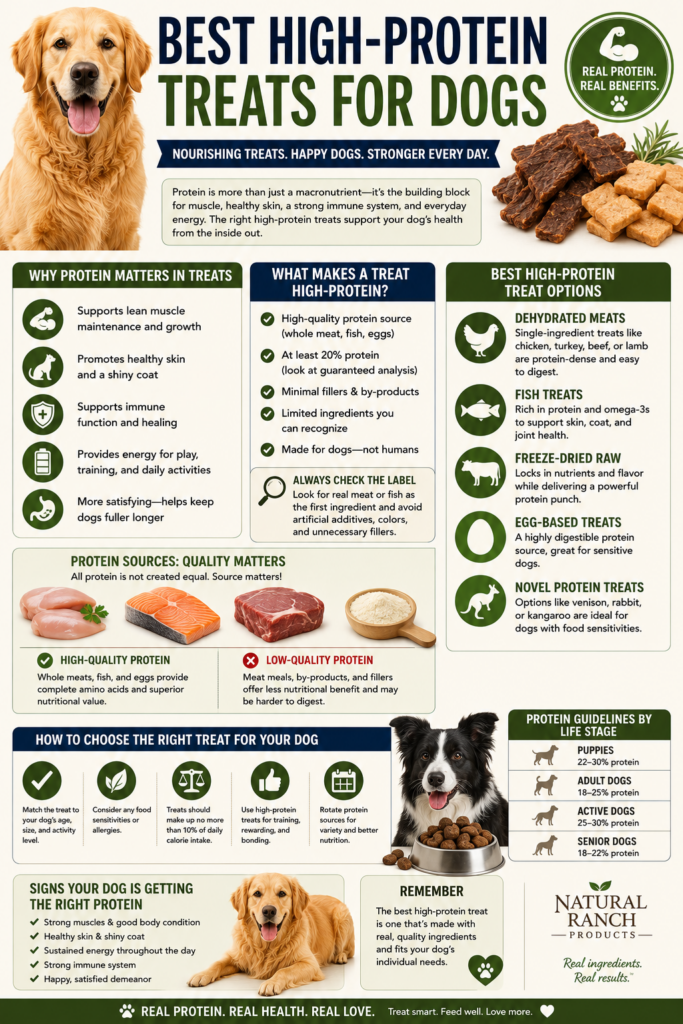
Walk into any pet store and the treat aisle offers hundreds of options Do you ever think what is best high-protein treats for dogs — all of them marketed with some combination of “natural,” “wholesome,” “real meat,” and “high protein.” But most of those claims are doing more marketing work than nutritional work. Understanding what actually makes a treat high-protein — and why protein source matters as much as protein percentage — helps you make choices that genuinely contribute to your dog’s health rather than just satisfying the marketing checklist.
This guide covers the biology of protein in dogs, what “high protein” actually means on a treat label, which protein sources deliver the most nutritional value, what label claims to look past, and what a genuinely high-quality high-protein treat looks like in practice.
Why Protein Source Matters More Than Protein Percentage
A treat label claiming 40% crude protein tells you the total nitrogen content of the product — not the biological value of that protein to your dog. These two numbers are very different, and the difference is determined by protein source.
Protein quality is measured by its amino acid profile and digestibility. Animal proteins — from whole meat, fish, and poultry — provide complete amino acid profiles that dogs can utilize directly for muscle maintenance, tissue repair, enzyme production, and immune function. Plant-based protein fillers — from pea protein, soy protein isolate, and corn gluten meal — can inflate crude protein percentages on the label while providing significantly lower biological value because dogs have limited capacity to convert plant amino acid profiles into usable animal-specific proteins.
The practical implication: a treat with 35% crude protein from a whole animal source like salmon or beef delivers more usable protein to your dog than one with 40% crude protein from a pea protein and corn gluten base. The label percentage doesn’t tell you which situation you’re in. The ingredient list does — and specifically, what the first ingredient is and whether the primary protein source is a named whole meat or a protein isolate derivative.
What Dogs Actually Need From Protein
Dogs are omnivores with a metabolic preference for animal protein. Their digestive systems are optimized to extract amino acids from animal sources — the building blocks used for every structural and functional protein in the body.
Protein supports muscle development and maintenance — the muscle tissue that declines with age, sedentary lifestyle, or inadequate dietary protein. It provides the amino acids for collagen synthesis — the structural protein of joints, tendons, skin, and connective tissue. It supplies the precursors for enzymes that drive every metabolic process. And it provides the raw material for immunoglobulins — the immune system proteins that resist infection and support recovery.
For active dogs, treats that contribute meaningful animal protein to the daily diet rather than just providing caloric filler genuinely support these functions. For senior dogs whose protein requirements increase as muscle maintenance becomes more metabolically challenging, high-quality animal protein treats can meaningfully supplement the dietary foundation.
The Best High-Protein Treats For Dogs — What to Look For
Salmon — The Skin and Coat Protein
Salmon is one of the most nutritionally complete protein sources available in dog treats. It delivers a high-quality complete amino acid profile alongside naturally occurring Omega-3 fatty acids — EPA and DHA — that are not present in most land animal proteins. These omega-3s directly support skin barrier lipid production, coat shine, systemic inflammation management, and joint health. A salmon treat is simultaneously delivering protein for muscle and tissue support and omega fatty acids for skin, coat, and anti-inflammatory benefit — two functional contributions in one ingredient.
Salmon is also a naturally chicken-free protein — which matters for the significant population of dogs who have developed chicken sensitivity from years of exposure to chicken as the primary protein in commercial diets. For dogs who can’t tolerate the most common treat proteins, salmon provides a high-palatability, high-value alternative with no common allergen overlap.
Beef — Dense and Highly Palatable
Beef provides one of the highest biological value animal protein profiles available — dense in the branched-chain amino acids that drive muscle protein synthesis. It is highly palatable to most dogs and provides meaningful amounts of zinc, B12, and iron alongside its protein content. The primary consideration with beef treats is sourcing — beef from quality whole muscle sources delivers significantly better amino acid density than beef byproduct meals.
Single-Ingredient Treats — The Clean Label Standard
Single-ingredient treats — dried or freeze-dried whole meat with nothing added — represent the cleanest possible protein delivery for dogs. Products like air-dried beef lung, freeze-dried chicken liver, or salmon jerky with salmon as the only ingredient eliminate every label reading concern. The protein percentage reflects the protein source directly. There are no fillers to inflate the number, no artificial preservatives to raise concerns, and no hidden allergens in secondary ingredients.
Single-ingredient treats also serve as the cleanest options for food allergy elimination trial periods — when a dog needs a novel protein treat that introduces no additional allergen variables.
Limited Ingredient Treats — High Protein With Minimal Variables
Limited ingredient treats with a named whole meat as the first ingredient and a short, readable ingredient list represent the practical high-quality standard for daily treat use. The key criteria: named whole meat first (salmon, beef, chicken, turkey — not “poultry meal” or “meat byproducts”), no artificial preservatives, no artificial colors, no sugar or corn syrup added for palatability, and ideally sourced and made in the USA where manufacturing standards are more consistently regulated.
What to Look for on a High-Protein Dog Treat Label
- Named whole meat as the first ingredient — salmon, beef, chicken, turkey, venison, bison. Not “meat meal,” “poultry byproduct,” or protein isolates like pea protein or soy protein concentrate.
- Crude protein percentage above 30% — the general threshold for high-protein classification. But as noted above, only meaningful when the protein source is a quality whole animal protein.
- Short ingredient list — fewer ingredients means more of the treat is the primary protein source and less is filler, binder, or flavor enhancement.
- No artificial preservatives — BHA, BHT, and ethoxyquin are synthetic preservatives with ongoing safety questions. Natural preservation through tocopherols (Vitamin E), rosemary extract, or through the drying process itself is preferable.
- No added sugar or corn syrup — used for palatability in low-quality treats, sugar adds unnecessary calories and is counterproductive for dogs with urinary or metabolic health concerns.
- Sourced and made in the USA — manufacturing standards and ingredient sourcing oversight are more consistent within US-regulated facilities than in many international manufacturing environments.
- Soft texture for senior dogs and small breeds — crunchy treats require significant jaw pressure that can be uncomfortable for older dogs with dental wear or smaller dogs with fragile teeth. Soft jerky-style treats deliver the same protein benefit with appropriate texture for all life stages.
What to Avoid in High-Protein Dog Treats
- Protein from isolates as the primary source — pea protein, soy protein isolate, and corn gluten meal inflate crude protein percentages without delivering the amino acid profile or digestibility of whole animal proteins.
- Unspecified “meat” or “poultry” — unnamed meat sources can change with supply availability, making the treat unreliable for dogs with specific protein sensitivities.
- Artificial colors — Red 40, Yellow 5, Blue 2 serve no nutritional purpose in a dog treat. Their presence signals a formula optimized for visual appeal to human buyers rather than nutritional value for dogs.
- Excessive fillers — wheat, corn, soy, and rice as primary ingredients in a treat labeled “high protein” are reducing the actual protein contribution per treat while adding carbohydrate calories.
- Propylene glycol for moisture — used in some soft treats to maintain texture, propylene glycol raises safety concerns and is banned in cat food in the US. Glycerin from plant sources is the appropriate soft chew moisture agent.
Protein Treats and Specific Health Goals — Matching the Treat to the Dog
For Skin and Coat Health
Marine protein sources — salmon, trout, sardine — provide naturally occurring omega-3 fatty acids alongside their protein content. For dogs with dry coat, seasonal allergies, or recurring skin issues, treats where the primary protein also delivers omega-3 support provide a functional benefit beyond basic nutrition. Salmon in particular delivers EPA and DHA — the long-chain omega-3s with the strongest evidence for skin barrier support and anti-inflammatory effect.
For Dogs With Food Sensitivities
Dogs who have developed sensitivity to commonly fed proteins — chicken and beef are the most frequent triggers — need treats that provide high-quality protein from a novel source. Salmon is naturally chicken-free and beef-free, making it one of the best options for dogs who react to the most common commercial pet food proteins. The limited ingredient profile of a 90% salmon soft jerky treat eliminates the multiple-protein-source confusion of most commercial treats.
For Senior Dogs
Senior dogs have higher protein requirements than most owners realize — not lower. Muscle mass naturally declines with age, and adequate high-quality protein intake is the primary nutritional countermeasure. Senior dogs also often have reduced digestive efficiency, making the digestibility of the protein source more important than in younger dogs. Soft, easily digestible animal protein treats that don’t require significant jaw effort are ideal for older dogs who may have dental wear alongside their increased protein needs.
For Training
High-value training treats need to be small, palatable, and sufficiently motivating to hold attention in distracting environments. Soft jerky-style treats can be broken into small pieces, maintaining high palatability without the caloric cost of full-treat doses at every repetition. The flavor intensity of salmon and other marine proteins makes them particularly effective as high-value training rewards compared to lower-palatability grain-based treats.
Introducing Natural Ranch Salmon Recipe Dog Treats
Natural Ranch Salmon Recipe Dog Treats are built around one principle — if the first ingredient isn’t real food your dog can thrive on, it doesn’t belong in the formula.
90% USA-sourced salmon. Real whole salmon — not salmon meal, not salmon flavoring, not salmon byproduct — as the foundation of the formula. At 90% salmon content this is one of the highest single-protein concentrations available in a soft treat format. 40% crude protein. 54 calories per treat.
The complete ingredient list: Salmon, Glycerin, Natural Flavor, Apple Cider Vinegar, Mixed Tocopherols, Rosemary Extract. Six ingredients. Every one of them serves a purpose — the salmon delivers protein and omega-3s, glycerin maintains soft texture without propylene glycol, apple cider vinegar supports digestive pH balance, mixed tocopherols provide natural Vitamin E preservation, and rosemary extract adds natural flavor enhancement with antioxidant properties.
No wheat, corn, or soy. No artificial flavors, colors, or preservatives. No chicken. Sourced and made entirely in the USA.
For dogs with skin and coat concerns, the naturally occurring omega-3 fatty acids in whole salmon support skin barrier lipid production from within — making these treats a functional complement to the Natural Ranch Skin and Coat Defense Duo. For dogs with chicken sensitivity, salmon provides a premium protein alternative that eliminates the most common treat allergen entirely.
→ See Natural Ranch Salmon Recipe Dog Treats — $16.00
→ See the Skin and Coat Defense Duo — Complete Inside-Out Skin Support
What makes a dog treat high protein?
A treat is generally considered high protein when its crude protein content exceeds 30%. But the crude protein percentage on the label reflects total nitrogen content — not the biological value of the protein to the dog. A treat with 35% crude protein from whole salmon delivers more usable protein than one with 40% crude protein from pea protein isolate. The protein source — named whole meat as the first ingredient versus plant protein derivatives — determines actual nutritional value more than the percentage alone.
Why is salmon a good protein source for dogs?
Salmon provides a complete amino acid profile alongside naturally occurring Omega-3 fatty acids — EPA and DHA — that most land animal proteins don’t contain. These omega-3s support skin barrier lipid production, coat shine, systemic inflammation management, and joint health. Salmon is also naturally chicken-free, making it one of the best high-value protein options for dogs who have developed sensitivity to chicken — the most common commercial pet food protein allergen. Whole salmon as the primary ingredient delivers both protein and functional omega-3 benefit simultaneously.
Are high-protein treats good for senior dogs?
Yes — senior dogs actually have higher protein requirements than most owners realize, not lower. Muscle mass naturally declines with age and adequate high-quality animal protein is the primary nutritional countermeasure. Senior dogs also have reduced digestive efficiency, making the digestibility of the protein source more important than in younger dogs. Soft, easily digestible animal protein treats that don’t require significant jaw effort are ideal for older dogs who need increased protein alongside appropriate texture for dental wear.
What should I look for on a high-protein dog treat label?
Look for a named whole meat as the first ingredient — salmon, beef, chicken, turkey — not meat meal, poultry byproduct, or protein isolates like pea protein. Crude protein above 30% from a whole animal source. Short ingredient list where most of the treat is the primary protein. No artificial preservatives, colors, or added sugar. Sourced and made in the USA for consistent manufacturing standards. Soft texture for senior dogs and smaller breeds who may have difficulty with crunchy treats.
Can dogs with food allergies eat salmon treats?
Salmon is naturally free from chicken and beef — the two most common protein allergens in commercial pet food. For dogs who have developed sensitivity to commonly fed proteins, salmon treats from a limited ingredient formula provide a high-quality protein option without the most frequent allergen triggers. During food elimination trials, single-ingredient or very limited ingredient salmon treats are among the cleanest options available for maintaining treat rewards without introducing additional allergen variables.
How many calories should a dog treat have?
General guidance is that treats should account for no more than 10% of a dog’s daily caloric intake. For a 50-pound active dog needing approximately 1,000 calories per day, that’s 100 calories from treats — roughly two 54-calorie treats with room for smaller training rewards. Tracking treat calories alongside food calories is particularly important for dogs managing weight, as treat calories are easy to overlook. High-protein treats with moderate calorie counts — like 54 calories per treat — provide substantial protein per calorie compared to grain-heavy biscuit treats at similar calorie levels.
References
Dog Food Advisor. “Best Dog Treats 2026.” Updated March 2026.
National Research Council. Nutrient Requirements of Dogs and Cats. National Academies Press. 2006.
Association of American Feed Control Officials. “Understanding Pet Food Labels.” aafco.org.
PetMD Editorial. “High Protein Diet for Dogs: Risks and Benefits.” petmd.com.
VCA Animal Hospitals. “Nutrition and Your Dog’s Skin and Haircoat.” vcahospitals.com.
American Kennel Club. “How to Choose the Best Dog Treats.” akc.org.