
Dog Skin Allergies: How to Manage Year-Round
If you’ve identified that your dog has allergies — whether environmental, food-related, or contact — the next question is always the same: now what? Knowing which allergy type applies is only the beginning. The harder part is building a management strategy that actually reduces symptoms consistently over months and years rather than just controlling acute flare-ups as they occur.
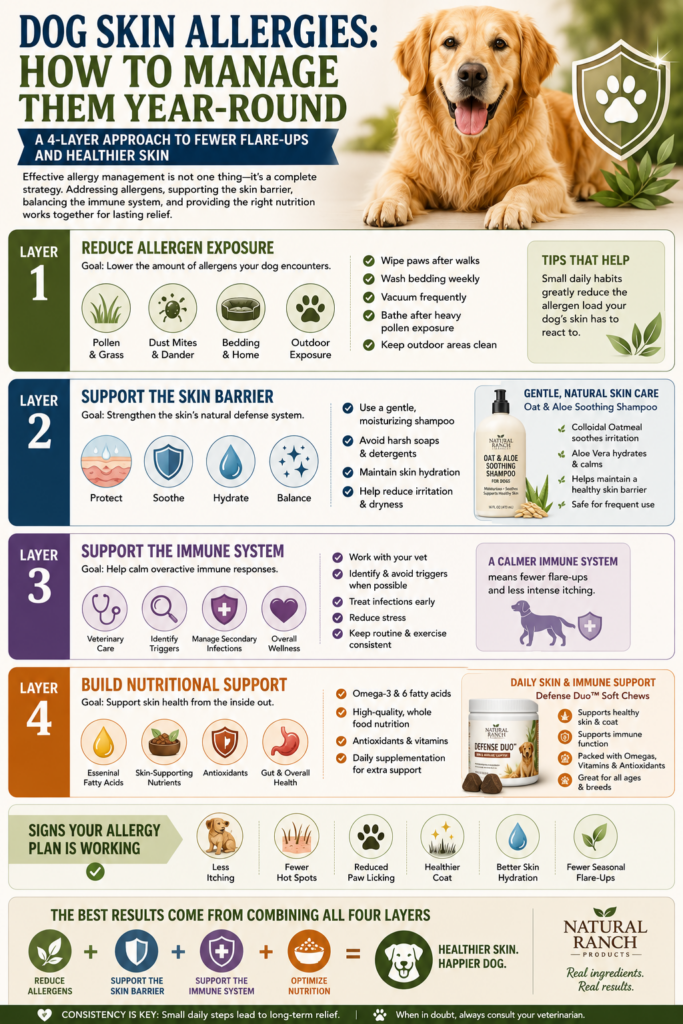
Dog skin allergy management is not a single intervention — it is a layered approach that combines allergen reduction, skin barrier support, immune management, and nutritional foundation. Each layer addresses a different part of the biological system driving the symptoms. Getting all four working together is what distinguishes dogs whose allergies become manageable from those who cycle through flare-ups indefinitely.
Why Dog Skin Allergies Require Year-Round Management
Atopic dermatitis — the most common chronic skin condition in dogs — is a genetically predisposed chronic inflammatory and pruritic allergic skin disease. The key word is chronic. Management includes medications and baths that relieve pruritus and avoidance of allergens, but the condition itself does not resolve. Client education and monitoring are key for treatment success.
Even dogs with seasonal allergies benefit from year-round management rather than just in-season treatment. The skin barrier degrades progressively with each allergic episode — the inflammation from one season’s flare-up leaves the barrier more vulnerable than it was before. Dogs who receive only reactive seasonal treatment often find their symptoms worsening year over year as the cumulative barrier damage compounds. Year-round support that maintains barrier integrity between peak allergy seasons reduces both the severity and frequency of seasonal flare-ups.
For dogs with year-round symptoms — dust mite allergy, food allergy, or environmental allergy in warm climates — consistent daily management isn’t optional. It is the entire strategy.
For the full guide on distinguishing allergy types: Dog Allergies: Seasonal vs Food vs Contact — How to Tell the Difference
Layer 1: Allergen Reduction — The Foundation of Management
The most direct way to reduce allergic symptoms is to reduce the allergen load the dog’s immune system is reacting to. Complete avoidance is rarely possible — but meaningful reduction is achievable with consistent daily habits.
Regular Bathing — The Most Actionable Allergen Reduction Tool
Bathing can help remove allergens and moisturize the skin. For dogs with environmental allergies, regular bathing with the right formula is one of the most effective non-prescription management strategies available.
The mechanism is straightforward: pollen, grass proteins, dust mite particles, and mold spores accumulate on the coat and skin throughout the day. When bathing removes them before they penetrate the skin barrier and trigger immune responses, the cumulative allergen load the immune system is reacting to decreases. Weekly bathing during high-allergen seasons produces measurable symptom reduction in many atopic dogs.
The critical requirement is using a formula that supports the barrier rather than damaging it. Sulfate-based shampoos strip the skin lipid layer with every use — progressively compromising the barrier they’re supposed to be cleaning. For allergy-prone dogs being bathed frequently, a pH-balanced, sulfate-free, colloidal oatmeal and aloe formula is essential. It removes allergens from the surface while the 5-10 minute contact time allows colloidal oatmeal to form its protective film and aloe to deliver its anti-inflammatory compounds.
→ See Natural Ranch Oat and Aloe Dog Shampoo
Wiping Down After Outdoor Time
Between baths, wiping your dog’s paws, belly, face, and any areas that contact ground-level allergens with fragrance-free grooming wipes after every outdoor session reduces the accumulation that drives daily symptom load. This is particularly impactful for dogs sensitive to grass pollen — the paws and belly pick up the highest concentration of ground-level allergens with every walk.
Indoor Allergen Management for Dust Mite Allergies
Dogs with year-round symptoms that don’t follow a seasonal pattern often have dust mite allergy — the most common year-round environmental allergen. Practical indoor management includes washing dog bedding weekly in hot water, vacuuming with a HEPA filter vacuum, using allergen-proof covers on mattresses and dog beds, and reducing humidity below 50% which significantly limits dust mite populations. These interventions don’t eliminate dust mite exposure but can meaningfully reduce the daily load the immune system is reacting to.
Year-Round Flea Prevention
All dogs with skin allergies should be protected with year-round flea adulticides. Dogs with atopic dermatitis are predisposed to flea bite hypersensitivity, and a single flea bite can trigger a prolonged inflammatory response in sensitized dogs. Flea allergy can compound with environmental allergy to produce symptoms that don’t respond to allergy management alone — because one of the drivers isn’t being controlled. Year-round flea prevention is non-negotiable for any atopic dog.
Layer 2: Skin Barrier Support — The Structural Foundation
The skin barrier is the physical structure that determines how much allergen reaches the immune cells beneath it. In atopic dogs, genetic predisposition produces a structurally weaker barrier from the outset — and each allergic episode further degrades it through the inflammation it triggers. Supporting barrier integrity is one of the most important and most underutilized management strategies available.
Topical Barrier Support
Products containing ceramides, essential fatty acids, and skin barrier-supporting compounds can be applied directly to areas of chronic sensitivity between baths to maintain moisture and reduce permeability. These are available as sprays, mousses, and leave-on conditioners from veterinary dermatology lines. For chronic hotspot-prone areas — paws, armpits, groin — targeted topical application between bathing episodes helps maintain barrier function in the most vulnerable sites.
Bathing Protocol Optimization
The bathing protocol itself significantly affects barrier outcomes. Water temperature — warm not hot, as heat exacerbates inflammation in sensitized skin. Contact time — 5-10 minutes for colloidal oatmeal and aloe to deliver their barrier-supporting benefit. Thorough rinsing — residue of any shampoo, even gentle formulas, can cause irritation. Gentle drying — rubbing with a towel can irritate sensitized skin; patting dry or using a low-heat dryer at a distance is gentler on reactive skin.
For the full science on how bathing frequency and shampoo selection affect the barrier: Are You Over-Bathing Your Dog? What It Does to Their Skin
Layer 3: Nutritional Support From Within — The Inside-Out Approach
The skin barrier’s structural integrity is determined by the nutritional inputs available for its ongoing maintenance and repair. Topical products address the surface. Nutrition addresses the biological foundation that determines how resilient the barrier is and how quickly it recovers after disruption.
Omega Fatty Acids
Omega-3 fatty acids have two distinct effects in allergic dogs: they provide the lipid building blocks for skin barrier maintenance, and they reduce the systemic inflammation that amplifies allergic responses. Supplementation with omega-3 fatty acids is one of the most consistently evidence-supported nutritional interventions for atopic dermatitis in dogs — reducing itch severity, improving barrier function, and in some cases reducing the dose of pharmaceutical interventions needed for adequate control.
The omega ratio matters alongside the total amount. Diets heavily weighted toward omega-6 — as most commercial kibble is — are inherently more pro-inflammatory at the ratio level. Supplementing with a balanced omega-3, 6, and 9 source from a stable, bioavailable carrier like cold-pressed cranberry seed oil addresses the ratio imbalance rather than just adding more of one omega type.
Zinc
Zinc is essential for skin cell repair and immune regulation at the skin surface. Zinc deficiency produces characteristic skin changes and impairs the skin’s ability to recover from allergic inflammation. Some breeds — particularly Nordic breeds — have genetic predispositions to zinc malabsorption that make supplementation especially important regardless of dietary content.
Biotin and B-Complex
Biotin (Vitamin B7) is a crucial cofactor in keratin synthesis — the primary protein structure of hair shafts and the skin’s surface cells. B-complex vitamins more broadly support the cellular energy metabolism that drives skin cell renewal and repair. Dogs on heavily processed commercial diets may receive adequate dietary biotin but at levels insufficient for dogs with elevated repair demands from chronic allergic skin inflammation.
Probiotics — The Gut-Skin Axis
A 2025 study published in BMC Microbiology found meaningful improvement in skin condition in atopic dogs over 16 weeks of daily probiotic supplementation. The gut microbiome influences skin immune regulation through the gut-skin axis — gut microbiome balance affects the systemic immune tone that determines how aggressively the skin immune system reacts to allergen exposure. Dogs on predominantly processed diets and those who have been on antibiotic courses have particularly disrupted gut microbiomes that amplify allergic inflammatory responses.
The Natural Ranch Skin and Coat Defense Duo pairs Oat and Aloe Shampoo with the Daily Multivitamin — addressing allergen removal and barrier support from the outside while delivering the omega fatty acids, zinc, biotin, B-complex, and probiotics that support barrier integrity and immune regulation from the inside.
→ See the Skin and Coat Defense Duo
→ See the Natural Ranch Daily Multivitamin
Layer 4: Medical Management — When Veterinary Intervention Is Needed
For dogs with moderate to severe atopic dermatitis, the three layers above provide essential foundational support — but pharmaceutical intervention from a veterinarian is often necessary for adequate symptom control. Understanding the options available helps owners have more informed conversations with their vet about what’s appropriate for their specific dog.
Allergen-Specific Immunotherapy (ASIT)
Allergen-specific immunotherapy is the most effective and proactive way to manage atopic dermatitis long-term. It involves administering progressively increasing doses of the specific allergens the dog is sensitized to — either by injection or sublingual drops — to gradually reduce immune reactivity. The first report of successfully treating an allergic dog with ASIT was published in 1941. In time the immune system becomes tolerant or conditioned to the offending allergen so that upon re-exposure the allergic inflammation is reduced.
Immunotherapy requires allergy testing by a veterinary dermatologist to identify specific allergens, then a custom formulation of the treatment course. The average observable clinical response occurs between six and eight months, and subcutaneous ASIT should be continued for at least one year to properly evaluate efficacy. It is the only approach that addresses the underlying immune sensitization rather than just managing symptoms.
Pharmaceutical Itch Control
Several pharmaceutical options are available for managing the itch and inflammation of atopic dermatitis when other approaches are insufficient. These range from older approaches like antihistamines and corticosteroids to newer targeted biologics. Your veterinarian will recommend the most appropriate option based on severity, duration of use required, and your dog’s overall health status. Pharmaceutical options control symptoms — they don’t address the underlying allergen sensitization that immunotherapy targets.
Treating Secondary Infections
Common flare factors in atopic dogs include bacterial or yeast overgrowth. Secondary infections are among the most significant contributors to the itch-scratch cycle that worsens atopic dermatitis. When the skin barrier is compromised by allergic inflammation, Staphylococcus bacteria and Malassezia yeast — normally present in controlled populations on healthy skin — can overgrow and dramatically amplify itch and inflammation. Identifying and treating secondary infections promptly — rather than treating them as the primary problem — is an important part of long-term allergy management.
Tracking Flare Factors — The Management Tool Most Owners Skip
Atopic dermatitis management is more effective when the specific factors that trigger or worsen individual episodes are identified. Keeping a simple log — date, symptoms, severity, recent activities, foods, environmental exposures, grooming products used — over several months reveals patterns that aren’t apparent from individual episodes.
Common flare factors include fleas and flea bite hypersensitivity, bacterial or yeast overgrowth on the skin, food and environmental allergens, and seasonal pollen patterns. Some dogs have predictable flare windows that allow proactive management intensification before symptoms peak rather than reactive treatment after they do.
Sharing this log with your vet — particularly when referral to a veterinary dermatologist is being considered — provides the clinical history that guides both allergy testing and immunotherapy formulation more effectively than a single consultation without longitudinal data.
For the complete dog skin health guide covering all conditions and the inside-out approach: Dog Skin Health: A Complete Guide to Causes, Nutrition, and Long-Term Support
For the science on why hotspots develop as secondary consequences of unmanaged allergies: Why Does My Dog Keep Getting Hotspots? The Real Causes and How to Stop the Cycle
Can dog skin allergies be cured?
Atopic dermatitis cannot be cured — it is a chronic condition with a genetic predisposition. Allergen-specific immunotherapy is the most effective long-term management approach and can significantly reduce immune reactivity to specific allergens over time, sometimes to the point where symptoms become minimal. But it is management rather than cure. Most atopic dogs require some level of ongoing support — whether through daily nutritional supplementation, regular allergen-removing baths, or pharmaceutical management — throughout their lives.
How often should I bathe a dog with skin allergies?
For dogs with environmental allergies, weekly bathing during high-allergen seasons is generally beneficial — removing accumulated pollen, grass proteins, and dust mite particles before they penetrate the barrier and trigger immune responses. The critical requirement is using a sulfate-free, pH-balanced, colloidal oatmeal and aloe formula that can be used frequently without stripping the skin barrier. Standard detergent shampoos damage the barrier even at monthly frequency. Between baths, wiping the paws, belly, and face with fragrance-free wipes after outdoor time reduces daily allergen accumulation.
What supplements help dogs with skin allergies?
Omega-3 fatty acids have the strongest evidence base for atopic dermatitis support — reducing itch severity, improving barrier function, and managing the systemic inflammation that amplifies allergic responses. Zinc supports skin cell repair and immune regulation at the skin surface. Biotin and B-complex vitamins support keratin synthesis and cellular energy for skin repair. Probiotics support the gut-skin axis — gut microbiome balance influences systemic immune tone and how aggressively the skin reacts to allergen exposure. A balanced multivitamin addressing all these foundations produces more consistent results than individual supplement stacking.
What is allergen-specific immunotherapy for dogs?
Allergen-specific immunotherapy (ASIT) is the most effective long-term treatment for atopic dermatitis — the only approach that addresses the underlying immune sensitization rather than just managing symptoms. It involves a veterinary dermatologist performing allergy testing to identify specific allergens, then formulating a custom treatment of progressively increasing allergen doses administered by injection or sublingual drops. Over time the immune system becomes less reactive to the offending allergens. Response typically begins between 6-8 months and treatment is usually continued for at least one year to properly evaluate efficacy.
Why do my dog’s skin allergies keep getting worse each year?
Progressive worsening of atopic dermatitis year over year is common when management is purely reactive — treating each flare-up without maintaining barrier integrity between episodes. Each allergic episode causes inflammation that degrades the skin barrier, leaving it more vulnerable than before. Without year-round support that maintains barrier integrity and reduces the allergen load the immune system is reacting to, the cumulative barrier damage compounds season after season. Year-round nutritional support, regular allergen-removing baths, and addressing secondary infections promptly all slow this progressive deterioration.
When should I see a veterinary dermatologist for my dog’s allergies?
Consider referral to a board-certified veterinary dermatologist if your dog’s symptoms are severe or significantly affecting quality of life, if symptoms don’t respond adequately to standard allergy management, if you want allergy testing to identify specific allergens for immunotherapy, or if secondary infections are recurring frequently. A dermatologist can perform intradermal skin testing — the gold standard for identifying specific allergens — and formulate a custom immunotherapy course. General veterinary care and daily management strategies are appropriate for mild to moderate cases, but a dermatologist consultation is warranted when the allergy burden is high.
References
Cornell University College of Veterinary Medicine. “Atopic Dermatitis (Atopy) in Dogs.” Updated October 2025.
Merck Veterinary Manual. “Canine Atopic Dermatitis.” Modified September 2024.
American Animal Hospital Association. “2023 AAHA Management of Allergic Skin Diseases in Dogs and Cats Guidelines.”
Drechsler Y, et al. “Canine Atopic Dermatitis: Prevalence, Impact, and Management Strategies.” Veterinary Medicine: Research and Reports. 2024.
Song H., et al. “Probiotics ameliorate atopic dermatitis in dogs by modulating gut microbiota.” BMC Microbiology. 2025.
Olivry T., et al. “Treatment of canine atopic dermatitis: 2015 updated guidelines from the International Committee on Allergic Diseases of Animals (ICADA).” BMC Veterinary Research. 2015.
VCA Animal Hospitals. “Atopic Dermatitis in Dogs.” vcahospitals.com