Colloidal Oatmeal for Dogs: What It Does, Why It Works, and When It Isn’t Enough
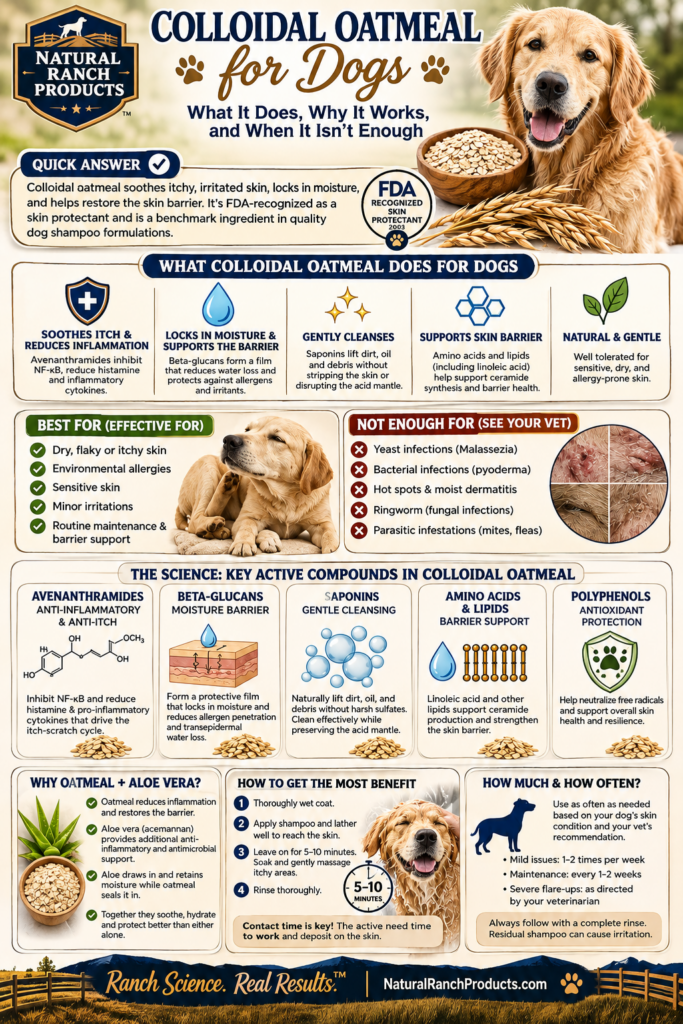
Quick Answer: Colloidal oatmeal is finely ground oat flour that suspends in water to coat the skin surface with a protective film. It reduces itching through avenanthramides — polyphenol compounds that inhibit the same inflammatory pathways that allergic skin disease activates. It locks in moisture through beta-glucans that form a barrier limiting transepidermal water loss. The FDA officially recognized colloidal oatmeal as a skin protectant in 2003 — one of the few topical ingredients with this regulatory classification. For dogs with dry skin, environmental allergies, or sensitive skin it provides genuine measurable relief that makes it the benchmark active ingredient in quality dog shampoo formulations.
Colloidal oatmeal appears on more dog shampoo labels than almost any other ingredient — but most of those labels don’t explain what it actually does or why it works. “Soothing” and “gentle” are the words most commonly used. Neither tells you anything about the mechanism, the regulatory history, or why veterinary dermatologists have recommended oatmeal-based bathing for dogs with sensitive and allergic skin for decades.
Understanding the actual science of colloidal oatmeal for dogs changes how you evaluate every grooming product your dog uses — and explains why the ingredient earns its place rather than just sounding natural on a label.
What Colloidal Oatmeal For Dogs Actually Is
Regular oatmeal — the kind you eat — does not produce the same skin benefits as colloidal oatmeal. The distinction is particle size. Colloidal oatmeal is oat grain that has been ground to an extremely fine powder — so fine that it suspends evenly throughout water rather than settling to the bottom. When mixed with water the colloidal particles remain suspended in a milky solution that coats every surface it contacts.
This suspension is what makes colloidal oatmeal therapeutically useful. Regular ground oatmeal in water settles out — the particles are too large to remain in contact with skin long enough to deposit the active compounds. Colloidal oatmeal stays suspended, deposits its active compounds on the skin surface during contact time, and leaves a residual film that continues providing benefit after rinsing.
Colloidal oatmeal has legitimate, FDA-recognized skin-protectant properties that can soothe mild itching, reduce inflammation, and help restore the skin barrier in dogs. The FDA recognition — granted in 2003 as a skin protectant in human dermatology — reflects decades of clinical evidence that colloidal oatmeal produces measurable skin benefit rather than just a pleasant texture. Since the FDA officially categorized colloidal oatmeal as an FDA-Approved Skin Protectant in 2003, its role in veterinary care has become even more vital.
The Active Compounds — What Does the Work
Avenanthramides — The Anti-Inflammatory and Anti-Itch Mechanism
The standout actives in colloidal oatmeal are the avenanthramides, a class of polyphenol antioxidants found almost exclusively in oats. Research published in dermatology literature shows that avenanthramides have measurable anti-inflammatory and anti-itch effects. Specifically, studies have found that avenanthramides can inhibit nuclear factor-κB (a master switch for inflammation) and reduce the release of pro-inflammatory cytokines and histamine, two key drivers of the itch-scratch cycle in inflammatory skin conditions.
NF-κB is the transcription factor that activates the genes responsible for producing inflammatory mediators — the signaling molecules that drive redness, swelling, and itch. When avenanthramides inhibit NF-κB they interrupt the inflammatory cascade at a fundamental level rather than just masking the symptom. Histamine reduction directly reduces the itch signal that drives the scratching behavior that damages the skin barrier. These aren’t generic anti-inflammatory effects — they’re specific molecular mechanisms with clinical measurement behind them.
A double-blind clinical study published in the Journal of Drugs in Dermatology found that a colloidal oatmeal cream significantly improved itch, dryness, and irritation in people with eczema and sensitive skin. The same mechanisms apply in canine skin — the avenanthramide pathways are conserved across mammalian species, which is why the same ingredient recommended for sensitive human skin appears consistently in veterinary dermatology recommendations for dogs.
Beta-Glucans — The Moisture Barrier Mechanism
Colloidal oatmeal contains beta-glucans and avenanthramides, compounds clinically proven to reduce redness, soothe irritation, and calm inflamed skin. Oatmeal creates a protective barrier on the skin, locking in moisture while maintaining the skin’s natural pH balance.
Beta-glucans are polysaccharide compounds that form a viscous film on the skin surface. This film serves two functions simultaneously. First it reduces transepidermal water loss — the evaporation of water through the skin surface that produces dry, tight, flaky skin in dogs whose lipid matrix has been compromised by over-bathing, nutritional deficiency, or environmental conditions. Second it forms a physical buffer between the skin surface and environmental allergens — reducing the penetration of pollen, dust mite proteins, and other allergens that trigger the immune response driving atopic dermatitis.
For dogs with environmental allergies this allergen-buffering function makes a pH-balanced colloidal oatmeal shampoo meaningful as part of allergen management — each bath removes accumulated allergens from the coat surface while depositing a beta-glucan film that reduces penetration between baths.
Saponins — The Cleansing Mechanism
Oats contain saponins — natural cleansing compounds that lift debris, oils, and surface contaminants from the skin and coat without the harsh stripping action of synthetic sulfate detergents. This is how colloidal oatmeal shampoos clean effectively without disrupting the acid mantle that sulfate-based formulas compromise. The saponins handle the cleaning function; the avenanthramides and beta-glucans handle the therapeutic functions — all from the same ingredient.
Amino Acids and Lipids — The Barrier Support Mechanism
Oats contain a meaningful profile of amino acids and lipids — including linoleic acid, an essential omega-6 fatty acid that is also a key component of the skin barrier’s lipid matrix. Topical application of linoleic acid supports ceramide synthesis — the lipid compounds that hold skin cells together and form the physical barrier that limits moisture loss and allergen penetration. In dogs with compromised skin barriers from allergic disease or nutritional deficiency, the lipid contribution of colloidal oatmeal provides topical support to the same barrier that dietary omega fatty acids support from the inside.
What Colloidal Oatmeal Helps — and What It Doesn’t
Oatmeal baths work best for mild, generalized itching from dry skin, minor environmental irritation, or as a soothing complement to veterinary-prescribed treatments. Being clear about what colloidal oatmeal addresses and what it doesn’t is important — because it’s one of the most common mistakes in dog skin care to use a soothing shampoo when a medicated one is needed.
Colloidal oatmeal is effective for:
- Dry skin and dandruff — moisture restoration and barrier support directly address the underlying mechanism
- Mild to moderate environmental allergy itching — allergen removal and anti-inflammatory avenanthramide activity reduce the allergic response
- Post-bath irritation from previous sulfate-based products — the protective film and pH support help restore the acid mantle
- Routine grooming for sensitive-skinned dogs — maintains barrier integrity between veterinary appointments
- Allergen load reduction in atopic dogs — weekly bathing during pollen season removes surface allergens before they penetrate
Colloidal oatmeal is not sufficient for:
- Active yeast (Malassezia) infections — requires veterinary antifungal treatment with miconazole and chlorhexidine
- Bacterial pyoderma — requires antibiotic treatment alongside chlorhexidine-based medicated shampoo
- Sarcoptic or demodectic mange — requires veterinary diagnosis and prescription parasitic treatment
- Severe allergic disease — colloidal oatmeal supports management but doesn’t replace veterinary allergy treatment
Using a colloidal oatmeal shampoo on an active yeast or bacterial infection provides comfort without addressing the infection — and delays effective treatment. The clearest signal that a medicated rather than soothing shampoo is needed: a musty or yeasty odor from the skin, greasy texture, rust-brown staining from chronic licking, or visible pustules and crusting. Any of these alongside itching means veterinary diagnosis before choosing a shampoo.
For the complete guide on when to use soothing vs medicated shampoo: Best Dog Shampoo for Sensitive Skin: What to Look For
Why Colloidal Oatmeal and Aloe Vera Work Better Together
The combination of colloidal oatmeal with organic aloe vera produces complementary effects that neither ingredient achieves as effectively alone. Colloidal oatmeal’s avenanthramides work primarily through the NF-κB pathway — reducing inflammatory signaling at the transcription level. Aloe vera’s acemannan and other polysaccharides work through a different but complementary anti-inflammatory mechanism — reducing prostaglandin production and providing direct antimicrobial activity against the bacterial species that commonly colonize irritated dog skin.
Aloe’s humectant properties — its ability to draw water into the skin surface and retain it — complement the moisture-sealing effect of colloidal oatmeal’s beta-glucan film. Together they address both the inflammatory mechanism and the moisture deficit that dry and allergic skin produce. The combination is not coincidental — it’s why the two ingredients appear together in virtually every quality veterinary-grade sensitive skin formulation.
The Natural Ranch Oat and Aloe Shampoo pairs colloidal oatmeal and organic aloe vera in a pH-balanced sulfate-free formula — the combination that addresses barrier support, allergen removal, anti-inflammatory activity, and moisture retention simultaneously in every bath. → See Natural Ranch Oat and Aloe Dog Shampoo
How to Get the Most From Colloidal Oatmeal — Contact Time
The most commonly missed step with colloidal oatmeal shampoos is contact time. Soak for 10 minutes, gently massaging the milky water into itchy areas. The avenanthramides need time to deposit on the skin surface and penetrate to the inflammatory tissue. The beta-glucans need time to form their protective film. Rinsing within thirty to sixty seconds of application provides the cleaning benefit of the saponins without the therapeutic benefit of the active compounds.
Five to ten minutes of contact time is the standard recommendation — consistent with the contact time guidelines for medicated shampoos. Lather thoroughly, ensure the shampoo reaches skin rather than just sitting on top of the coat, and use the contact period productively — checking ears, inspecting between toes, examining skin for early signs of secondary infection. Rinse thoroughly after contact time. Residual shampoo left in the coat is a more common cause of post-bath irritation than any specific ingredient.
For the complete guide on bathing frequency and how contact time fits the overall protocol: How Often Should You Bathe Your Dog? The Science Behind the Schedule
For the complete skin barrier science and why inside-out support complements topical care: Why the Canine Skin Barrier Matters More Than Most Dog Owners Realize
Is colloidal oatmeal safe for dogs?
Yes — colloidal oatmeal is one of the safest topical ingredients used in dog grooming and is recognized by the FDA as a skin protectant. It is non-toxic, hypoallergenic in most dogs, and has been used in veterinary dermatology for decades. The rare exception is dogs with documented oat allergies — which exist but are uncommon. For any dog being introduced to a new grooming product, a patch test on a small skin area 24 hours before full application is a reasonable precaution for dogs with known sensitivities.
What does colloidal oatmeal do for dogs?
Colloidal oatmeal reduces itching through avenanthramides — polyphenol compounds that inhibit NF-κB (a master inflammation switch) and reduce histamine release. It locks in moisture through beta-glucans that form a protective film limiting transepidermal water loss. It cleanses through saponins — natural surfactants that lift debris without stripping the acid mantle the way sulfate detergents do. And it provides barrier support through lipids and amino acids that complement the skin’s own structural components. Together these mechanisms make colloidal oatmeal effective for dry skin, allergic itching, and sensitive skin management.
How often should I use colloidal oatmeal shampoo on my dog?
For routine sensitive skin maintenance — every four to six weeks. For allergic dogs during high pollen season — weekly to remove accumulated allergens and deposit a fresh protective film. For dogs recovering from skin irritation — two to three times weekly until the skin improves, then transition to maintenance frequency. The key requirement is matching frequency to shampoo formula — weekly bathing with a pH-balanced sulfate-free colloidal oatmeal shampoo supports the skin barrier; weekly bathing with a sulfate-based formula damages it regardless of any other ingredients present.
Can I make colloidal oatmeal shampoo at home for my dog?
You can make a basic colloidal oatmeal bath at home by grinding plain unflavored oats to a very fine powder in a blender or food processor — test by mixing a tablespoon in water, which should turn milky and silky rather than cloudy and lumpy. Dissolve in lukewarm bathwater and soak the dog for ten minutes. This provides the oatmeal benefit but doesn’t have the pH calibration, aloe vera, or sulfate-free cleansers that a formulated product provides. DIY oatmeal baths are a useful emergency or between-shampoo option, not a replacement for a properly formulated pH-balanced product.
What is the difference between colloidal oatmeal and regular oatmeal for dogs?
Regular oatmeal ground at home is too coarse to suspend evenly in water — the particles settle and don’t maintain contact with the skin surface long enough to deposit the active compounds. Colloidal oatmeal is ground to a particle size fine enough to remain suspended, coating the skin surface evenly during contact time and leaving a residual film after rinsing. The active compounds — avenanthramides, beta-glucans, saponins — are present in both, but only colloidal oatmeal’s particle size allows them to be delivered to the skin effectively. The FDA recognition as a skin protectant applies to colloidal oatmeal specifically, not to regular ground oatmeal.
Will colloidal oatmeal shampoo help my dog’s yeast infection?
No — colloidal oatmeal shampoo soothes skin but does not treat yeast (Malassezia) infections. Established yeast infection requires a medicated shampoo containing miconazole and chlorhexidine — the antifungal active that addresses the pathogenic yeast population — alongside veterinary evaluation and potentially oral antifungal treatment for severe cases. The signal that a medicated shampoo is needed rather than a soothing one: a musty or yeasty odor from the skin, greasy texture, rust-brown staining from chronic licking, or skin thickening. If these signs are present, veterinary diagnosis before shampoo selection is the right sequence.
References
Vetified Editorial. Maddens E. “Oatmeal Baths for Dogs with Itchy Skin: DIY Guide.” Updated April 2026.
Stuck Soap. “Colloidal Oatmeal for Dogs: The Soothing Itch-Relief Hero.” June 10, 2026.
Petco Editorial. Ochoa S, DVM. “Oatmeal Bath for Dogs: Benefits, How-To and Tips.” Updated October 2025.
HICC Pet. “The Powerful Topical Benefits of Colloidal Oatmeal for Pets Explained.” May 25, 2026.
Ask a Vet. Houston D, BVSc. “2025 Vet Guide: Soothing Itchy Skin with Oatmeal Baths for Dogs.” December 2025.
Fowler J. “Colloidal oatmeal formulations and the treatment of atopic dermatitis.” Journal of Drugs in Dermatology. 2012;11(7):804-807.