
Salmon for Dogs: Benefits, Safety, and Nutrition
Few foods pack as much nutritional value into a single ingredient as salmon. It’s rich in omega-3 fatty acids, high in complete protein, and gentle enough on digestion to work as an alternative for dogs with chicken or beef sensitivities. But salmon also comes with real risks that every owner should understand before serving it — risks that have nothing to do with the fish being unhealthy and everything to do with how it’s prepared.
This guide covers what salmon actually delivers nutritionally, which dogs benefit most, the safety rules that are non-negotiable, and how salmon fits alongside other omega-3 sources in a complete approach to canine nutrition. Learn more about Salmon for Dogs
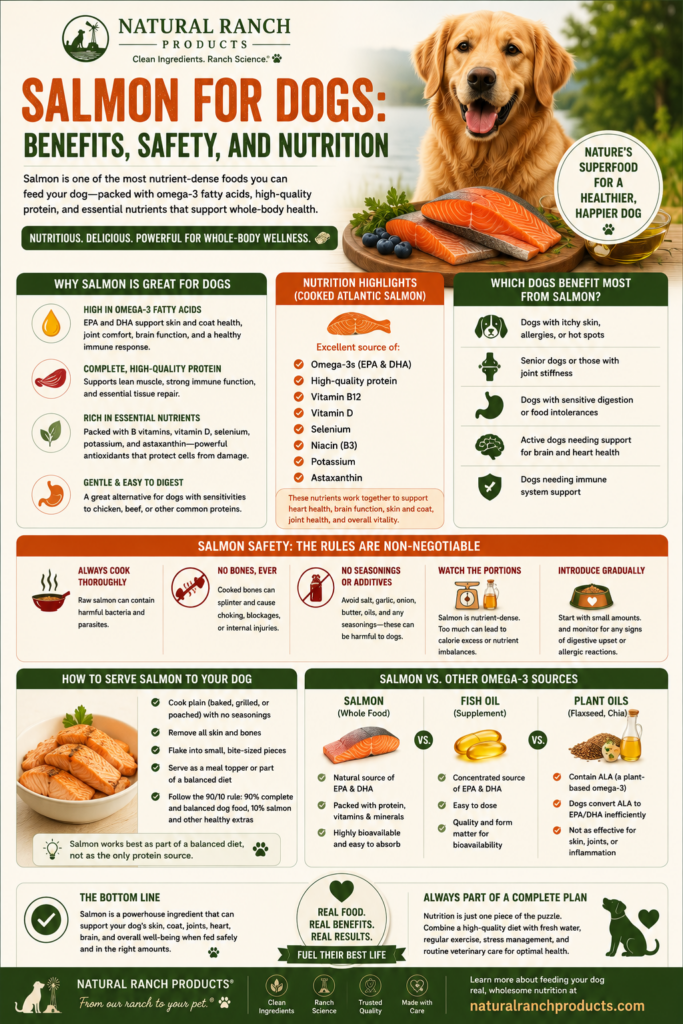
Why Salmon Is Considered One of the Best Foods for Dogs
“Dogs can safely eat cooked salmon,” confirms Dr. Ashly Smith, Regional Medical Director of Small Door Veterinary. “It’s a great source of protein, omega-3 fatty acids, and essential nutrients that support skin, coat, and joint health.” Few foods are fattier and richer in omega-3 fatty acids than wild-caught, natural salmon — it’s a naturally fatty food that contains both omega-3 and omega-6 fatty acids alongside a complete protein profile.
What sets salmon apart from most protein sources is the direct delivery of EPA and DHA — the long-chain omega-3 fatty acids that produce measurable anti-inflammatory and skin barrier benefits. Many plant-based omega-3 sources provide only ALA, which dogs convert to EPA and DHA very inefficiently. Salmon delivers the bioactive forms directly, with no conversion step required.
The Skin and Coat Benefits — Why Some Breeds Benefit More Than Others
“Salmon is highly digestible and rich in beneficial fats, which can be especially helpful for dogs with skin allergies or inflammatory conditions,” explains Dr. Smith. The mechanism is specific: when a dog consumes salmon, the omega-3 fatty acids EPA and DHA integrate directly into cell membranes, especially in skin and immune cells. These fats shift the body’s inflammatory response by reducing pro-inflammatory eicosanoid production while increasing anti-inflammatory mediator production — improving the skin’s natural barrier function and making it less reactive to allergens.
“Breeds prone to skin sensitivities, like Huskies or Retrievers, may particularly benefit from the omega-3s in salmon, though all dogs can gain from its nutritional value,” Dr. Smith notes. Jack Russells are another breed commonly flagged as prone to skin conditions that respond well to omega-3 support. For dogs with seasonal allergies or chronic skin irritation, salmon’s direct EPA/DHA delivery supports the skin barrier’s lipid matrix more efficiently than plant-based omega sources requiring conversion.
For the complete science on how the skin barrier works and what supports it: Why the Canine Skin Barrier Matters More Than Most Dog Owners Realize
Beyond Skin — Joint, Heart, and Cognitive Benefits
Omega-3 fatty acids reduce inflammation throughout a dog’s body — not just at the skin. This translates to measurable comfort benefits for joints, with EPA and DHA helping reduce the inflammatory processes involved in arthritis and general joint discomfort, particularly valuable for senior dogs and larger breeds prone to joint wear.
DHA plays a significant role in brain development and function — important for puppies during neurological development and increasingly relevant for senior dogs managing cognitive decline. EPA and DHA also support heart, kidney, and liver function — organ systems that benefit from the same anti-inflammatory mechanisms that protect skin and joints.
The Safety Rules That Are Non-Negotiable
Never Feed Raw Salmon
This is the single most important safety rule. “Raw salmon is not safe for dogs,” says Dr. Smith. “It can carry parasites, such as Neorickettsia helminthoeca, which causes salmon poisoning disease, a potentially fatal condition.” This organism is carried by a fluke parasite found in raw salmon and other Pacific Northwest fish species, and salmon poisoning disease can be fatal if untreated. “Owners should contact their veterinarian immediately” if their dog eats raw salmon — “even a small amount of raw salmon can cause illness if contaminated.”
Cook salmon to an internal temperature of 140°F. This single step eliminates the parasite risk entirely while preserving the nutritional value. Salmon-infused commercial diets and treats are formulated and processed to eliminate this risk — the concern applies specifically to raw or undercooked fresh salmon.
Remove All Bones
Salmon and other fish harbor small, brittle bones that pose a genuine choking hazard and can perforate the intestine if swallowed. Choose fresh, boneless filets, and double-check thoroughly even when a filet is labeled boneless.
Cook Without Additives
Salmon should never be cooked in oils, butter, spices, garlic, onions, or seasonings that may be safe or pleasant for humans but toxic to dogs. Plain, thoroughly cooked, boneless salmon is the only version appropriate for canine consumption.
Watch the Fat Content
While salmon is an excellent source of omega-3s, it is also high in fat compared to leaner proteins like chicken or turkey. “It may be more calorie-dense than lean proteins like chicken or turkey, so portion control is important,” notes Dr. Smith. With any diet high in fat, pancreatitis becomes a concern in susceptible dogs — though there are no reported cases of pancreatitis specifically from therapeutic fish oil supplementation, it is worth discussing dosing with a veterinarian, particularly for dogs with a history of pancreatitis or fat sensitivity.
How Much Salmon Should a Dog Eat
As an occasional treat or food topper, salmon should make up no more than about 2% of a dog’s body weight, offered once a week or less. Always introduce salmon gradually rather than as a sudden large serving, particularly for dogs who haven’t eaten fish before.
For dogs receiving salmon oil rather than whole salmon as a concentrated omega-3 source, the recommended dose is 75-100 mg/kg with a maximum daily dose of 310 mg/kg of combined EPA and DHA. Always consult your veterinarian before starting any omega-3 supplementation to determine the appropriate dose for your dog’s specific size, weight, and health status.
At appropriate doses omega-3 fatty acids have few side effects — the most common being mild diarrhea, particularly when introduced too quickly. Gradually increasing the dose over several days typically resolves this. Excessive doses can lead to vomiting, diarrhea, reduced blood clotting ability, weight gain, altered immune function, and delayed wound healing — underscoring why dosing guidance matters even for a generally safe food.
Salmon as a Protein Alternative for Sensitive Dogs
Salmon-infused diets make a great protein alternative for dogs who are allergic or sensitive to chicken or beef — the two most common animal protein allergens in commercial dog food. For dogs showing signs of food sensitivity to traditional proteins, a salmon-based diet or treat rotation provides complete protein nutrition without triggering the same immune response.
Whole Salmon vs Salmon Oil vs Salmon-Based Treats
Each format serves a slightly different purpose. Whole cooked salmon provides complete protein alongside omega-3s — appropriate as an occasional meal addition or topper. Salmon oil provides a concentrated, precisely dosed omega-3 source without the protein or fat load of whole fish — useful for dogs needing therapeutic omega-3 levels for skin or joint support without additional calories. Salmon-based treats and toppers provide a consistent, conveniently dosed way to incorporate salmon’s benefits into a daily routine without the preparation requirements of fresh fish.
Natural Ranch Salmon Recipe Dog Treats are made with 90% USA-sourced salmon, delivering 54 calories and 40% protein per treat — providing the complete protein and direct EPA/DHA delivery of whole salmon in a convenient daily format without the preparation steps or bone risk of fresh fish.
→ See Natural Ranch Salmon Recipe Dog Treats
For the full comparison of omega-3 sources including fish oil, krill oil, algae, and cranberry seed oil: Omega-3 for Dogs: Why the Source Matters
For dogs whose skin concerns extend beyond what diet alone addresses: → See the Skin and Coat Defense Duo
Can dogs eat salmon?
Yes — dogs can safely eat cooked, boneless salmon. It’s an excellent source of protein, omega-3 fatty acids, and essential nutrients that support skin, coat, and joint health. Salmon should always be cooked to an internal temperature of 140°F, with all bones removed, and without oils, spices, or seasonings. As an occasional treat, salmon should make up no more than about 2% of a dog’s body weight, offered once a week or less.
Can dogs eat raw salmon?
No — raw salmon is not safe for dogs under any circumstances. It can carry the parasite Neorickettsia helminthoeca, which causes salmon poisoning disease — a potentially fatal condition. Even a small amount of raw or undercooked salmon can cause illness if contaminated. If a dog eats raw salmon, contact a veterinarian immediately rather than waiting to see if symptoms develop. Cooking salmon to 140°F eliminates this risk entirely.
What are the benefits of salmon for dogs?
Salmon delivers EPA and DHA — long-chain omega-3 fatty acids — directly, without requiring the inefficient conversion process that plant-based omega sources like flaxseed require in dogs. Benefits include reduced skin inflammation and improved barrier function for dogs with allergies, joint comfort support particularly valuable for senior dogs, DHA for brain development in puppies and cognitive support in seniors, and anti-inflammatory support for heart, kidney, and liver function. Breeds prone to skin sensitivities like Huskies, Retrievers, and Jack Russells often show particular benefit.
How much salmon can a dog eat?
As an occasional treat or food topper, salmon should be limited to about 2% of a dog’s body weight, given once a week or less, due to its higher fat content compared to leaner proteins. For salmon oil as a concentrated omega-3 supplement, the typical recommended dose is 75-100 mg/kg with a maximum daily dose of 310 mg/kg of combined EPA and DHA. Always introduce salmon gradually and consult a veterinarian to determine the appropriate amount for your dog’s specific size and health status.
Is salmon good for dogs with skin allergies?
Yes — salmon’s direct EPA and DHA content integrates into skin cell membranes, shifting the body’s inflammatory response toward anti-inflammatory mediators and improving the skin barrier’s natural function. This makes the skin less reactive to allergens and reduces itching and redness. Breeds prone to skin sensitivities including Huskies, Retrievers, and Jack Russells often see particular benefit from omega-3 support, though all dogs with skin allergies can benefit from the anti-inflammatory mechanism.
What are the side effects of too much salmon or salmon oil for dogs?
At appropriate doses, omega-3s have few side effects beyond occasional mild diarrhea, especially if introduced too quickly. Excessive doses can cause vomiting, diarrhea, reduced blood clotting ability, weight gain, altered immune function, and delayed wound healing. Because salmon is calorie-dense and high in fat compared to leaner proteins, overfeeding also raises pancreatitis risk in susceptible dogs. Gradual introduction and veterinary guidance on appropriate dosing help avoid these issues.
References
American Kennel Club. “Can Dogs Eat Salmon?” Updated February 2026.
Dogster Editorial. “7 Benefits of Salmon Oil for Dogs: Canine Health and Nutrition.” Updated May 2025.
Dogster Editorial. “Sources of Omega-3 for Dogs & How Much They Need Daily.” Updated October 2025.
Ontario Veterinary College, University of Guelph. “The ABCs of Omega-3s.” Updated August 2025.
PetMD Editorial. “Fish Oil for Dogs: Benefits, Dosage, and Vet Pick.” Updated June 2025.
Lenox CE, Bauer JE. “Potential Adverse Effects of Omega-3 Fatty Acids in Dogs and Cats.” Journal of Veterinary Internal Medicine.