Dog Skin Yeast Infections
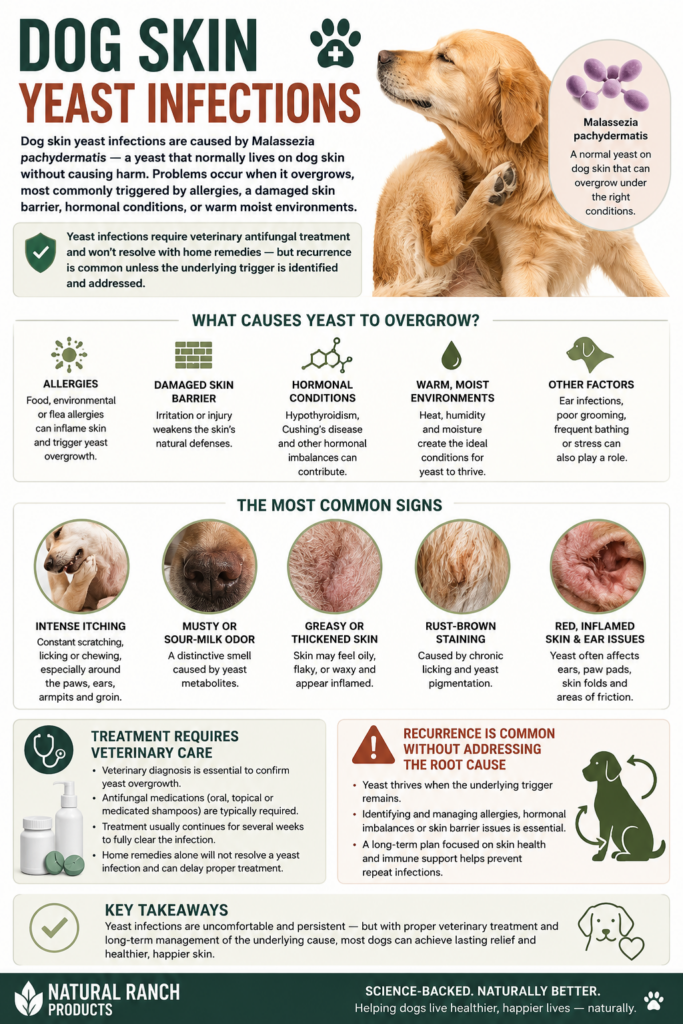
Quick Answer: Dog skin yeast infections are caused by Malassezia pachydermatis — a yeast that normally lives on dog skin without causing harm. Problems occur when it overgrows, most commonly triggered by allergies, a damaged skin barrier, hormonal conditions, or warm moist environments. The most distinctive signs are intense itching, a musty or sour-milk odor, greasy or thickened skin, and rust-brown staining from chronic licking. Yeast infections require veterinary antifungal treatment and won’t resolve with home remedies — but recurrence is common unless the underlying trigger is identified and addressed.
Your dog has been scratching constantly. The skin looks red and angry, feels greasy under your fingers, and carries a smell that’s hard to describe — somewhere between sour milk and corn chips but more intense and more persistent. Your vet examines a skin swab under the microscope and confirms what the smell already suggested: Malassezia dermatitis, a yeast skin infection.
Yeast skin infections are one of the most common and most consistently mismanaged skin conditions in dogs. They’re treatable — but they come back reliably when the underlying cause isn’t found and addressed alongside the antifungal treatment. Understanding how yeast overgrowth develops, what drives it, and why it keeps returning is the key to actually breaking the cycle.
What Is Malassezia and Why Does It Cause Problems?
Yeast dermatitis or Malassezia dermatitis is caused by the fungus Malassezia pachydermatis. It is an extremely common cause of skin disease in dogs. This yeast is normally found on the skin, but its abnormal overgrowth can cause dermatitis, or inflammation of the skin.
Malassezia is part of the normal flora of an animal’s skin and is actually protective when present in normal amounts. However, inflammation of the skin or ears allows the yeast to overgrow and overpopulate, often leading to dermatitis. Some dogs can develop an allergy or hypersensitivity to Malassezia itself — meaning even low levels of the yeast trigger significant itching in sensitized individuals.
The shift from harmless skin resident to active infection is driven by changes in the skin environment — not by exposure to a new organism. If conditions on the skin change or if the immune system is suppressed, these bacteria and fungi can cause infection. A common cause of a yeast skin infection is an increase in the amount of oils produced on the skin. When the skin surface becomes warmer, moister, oilier, or more alkaline — either through allergic inflammation, hormonal changes, or barrier disruption — the conditions favor rapid Malassezia multiplication.
This is also why yeast infections are almost always secondary conditions — meaning something changed the skin environment before the yeast overgrew. Finding and addressing that primary change is the difference between a yeast infection that resolves and one that keeps coming back.
Symptoms of Dog Skin Yeast Infection — What to Look For
Yeast infections are itchy, crusty, and smelly. Often a dog starts out with a rash or simple itching, but the skin thickens to an elephant skin appearance. The itch is extreme, and the odor can be especially troublesome. The full symptom picture includes:
- Intense itching — one of the most consistent signs; the itch from Malassezia is characteristically more persistent and severe than simple dry skin itching
- Distinctive odor — sometimes described as a sour milk odor; a veterinarian can sometimes tell that a dog has Malassezia dermatitis just by smelling them
- Greasy, oily skin — the skin surface takes on an oily texture as yeast populations increase and alter skin secretion composition
- Redness and inflammation — visible redness, particularly in skin folds, armpits, groin, between the toes, and around the ears
- Rust-brown or reddish staining — discoloration of the fur from chronic licking and saliva contact in affected areas
- Flaky or scaly skin — skin cells shed more rapidly under yeast-driven inflammation
- Skin thickening — in chronic or severe cases the skin develops what Veterinary Partner describes as an elephant skin appearance — darkened, thickened, and leathery from prolonged inflammation
- Hair loss — in areas of active infection and repeated scratching
- Darkened nails — affected dogs frequently have greasy, unpleasant-smelling skin with a characteristic reddish-brown staining on the nails
Where Yeast Infections Most Commonly Develop
Malassezia preferentially colonizes areas where warmth, moisture, and skin-to-skin contact create favorable growth conditions. The most common locations are:
- Ears — the ear canal is the single most common site; see the connection between ear infections and allergies for why recurring ear yeast infections usually signal an underlying allergy
- Paws and interdigital spaces — the warm moist environment between the toes is ideal for Malassezia overgrowth; the characteristic corn chip or Frito smell from paws is driven by both bacteria and yeast
- Skin folds — facial folds in flat-faced breeds, neck folds, armpit folds, groin folds, and tail base folds all create the trapped moisture and warmth that Malassezia requires
- Armpits and groin — areas where skin-to-skin contact occurs during movement
- Underbelly — particularly in dogs whose belly contacts warm surfaces
- Around the anus — perianal yeast infections often occur alongside ear and skin yeast in dogs with allergies
For the complete guide to paw yeast overgrowth and what the corn chip smell actually means: Why Does My Dog Smell Like Corn Chips? Frito Feet Explained
What Causes Yeast Overgrowth — The Underlying Triggers
Allergies — The Most Common Driver
Most Malassezia causes are linked to allergic skin disease, which will need to be addressed for a successful outcome. Environmental allergies and food allergies both produce skin inflammation that changes the skin surface environment — altering oil production, increasing moisture, disrupting the acid mantle, and compromising the barrier that normally limits yeast populations to controlled levels. Allergic dogs don’t just get more yeast infections — the allergy itself is continuously recreating the conditions that favor yeast overgrowth, which is why treating the yeast without addressing the allergy produces temporary improvement followed by reliable relapse.
For the complete guide to canine allergies and skin management: Dog Skin Allergies: How to Manage Year-Round
Skin Barrier Compromise
The skin barrier’s lipid matrix and acid mantle normally maintain the surface pH and microbial balance that keeps Malassezia populations in check. Should the skin barrier be damaged or weakened and certain factors such as excess humidity and temperature occur, this yeast might multiply leading to an infection. Repeated bathing with harsh sulfate-based shampoos, nutritional deficiencies in essential fatty acids, chronic scratching, and prior skin infections all progressively degrade barrier function — shifting the skin environment toward one that favors yeast overgrowth.
For the complete science on skin barrier integrity and what maintains it: Why the Canine Skin Barrier Matters More Than Most Dog Owners Realize
Hormonal Conditions
Hypothyroidism and Cushing’s disease both alter skin secretion composition and immune function in ways that predispose to Malassezia overgrowth. Any dog with recurring yeast infections that don’t have an obvious allergy connection warrants thyroid and adrenal screening — hormonal conditions are the second most common underlying driver of recurrent yeast dermatitis after allergies.
Breed Predisposition
Certain breeds prone to skin disorders tend to experience more frequent Malassezia issues, pointing to inherited vulnerability. Breeds with skin folds — Bulldogs, Shar-Peis, Basset Hounds, Cocker Spaniels — are among the most frequently affected due to the warm moist skin fold environments. West Highland White Terriers, Dachshunds, and Poodles also show elevated susceptibility. For these breeds routine skin fold hygiene and regular monitoring are meaningful preventive measures.
Environmental Moisture
Hot and humid conditions create the perfect environment for yeast to grow and multiply on your dog’s skin. Dogs who swim frequently, live in humid climates, or have moisture regularly trapped in skin folds show higher rates of Malassezia overgrowth regardless of underlying allergic status. Thorough drying after water exposure — particularly in skin folds and between toes — significantly reduces the moisture environment that drives yeast amplification.
Diagnosis — Why Veterinary Confirmation Matters
Yeast dermatitis should be confirmed by a veterinarian before treatment rather than assumed based on symptoms alone — because several skin conditions including bacterial pyoderma, mange, and ringworm can produce similar symptoms and require completely different treatments.
The diagnosis is confirmed by collecting a skin swab sample. If there’s abundant discharge on the skin, a Q-tip can be used to make a thin preparation on a slide, then examined under the microscope with special staining. Cytology — microscopic examination of skin swabs — is the preferred diagnostic approach. Cytology is preferred over fungal cultures for timely, accurate detection. A high number of Malassezia organisms on cytology confirms the diagnosis and guides treatment decisions.
Treatment — What Actually Works
Treatment normally comprises topical or systemic azole therapy, often with miconazole-chlorhexidine shampoos or oral itraconazole or ketoconazole. The appropriate treatment approach depends on the severity and extent of infection.
Topical antifungal treatment — for localized or mild infections, medicated shampoos containing miconazole and chlorhexidine used two to three times weekly provide effective antifungal coverage. Contact time of five to ten minutes before rinsing is essential for the active ingredients to reach sufficient skin contact. Antifungal sprays and wipes for specific affected areas supplement shampoo treatment between baths.
Oral antifungal treatment — for generalized or severe Malassezia dermatitis, systemic antifungal medications including itraconazole and ketoconazole provide systemic coverage that topical treatment alone cannot achieve. Treatment duration is typically several weeks with follow-up cytology to confirm resolution.
Addressing the underlying cause — Malassezia overgrowth is treatable, although relapses are common if the underlying cause isn’t addressed. Antifungal treatment clears the current infection. Without identifying and managing the allergy, hormonal condition, or barrier compromise that created the overgrowth conditions, the same conditions will recreate the infection after treatment ends. This is the most important and most frequently skipped step in yeast infection management.
Why Home Remedies Don’t Work for Established Yeast Infections
Apple cider vinegar, coconut oil, baking soda, tea tree oil, and yogurt are frequently suggested as home treatments for dog yeast infections. None of these are supported by clinical evidence as effective treatments for established Malassezia dermatitis — and some actively cause harm. Tea tree oil is toxic to dogs at concentrations that would be required for antifungal effect. Apple cider vinegar applied to inflamed skin causes irritation that worsens the barrier damage driving the infection. Coconut oil adds dietary fats that can increase skin surface oiliness favorable to Malassezia.
Prevention and environmental management — moisture control, skin fold hygiene, allergen reduction, pH-balanced grooming — support the skin environment between veterinary treatments. They don’t replace antifungal therapy for established infection.
Supporting the Skin Between Infections — The Prevention Layer
For dogs with recurring yeast infections — particularly those with underlying allergies — the management approach between infections is as important as the treatment during them.
- pH-balanced sulfate-free shampoo — maintaining the skin’s acid mantle at the correct pH limits the alkaline shift that favors Malassezia overgrowth. Sulfate-based shampoos strip the lipid matrix and shift pH away from the range that supports normal microbial balance
- Regular skin fold hygiene — cleaning and thoroughly drying skin folds between baths removes the accumulated moisture and debris that Malassezia requires to multiply
- Post-swim and post-bath drying — particularly between toes and in ear canals where moisture persists longest
- Allergen reduction bathing — for allergic dogs, weekly bathing during high pollen seasons removes the allergen load that drives the skin inflammation that Malassezia exploits
- Nutritional support for skin barrier integrity — omega fatty acids for lipid matrix production, zinc for skin cell repair, vitamin E for antioxidant protection
For dogs where skin allergies are the primary driver, the complete inside-out skin support approach addresses both the allergen management and the nutritional barrier support simultaneously: → See the Skin and Coat Defense Duo
For the full guide to paw licking as an early indicator of yeast involvement: Why Does My Dog Keep Licking Their Paws? 7 Causes and How to Stop It
For the full guide to ear yeast infections and the allergy connection: Dog Ear Infections and Allergies: The Connection Most Owners Miss
What does a yeast infection look like on a dog’s skin?
Dog skin yeast infections typically produce intense itching, greasy or oily skin texture, redness and inflammation particularly in skin folds and between toes, a distinctive musty or sour-milk odor, rust-brown staining of fur from chronic licking, flaky or scaly skin, and in chronic cases a darkened thickened leathery skin appearance sometimes described as elephant skin. The characteristic odor is often what first alerts owners that something beyond routine itching is occurring — a veterinarian can sometimes diagnose Malassezia dermatitis from the smell alone before cytology confirms it.
What causes yeast infections on dog skin?
Dog skin yeast infections are almost always secondary conditions — meaning something changed the skin environment before the Malassezia yeast overgrew. Allergies (environmental or food) are the most common underlying cause, followed by hormonal conditions like hypothyroidism and Cushing’s disease, skin barrier compromise from harsh grooming products or nutritional deficiency, and environmental moisture trapped in skin folds or between toes. The yeast itself is a normal skin resident in all dogs — it’s the change in skin conditions that allows it to overpopulate rather than exposure to a new organism.
Can dog yeast infections go away on their own?
Established yeast dermatitis requires veterinary antifungal treatment and will not resolve on its own. The underlying conditions that caused the overgrowth — allergies, hormonal changes, barrier disruption — typically persist and worsen the infection without treatment. Home remedies including apple cider vinegar, coconut oil, and tea tree oil are not supported by clinical evidence and some cause additional skin irritation or toxicity. Veterinary cytology confirms the diagnosis and guides appropriate antifungal treatment — topical miconazole-chlorhexidine shampoos for mild cases or systemic azole medications for severe or generalized infections.
Why does my dog keep getting yeast infections?
Recurring yeast infections almost always indicate an underlying condition that is continuously recreating the skin environment that favors Malassezia overgrowth. Allergies are the most common cause — the allergic skin inflammation changes oil production, moisture levels, and skin pH in ways that favor yeast even between acute episodes. Hormonal conditions including hypothyroidism and Cushing’s disease are the second most common driver. Antifungal treatment clears the current infection but the conditions that caused it return unchanged if the underlying trigger isn’t identified and managed. Dogs with more than two yeast infections in a year warrant investigation for allergies and hormonal conditions.
Which dog breeds are most prone to yeast skin infections?
Breeds with skin folds — Bulldogs, Shar-Peis, Basset Hounds, Cocker Spaniels — are among the most prone due to the warm moist environments their skin folds create. Breeds already predisposed to allergic skin disease including West Highland White Terriers, Dachshunds, Poodles, and Maltese also show elevated susceptibility because allergies are the most common driver of Malassezia overgrowth. For these breeds routine skin fold hygiene, thorough drying after bathing and swimming, and regular skin monitoring are meaningful preventive measures alongside any allergy management in place.
How is a dog yeast skin infection treated?
Treatment depends on severity. Mild or localized yeast infections are typically treated with medicated shampoos containing miconazole and chlorhexidine used two to three times weekly with five to ten minutes of contact time before rinsing. Generalized or severe infections typically require systemic oral antifungal medications including itraconazole or ketoconazole for several weeks alongside topical treatment. Follow-up cytology confirms resolution before stopping treatment. Critically — antifungal treatment alone is insufficient for dogs with recurring infections; the underlying allergy, hormonal condition, or barrier compromise driving the overgrowth must be identified and managed to prevent reliable recurrence.
References
VCA Animal Hospitals. “Yeast Dermatitis in Dogs.” vcahospitals.com.
BluePearl Pet Hospital. Wyatt D, DVM, DACVD. “Malassezia (Yeast Dermatitis) in Dogs and Cats.” February 2024.
American Kennel Club. “Yeast Dermatitis (Malassezia) in Dogs: Signs, Symptoms, and Treatments.” Updated March 2024.
The Vet Desk. “Malassezia Dermatitis (Yeast Infections) in Dogs: Causes, Treatments, Prevention.” October 2025.
Veterinary Partner — VIN. “Malassezia Dermatitis (Yeast Infection of Dog’s Skin).”
Guillot J, Bond R. “Malassezia Yeasts in Veterinary Dermatology: An Updated Overview.” Frontiers in Cellular and Infection Microbiology. 2020.