How to Prevent Dog UTIs Naturally: What Actually Works Long-Term
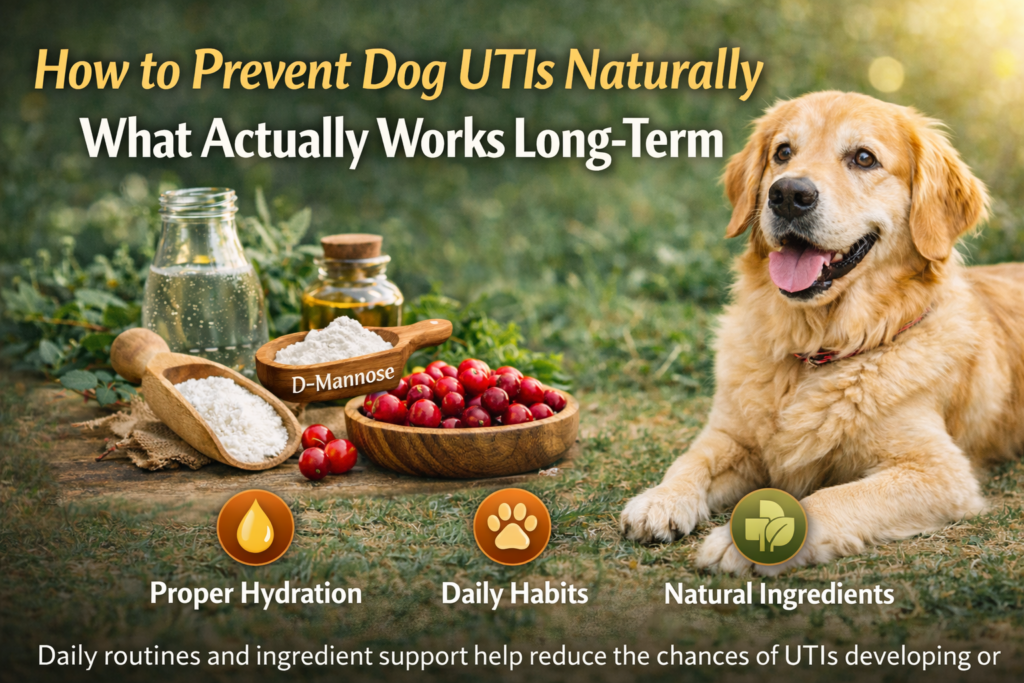
If you’re searching for how to prevent dog UTIs naturally, you’re probably not a first-time dog owner reading out of curiosity. You’re someone who has watched your dog go through one infection — or several — and you’re done playing defense.This guide is written for all three stages: the dog owner researching prevention before problems start, the one currently managing an active infection, and the one who just finished a round of antibiotics and is determined to break the cycle for good.The honest answer is that natural UTI prevention isn’t one thing. It’s a combination of daily habits, environmental factors, and targeted ingredient support that together create conditions where bacteria are less likely to take hold — and less likely to come back.
Prevention Matters More Than TreatmentAbout
14% of all dogs will experience at least one UTI in their lifetime (Dogs Naturally) — and for dogs who have had one, the risk of recurrence is significantly higher than for dogs who haven’t.This matters because each infection creates a window for complications. Repeated antibiotic courses disrupt the gut microbiome. Chronic inflammation degrades the bladder’s protective lining. Bacterial populations can develop resistance patterns that make future infections harder to treat.Prevention isn’t just about avoiding discomfort. It’s about protecting the biological systems that make your dog’s urinary tract resilient over time.
The 6 Most Effective Natural UTI Prevention Strategies
How to Prevent Dog UTIs Naturally: Essential Tips
1. Hydration — The Foundation Everything Else Depends On
No prevention strategy works without adequate hydration. Water intake directly influences urine concentration, bladder flushing frequency, and whether bacteria get the chance to establish before they’re cleared naturally.Dilute urine means bacteria are less concentrated and more likely to be flushed out before they attach to the bladder wall. Concentrated urine creates a more favorable environment for bacterial persistence.Practical ways to increase water intake:Add a splash of low-sodium broth to your dog’s water bowlUse a pet water fountain — many dogs prefer moving waterAdd wet food or water to dry kibblePlace multiple water bowls in different locations around the houseIf your dog is on a dry kibble diet exclusively, hydration deserves particular attention. Dry food provides almost no moisture compared to wet or raw diets, and chronically low water intake is one of the most common underlying factors in dogs with recurring UTIs.This is also why hydration is the first thing addressed in our guide to daily UTI prevention habits — because without it, every other strategy is working at a disadvantage.https://naturalranchproducts.com/dog-uti-prevention-daily-habits-that-actually-matter/
Frequent Bathroom Breaks
Most UTIs begin when bacteria from the gastrointestinal tract or skin contaminate the urethral opening and ascend into the bladder. (Mvethospital) One of the most straightforward ways to reduce this risk is simply ensuring your dog urinates frequently enough to flush the urinary tract regularly.Dogs who hold urine for extended periods give bacteria more time to multiply before being cleared. For dogs prone to recurring UTIs, scheduled bathroom breaks every 4-6 hours during the day are a meaningful preventive measure — not just a convenience.
3. Hygiene Basics That Most Owners Overlook
Maintaining proper hygiene can help prevent UTIs in dogs — regularly cleaning your dog’s genital area, especially after urination, and trimming long hair around the area to reduce the risk of bacterial buildup. (Munchbird)
This is especially relevant for female dogs with recessed or hooded vulvas, where moisture and bacteria can accumulate in skin folds. If your dog has recurring UTIs and this anatomical factor hasn’t been discussed with your vet, it’s worth raising — it’s one of the most commonly overlooked predisposing factors.
4 Diet and pH Support
What your dog eats influences the urinary environment. Poor quality diets high in carbohydrates can promote more alkaline urine, which creates a more favorable environment for bacterial growth. Higher quality diets — particularly those with adequate protein and moisture — tend to support a more balanced urinary pH.
Vitamin C is worth understanding specifically. It contributes to natural urine acidification, creating conditions less hospitable to bacterial persistence. It also supports immune function — the body’s first line of defense against infection taking hold in the first place.
This is one reason Bladder Guard Soft Chews from Natural Ranch Products includes Vitamin C as part of its formula — not as a standalone fix, but as part of a complete daily urinary environment strategy alongside cranberry, D-Mannose, marshmallow root, NAG, and probiotics.
5. Targeted Ingredient Support — Daily and Consistent
This is where natural UTI prevention moves from general wellness advice into specific biological mechanism territory.
Cranberry compounds (PACs)
The active compounds in cranberries, known as proanthocyanidins, inhibit the attachment of bacteria like E. coli to the urinary tract walls (White Oak Animal Hospital) — which is the most common cause of canine UTIs. Cranberry doesn’t kill bacteria. It influences where they end up, making daily consistent use more important than reactive dosing.
The deeper science on this is covered in:https://naturalranchproducts.com/type-a-proanthocyanidins-and-the-teflon/
D-Mannose
D-Mannose works similarly to cranberry extract by preventing bacteria from attaching to the urinary tract lining, with the added benefit of being flushed out of the system quickly, taking bacteria with it. (White Oak Animal Hospital) Together, cranberry and D-Mannose address bacterial adhesion from two complementary angles — which is why formulas containing both tend to outperform single-ingredient products.Marshmallow Root
Marshmallow Root
Marshmallow root soothes and supports the bladder lining directly — the tissue that comes under stress during and after infections. For dogs recovering from a UTI or dealing with chronic inflammation, this ingredient addresses something cranberry and D-Mannose alone don’t: direct tissue support.
Probiotics
A healthy gut microbiome supports systemic immune function, including the body’s ability to resist urinary infections. A high quality multi-strain probiotic can be given daily and is safe for long-term use, particularly in dogs with recurring infections. (Veterinary Secrets) This becomes especially important after antibiotic courses, which disrupt gut flora alongside the bacteria they’re targeting.
NAG and Glucosamine
These support the glycoprotein layer that lines and protects the bladder wall. Chronic inflammation and repeated infections degrade this layer over time — NAG and glucosamine support its maintenance and repair. This is covered in depth in:https://naturalranchproducts.com/the-bladders-protective-barrier-understanding-the-gag-layer-in-dogs/
6. Daily Supplementation — Consistency Over Intensity
The single most common reason natural urinary support doesn’t produce results is inconsistency. Ingredients like cranberry PACs and D-Mannose need to maintain a consistent presence in the urinary environment to influence bacterial behavior. Using them reactively — only when symptoms appear — misses the point entirely.
This is the philosophy behind Bladder Guard Soft Chews from Natural Ranch Products. Every ingredient in the formula — cranberry, D-Mannose, marshmallow root, NAG, glucosamine, pumpkin seed powder, Vitamin C, and probiotics — is selected for a specific mechanism and delivered daily in a beef-flavored soft chew dogs treat as a reward.
Critically, Bladder Guard is cold-pressed rather than heat-extruded. High-heat manufacturing can degrade vitamin and antioxidant potency by up to 40% before the product reaches your dog. Cold-pressed processing preserves the molecular integrity of the active compounds — particularly the PACs in cranberry — so what’s on the label is what’s actually working.https://naturalranchproducts.com/product/bladder-guard-soft-chews-for-dogs/
For Dogs Currently on Antibiotics
If your dog is mid-treatment right now, natural prevention strategies aren’t on pause — they’re more important than during healthy periods.Antibiotics clear the infection but they also disrupt the gut microbiome and don’t address the bladder environment that allowed the infection to establish. Starting or continuing daily probiotic and urinary support during and after antibiotic treatment helps maintain the protective systems that reduce the chance of recurrence.Always finish the full antibiotic course as prescribed. A follow-up urinalysis after completing antibiotics is also worth requesting — it confirms the infection has fully cleared rather than partially resolved, which is one of the most common causes of relapse
For a full breakdown of the relapse window and what to watch forhttps://naturalranchproducts.com/signs-your-dogs-uti-is-coming-back/
For Dogs Who Keep Getting UTIs Despite Everything
If your dog has had three or more UTIs in the past year, prevention strategies alone may not be enough without identifying an underlying factor.Predisposing factors including diabetes, kidney disease, Cushing’s disease, bladder stones, incontinence, and immunosuppression can make UTIs difficult to fully resolve and likely to return if left unaddressed. (VCA Animal Hospitals)
Natural prevention supports a healthy urinary environment — it doesn’t override underlying medical conditions that need veterinary diagnosis and management. If recurrence continues despite consistent prevention efforts, a deeper diagnostic workup is the right next step.
The science behind why some dogs stay stuck in the recurrence cycle is covered here:https://naturalranchproducts.com/why-some-dogs-keep-getting-utis-and-what/
What Long-Term Prevention Actually Looks Like
The dogs who experience the fewest recurring UTIs tend to have owners who treat urinary health as a daily habit rather than a reactive problem.That means consistent hydration, regular bathroom breaks, appropriate hygiene, quality nutrition, and a daily supplement formula that supports the bladder environment through multiple mechanisms — not a single ingredient at a minimal dose.None of these strategies replace veterinary care when an active infection is present. But together they create a urinary environment where infections are harder to establish, less likely to recur, and easier to manage when they do occur.
That’s what long-term prevention actually looks like.
How can I prevent my dog from getting UTIs naturally?
The most effective natural prevention combines consistent hydration, frequent bathroom breaks, hygiene maintenance, and daily ingredient support through compounds like cranberry PACs, D-Mannose, and probiotics that influence bacterial behavior in the urinary tract.
Does cranberry prevent UTIs in dogs?
Cranberry compounds called proanthocyanidins may reduce bacterial adhesion to the bladder wall, which is how most UTIs begin. Cranberry is most effective as a daily prevention ingredient rather than a reactive treatment for active infections.
What is the best natural supplement to prevent dog UTIs?
The most effective formulas combine multiple mechanisms — cranberry and D-Mannose for bacterial adhesion, marshmallow root and NAG for bladder lining support, Vitamin C for pH balance, and probiotics for immune function. Single-ingredient products tend to produce less consistent results.
Can I give my dog cranberry every day?
Yes — daily use is actually how cranberry works most effectively for urinary prevention. Consistent daily dosing maintains the anti-adhesion environment in the bladder. Look for supplements that use cold-pressed cranberry to ensure the active PAC compounds are preserved.
How long does it take for natural UTI prevention to work in dogs?
Results vary by dog and by the quality of the formula. Some dogs show improvement within a few weeks. Long-term prevention — reducing recurrence frequency — typically becomes apparent after two to three months of consistent daily use.
Should I give my dog UTI supplements while on antibiotics?
Probiotic support during and after antibiotic treatment is generally beneficial to help maintain gut microbiome balance. Urinary support ingredients like cranberry and D-Mannose can be continued alongside antibiotics. Always confirm with your veterinarian for your dog’s specific situation.
References
Howell AB. “Bioactive Compounds in Cranberry and Their Role in Urinary Tract Health.” Advances in Nutrition.Kranjčec B, et al. “D-Mannose in Recurrent Urinary Tract Infections.” World Journal of Urology.Flores-Mireles AL, et al. “Urinary Tract Infections: Epidemiology, Mechanisms, and Treatment Options.” Nature Reviews Microbiology.Byron JK. “Urinary Tract Infection.” Veterinary Clinics of North America: Small Animal Practice. 2019.VCA Animal Hospitals. “Urinary Tract Infections (UTIs) in Dogs.” vcahospitals.com
Written by [Natural Ranch Products Team ], Pet Wellness Advocate at Natural Ranch. Passionate about holistic dog care and high-quality nutrition.”