Dog Skin Health: A Complete Guide to Causes, Nutrition, and Long-Term Support
Dog skin health is one of the most common concerns in veterinary medicine — skin conditions account for roughly a quarter of canine veterinary consultations, making it one of the top reasons dogs visit the vet each year. Yet most owners don’t think about their dog’s skin until something goes visibly wrong — a hotspot, persistent itching, a coat that’s lost its shine, or a rash that won’t resolve.
This guide covers everything you need to understand about dog skin health — how the skin barrier works, what causes the most common conditions, how nutrition drives skin health from within, what grooming practices support or damage the barrier, and what a complete daily skin health strategy actually looks like. It is designed as a reference you can return to at any stage of your dog’s skin health journey.
How Canine Skin Works — The Foundation of Everything Else
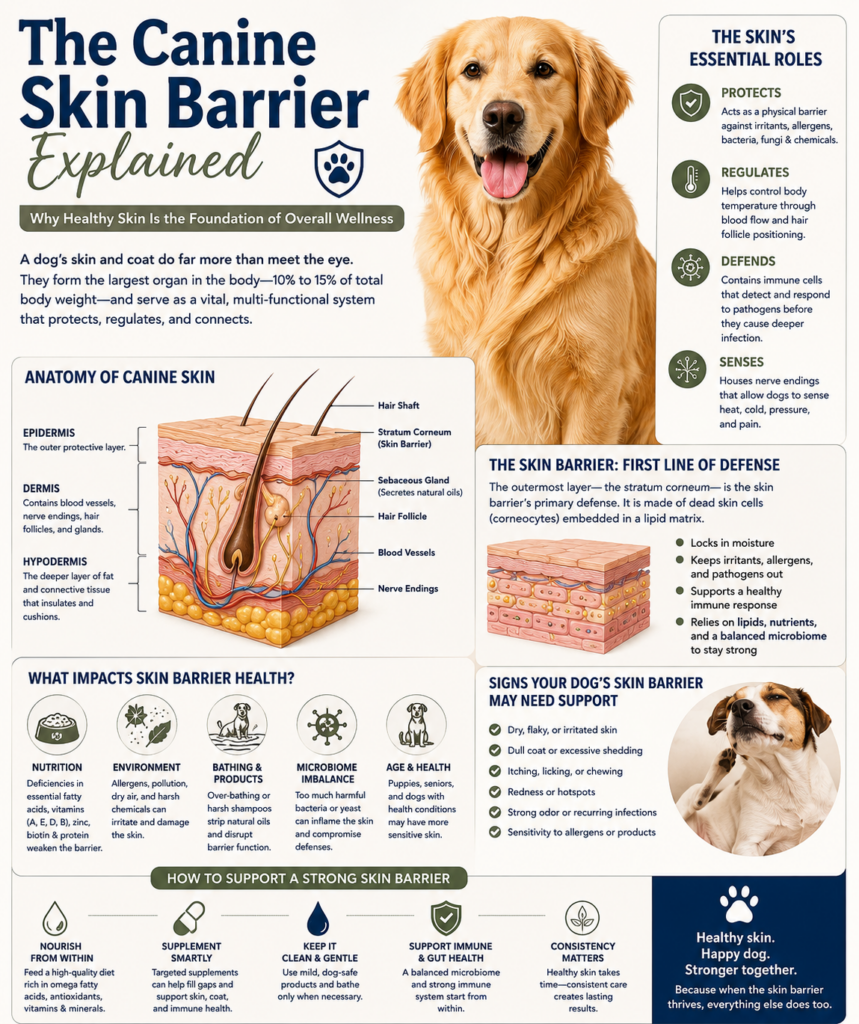
The skin and coat form the largest organ in dogs, comprising around 10% to 15% of their total body weight. It is not simply a covering — it is an active biological system performing multiple critical functions simultaneously.
The skin provides a physical barrier against environmental irritants, allergens, bacteria, fungi, and chemical damage. It regulates body temperature through hair follicle positioning and blood flow. It functions as an important part of the immune system — the skin contains immune cells that identify and respond to pathogens before they can establish infection in deeper tissue. And it houses the nerve endings that allow a dog to sense heat, cold, pressure, and pain.
The outermost layer — the stratum corneum — is the skin barrier’s primary defense. It is made of tightly packed cells surrounded by a lipid matrix that regulates moisture retention and limits allergen penetration. When this barrier is intact the skin maintains its own moisture, resists environmental triggers, and supports healthy coat growth. When it is disrupted — through harsh grooming products, nutritional deficiencies, chronic inflammation, or underlying disease — moisture escapes, allergens penetrate more easily, and the skin becomes progressively more reactive and difficult to manage.
For the full science on the canine skin barrier: Why the Canine Skin Barrier Matters More Than Most Dog Owners Realize
The Most Common Dog Skin Conditions — What They Are and Why They Happen
Environmental Allergies (Atopic Dermatitis)
Atopic dermatitis is the most common chronic skin condition in dogs — an immune-mediated hypersensitivity reaction to environmental allergens including pollen, dust mites, mold, and grass. The immune system overreacts to these normally harmless substances, triggering chronic low-grade skin inflammation that drives itching, self-trauma, and secondary bacterial or yeast infections.
Atopic dermatitis typically shows seasonal patterns — worse during pollen seasons, better in winter — though year-round dust mite allergy can produce continuous symptoms. The most commonly affected areas are the paws, face, belly, armpits, and groin. The condition is managed rather than cured — the goal is reducing allergen load, supporting the skin barrier, and managing the inflammatory response.
Food Allergies and Adverse Food Reactions
Adverse food reactions are skin and gastrointestinal problems that result directly from food. One of the most common food allergies for dogs is chicken, but dogs can be allergic to other protein and carbohydrate ingredients. Food allergies typically produce year-round symptoms without seasonal variation — which is one way to distinguish them from environmental allergies. Gastrointestinal symptoms like gas, diarrhea, or inconsistent appetite alongside skin symptoms suggest food sensitivity rather than environmental allergy.
Diagnosis requires an elimination diet trial — typically 8-12 weeks on a novel protein or hydrolyzed protein diet that the dog has never been exposed to. During this period, no other food, treats, or flavored supplements are given. Improvement during the elimination period confirms food allergy; the offending ingredient is then identified by reintroducing ingredients one at a time.
Hotspots (Acute Moist Dermatitis)
Hotspots are one of the most common acute skin emergencies dog owners encounter. They develop when a dog scratches, licks, or chews at an irritated area — breaking the skin barrier and allowing bacteria normally present on the skin surface to colonize the moist, traumatized tissue. The hotspot itself is a secondary bacterial infection. The primary problem is whatever caused the scratching or licking in the first place — environmental allergies, flea exposure, ear infections, anal gland problems, moisture trapped in the coat, or behavioral licking.
Treating the hotspot without identifying its underlying trigger guarantees recurrence. Each episode leaves the skin barrier more vulnerable at the healing site — which is why the same spots tend to keep coming back.
For the complete guide to understanding and preventing recurring hotspots: Why Does My Dog Keep Getting Hotspots? The Real Causes and How to Stop the Cycle
Dry Skin and Dandruff
Dry skin and dandruff in dogs results from the skin barrier’s inability to retain adequate moisture — a condition called transepidermal water loss. Common causes include frequent bathing with harsh sulfate-based shampoos that strip the lipid layer, low environmental humidity, inadequate dietary fatty acids that support lipid layer production, and underlying conditions including hypothyroidism and Cushing’s disease. Addressing dry skin requires identifying whether the primary cause is external (grooming practices), internal (nutritional), or systemic (underlying disease).
Bacterial and Yeast Skin Infections
Secondary bacterial infections (pyoderma) and yeast overgrowth (Malassezia dermatitis) are among the most common skin conditions seen in veterinary practice — but they are almost always secondary to an underlying condition that has compromised the skin barrier. The bacteria and yeast that cause these infections are normally present on healthy dog skin in controlled populations. It is the barrier disruption — from allergies, hormonal conditions, moisture, or grooming damage — that allows them to overgrow and establish infection. Treating the infection without addressing the underlying barrier compromise leads to rapid recurrence.
How Nutrition Drives Dog Skin Health From Within
The right balance of nutrients can help support a healthy skin barrier, minimize scratching, reduce inflammation, and maintain a shiny coat. In addition, nutrients must be bioavailable, meaning they can be easily and effectively absorbed and used by the body. The skin reflects internal nutritional status — and topical treatments address only the surface while the underlying nutritional foundation continues driving problems.
Omega Fatty Acids — The Foundation of the Skin Barrier
Fatty acids are necessary for skin barrier integrity and hydration, which means fewer skin infections and allergic reactions. Omega-3 fatty acids also have an anti-inflammatory effect, reducing the risk of an allergic response. The skin’s lipid matrix — the structural glue of the stratum corneum — is made largely of fatty acids. Without adequate omega-3 and omega-6 supply, the barrier becomes structurally compromised: less able to retain moisture, more permeable to allergens, and more prone to inflammatory breakdown.
The omega ratio matters as much as the total amount. Most commercial diets are heavily weighted toward omega-6 — which is pro-inflammatory at high ratios. A balanced omega-3, 6, and 9 profile from a stable, bioavailable source supports skin barrier lipid production without the inflammatory imbalance that comes from omega-6 excess alone.
Protein and Amino Acids
Protein is beneficial to support healthy skin and fur. Look for food that provides the balance of amino acids and other nutrients that pets need. The skin requires a constant supply of amino acids for cell renewal, collagen synthesis, keratin production for hair structure, and tissue repair after damage. Dogs on high-carbohydrate diets that displace quality animal protein are often protein-deficient at the tissue level even when they appear to be eating adequate calories — and the skin is typically the first system to show it.
Zinc
Zinc is essential for skin cell repair, immune regulation at the skin surface, and the production of metalloproteins that maintain skin structure. Zinc deficiency produces characteristic skin changes — scaling, crusting, and thickened skin particularly around the face and footpads. Some breeds — particularly Siberian Huskies and Alaskan Malamutes — have genetic predispositions to zinc malabsorption that make supplementation specifically important regardless of dietary content.
Biotin (Vitamin B7)
Biotin is a crucial cofactor in keratin synthesis — the primary protein structure of hair shafts and nails. Research demonstrates that biotin supplementation can significantly improve coat thickness, reduce brittleness, and enhance overall hair follicle strength. Biotin deficiency produces dull, brittle coat, hair loss, and dry skin. Dogs on raw egg diets are at particular risk — raw egg whites contain avidin, a protein that binds biotin and prevents its absorption.
Vitamin E
Vitamin E is a fat-soluble antioxidant that protects skin cells from oxidative damage — the cellular stress that accumulates from UV exposure, inflammation, and metabolic activity. It works synergistically with omega fatty acids — vitamin E protects the unsaturated fatty acids that make up the skin barrier from oxidative degradation, maintaining their structural function in the lipid matrix.
Vitamin A
Vitamin A supports normal skin cell differentiation and turnover — the process by which new cells replace damaged ones. Deficiency produces thickened, scaly skin and a dry, brittle coat. Excess is also a concern — vitamin A is fat-soluble and accumulates in tissue, making toxicity from over-supplementation a real risk. Appropriate levels from a balanced formula support barrier maintenance without accumulation risk.
The Gut-Skin Connection — Why Digestive Health Affects Skin
The gut microbiome and skin health are connected through what researchers call the gut-skin axis. A 2025 study published in BMC Microbiology assessed dogs with atopic dermatitis over 16 weeks of daily probiotic supplementation and found meaningful improvement in skin condition — supporting what the emerging research consistently shows: gut microbiome balance directly influences systemic immune function, including the immune regulation at the skin surface that determines susceptibility to allergic and inflammatory skin conditions.
Dogs on predominantly processed, heat-extruded commercial diets that destroy naturally occurring enzymes and beneficial bacteria are particularly dependent on supplemental probiotic support to maintain the gut environment that skin immune health depends on. Dogs who have been on repeated antibiotic courses face compounding microbiome disruption that affects both digestive and skin immune function simultaneously.
Grooming and Bathing — How to Support the Barrier Rather Than Damage It
Bathing frequency and shampoo selection are among the most impactful and most misunderstood variables in dog skin health. The wrong shampoo used at the wrong frequency can progressively damage the skin barrier that it purports to clean.
The key variables are pH calibration, cleanser type, and active ingredient quality. Dog skin ranges from pH 6.2-7.5 — significantly more alkaline than human skin at pH 5.5. Shampoos formulated for human pH disrupt the canine acid mantle with every use. Sulfate-based cleansers strip the lipid layer faster than sebaceous glands can replace it, progressively compromising the barrier in dogs bathed frequently. Colloidal oatmeal — the FDA-recognized skin protectant form of oatmeal — forms a protective mucilaginous film on the skin surface that locks in hydration and buffers environmental allergens. Organic aloe vera inhibits inflammatory pathways and provides lasting humectant hydration.
For dogs with environmental allergies, weekly bathing with a pH-balanced, sulfate-free, colloidal oatmeal and aloe formula during high-allergen seasons removes accumulated pollen, grass, and dust from the coat before they can penetrate the barrier and trigger immune responses. This single habit is one of the most actionable allergy management strategies available without a prescription.
The 5-10 minute contact time rule is essential — colloidal oatmeal and aloe need this time to deliver their therapeutic benefit. Rinsing immediately after application provides surface cleaning only.
For the full science on over-bathing and barrier damage: Are You Over-Bathing Your Dog? What It Does to Their Skin
For the full science on why oat and aloe work: Why Oat and Aloe Help Calm Irritated Dog Skin
Early Warning Signs of Dog Skin Problems
Skin conditions are almost always easier and less expensive to address early than after they have established. These early signals are worth responding to before obvious symptoms develop:
- Coat losing its shine or feeling coarser than usual — one of the earliest indicators of nutritional gaps or early barrier compromise
- Increased shedding without seasonal explanation — nutritional deficiency, stress, or early hormonal conditions
- Increased scratching after bathing — the clearest signal that the current shampoo is disrupting rather than supporting the barrier
- Mild dandruff appearing between baths — early transepidermal water loss indicating barrier compromise
- More frequent ear scratching or head shaking — early ear irritation that, if untreated, often drives secondary hotspot development
- Paw licking that’s becoming habitual — often the earliest behavioral sign of environmental allergy in atopic dogs
- Small red bumps or pustules on the belly or groin — early superficial pyoderma indicating bacterial colonization of compromised barrier areas
A Complete Dog Skin Health Strategy — The Inside-Out Approach
The most effective approach to dog skin health addresses both layers simultaneously — external support through appropriate grooming practices and internal support through nutrition and supplementation. Neither alone produces the same results as both together.
External: Grooming and Topical Support
Natural Ranch Oat and Aloe Dog Shampoo provides pH-calibrated, sulfate-free, barrier-preserving cleansing built on an organic aloe vera base with whole-grain colloidal oatmeal. Designed for regular use without cumulative barrier damage — making it suitable for weekly bathing in allergy-prone dogs during high-allergen seasons.
→ See Natural Ranch Oat and Aloe Dog Shampoo — $18.99
Internal: Nutritional Foundation
The Natural Ranch Daily Multivitamin delivers the complete nutritional foundation that skin health depends on — Biotin for keratin production, Zinc for skin cell repair and immune regulation, Vitamins A and E for barrier integrity and antioxidant protection, full B-Complex for cellular metabolism and energy, and cold-pressed Canine Royal Oil™ providing a balanced 1:1:1 ratio of Omega-3, Omega-6, and Omega-9 from cranberry seed oil for skin barrier lipid support and systemic inflammation management.
→ See the Natural Ranch Daily Multivitamin — $36.00
The Complete System: Skin and Coat Defense Duo
The Skin and Coat Defense Duo pairs Oat and Aloe Shampoo with the Daily Multivitamin — addressing the itch cycle and barrier integrity from both the external allergen removal and internal nutritional support directions simultaneously. For dogs where recurring skin issues are the primary concern, this inside-out approach produces more consistent results than either product alone.
→ See the Skin and Coat Defense Duo — $47.99
When to See the Vet — And What to Ask
Daily skin health support — appropriate grooming, nutrition, and supplementation — works best as a foundation alongside veterinary care when conditions require it. These situations warrant a veterinary appointment rather than watchful waiting:
- Hotspots larger than a golf ball or spreading rapidly
- Skin infections that recur within weeks of completing antibiotic treatment
- Hair loss in patches or areas of complete coat thinning
- Skin thickening, darkening, or significant texture change
- Chronic itching that significantly affects quality of life or sleep
- Any skin symptom accompanied by changes in appetite, energy, or water consumption — these may indicate systemic conditions like hypothyroidism or Cushing’s disease that produce skin symptoms as a secondary effect
For dogs with recurring skin conditions, ask your vet specifically about allergy testing to identify specific environmental triggers, food elimination trial if year-round symptoms suggest food sensitivity, skin scraping and culture to identify any bacterial or fungal component, and thyroid and cortisol screening to rule out hormonal conditions driving skin symptoms.
What causes skin problems in dogs?
Dog skin problems have multiple possible causes — environmental allergies (atopic dermatitis) are the most common, followed by food allergies, parasites like fleas and mites, bacterial and yeast infections secondary to barrier disruption, nutritional deficiencies affecting skin barrier integrity, hormonal conditions like hypothyroidism and Cushing’s disease, and grooming practices that damage the acid mantle. Most chronic or recurring skin conditions involve a combination of a compromised barrier and an underlying trigger that keeps the barrier in a disrupted state.
How does nutrition affect dog skin health?
The skin barrier’s structural integrity depends on a continuous supply of specific nutrients — omega fatty acids for lipid layer production, zinc for skin cell repair and immune regulation, biotin for keratin synthesis, vitamin E for antioxidant protection, vitamin A for normal cell differentiation, and adequate animal protein for collagen synthesis and tissue repair. Dogs on high-carbohydrate, grain-heavy diets deficient in these nutrients have structurally weaker skin barriers that are slower to repair after damage and more susceptible to inflammatory breakdown.
How often should I bathe my dog for healthy skin?
Most healthy dogs benefit from bathing every 4-6 weeks with a barrier-preserving formula. Dogs with environmental allergies may benefit from weekly bathing during high-allergen seasons to remove accumulated pollen and dust before it penetrates the barrier. The critical factor is shampoo selection — a sulfate-free, pH-balanced formula with colloidal oatmeal and organic aloe can be used weekly without cumulative barrier damage, while detergent-based shampoos damage the barrier even at monthly frequency.
What is the canine skin barrier and why does it matter?
The canine skin barrier is the outermost layer of the skin — the stratum corneum — made of tightly packed cells surrounded by a lipid matrix. It regulates moisture retention, limits allergen penetration, and protects deeper tissue from bacteria and environmental chemicals. When intact it maintains healthy skin function. When compromised through harsh grooming products, nutritional deficiencies, chronic inflammation, or underlying disease, moisture escapes, allergens penetrate more easily, and secondary infections establish more readily.
What supplements support dog skin health?
The most evidence-supported supplements for dog skin health are omega-3 fatty acids for skin barrier lipid production and anti-inflammatory effect, biotin for keratin synthesis and coat strength, zinc for skin cell repair and immune function at the skin surface, vitamin E for antioxidant protection of skin cell lipids, and probiotics for gut microbiome balance that influences skin immune regulation through the gut-skin axis. These work most effectively as a complete balanced formula rather than individual supplements added to an already adequate diet.
Why does my dog keep getting hotspots?
Recurring hotspots in dogs are almost always caused by an unidentified underlying trigger — environmental allergies driving chronic skin inflammation, moisture trapped in the coat, ear infections or anal gland problems triggering nearby scratching, flea allergy dermatitis, nutritional deficiencies weakening the skin barrier, or behavioral licking driven by anxiety. The hotspot itself is a secondary bacterial infection — treating it without identifying the underlying cause guarantees the next episode. Dogs with three or more hotspots in twelve months warrant investigation of the underlying trigger.
What is the inside-out approach to dog skin health?
The inside-out approach combines external support — pH-balanced, sulfate-free grooming with barrier-supporting ingredients like colloidal oatmeal and aloe vera — with internal nutritional support that provides the omega fatty acids, zinc, biotin, and vitamins the skin barrier needs to maintain its structural integrity. Neither approach alone produces the same results as both together. Topical products address the surface environment; nutrition addresses the biological foundation that determines how resilient the barrier is and how quickly it recovers after disruption.
References
VCA Animal Hospitals. “The Importance of Your Pet’s Skin and Coat and the Role of Diet.” vcahospitals.com
VCA Animal Hospitals. “Nutrition and Your Dog’s Skin and Haircoat.” vcahospitals.com
PetMD Editorial. “The Impact of Nutrition on Dog Skin Conditions.” September 2025.
Song H., et al. “Probiotics ameliorate atopic dermatitis in dogs by modulating gut microbiota.” BMC Microbiology. 2025.
Klinger C.J., et al. “Vitamin D supplementation shows efficacy in canine atopic dermatitis.” Veterinary Record. 2018.
Saevik B.K., et al. “Trial showing steroid-sparing effect of essential fatty acids in atopic dogs.” Veterinary Dermatology. 2004.
Cornell University College of Veterinary Medicine. “Hot Spots.” vet.cornell.edu
National Research Council. Nutrient Requirements of Dogs and Cats. National Academies Press. 2006.